This report explores maritime security conditions in the Mediterranean and the evolving US engagement in the region. As critical infrastructure becomes increasingly vulnerable to sabotage, freedom of navigation is undermined by conflict, and energy disputes generate tension, US policy focus on the region has become fragmented and disengaged. The authors call for a sustained American role to strengthen maritime domain awareness, allied coordination, infrastructure protection, and the capacity to respond when Mediterranean crises affect US and transatlantic interests.
The Multiple Costs of the US–Iran War – From Hormuz to Europe and South Asia: The Widening Economic and Political Geography of the Conflict
Wars are decided by those who hold military power, but their costs are increasingly borne by those who have little or no voice in the decisions that start them. The US–Iran war shows this imbalance very clearly. Its economic consequences have gone far beyond the battlefield and have disrupted energy markets, trade routes, food supplies, public finances and investment in the Gulf, Europe, Africa and Asia. The most striking feature of the conflict, however, is not only the size of the damage but its very unequal distribution.
In less than two decades, a string of offshore discoveries has turned the Eastern Mediterranean into a significant gas-producing region, making Israel an exporter, twice lifting Egypt into the ranks of liquefied natural gas (LNG) exporters, and giving Cyprus finds it has yet to bring to market. This backgrounder explores the potential and challenges of exploiting and managing LNG resources in the region.
Since the “Arab Spring,” international actors have considered Tunisia an exemplar of democratic transition in the Arab world. But this optimism is increasingly being replaced by fear and frustration, especially within Tunisia itself. Transitional justice—dealing with the crimes committed by previous regimes—is one of the subjects of debate.
In December 2012, the Central Bank of Egypt announced that the country’s foreign reserves had reached an alarming low of $15 billion, less than 50 percent of its holdings following Hosni Mubarak’s ouster in February 2011. At that point, the Bank was no longer capable of providing the treasury with the monthly dollar transfers necessary for the purchase of basic food and energy imports, and thus had to rely on foreign borrowing to cover these imports and debt service as well as to support local currency.
The Arab Awakening: Determinants and Economic Consequences
Economist Zubair Iqbal explains the daunting economic challenges facing Arab countries in transition following the Arab Awakening and the different trajectories stemming from those nations’ policy responses. Tunisia and Egypt provide an instructive case study: the former made hard fiscal decisions and has embraced sound economic principles and achieved broad support for a reform plan, while the latter, suffering from more difficult political conditions, has been faced with limited policy options that increase the risk for long-term challenges.
Al Qaeda's Expansion in Egypt: Implications for U.S. Homeland Security
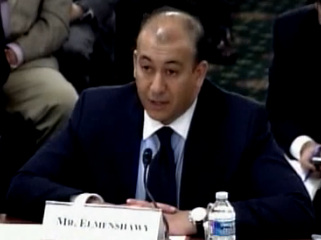
Testimony of MEI Resident Scholar Mohamed Elmenshawy before the House Committee on Homeland Security Subcommittee on Counterterrorism and Intelligence, delivered February 11, 2014. Click here for video clips and additional testimony from this hearing.
The Christmas visit of Egypt’s interim president Adly Mansour to the Coptic Cathedral in Cairo occasioned much commentary in the Egyptian press about a new era in church-state relations. Indeed, newspaper headlines heralded the visit as the first undertaken by an Egyptian president to a Coptic patriarch to offer congratulations on a Coptic holiday. The interim president’s magnanimity in making the visit was set in stark contrast to the parsimonious attitude of Hosni Mubarak, who would typically leave such obligatory greetings to a lesser figure in the Egyptian government.
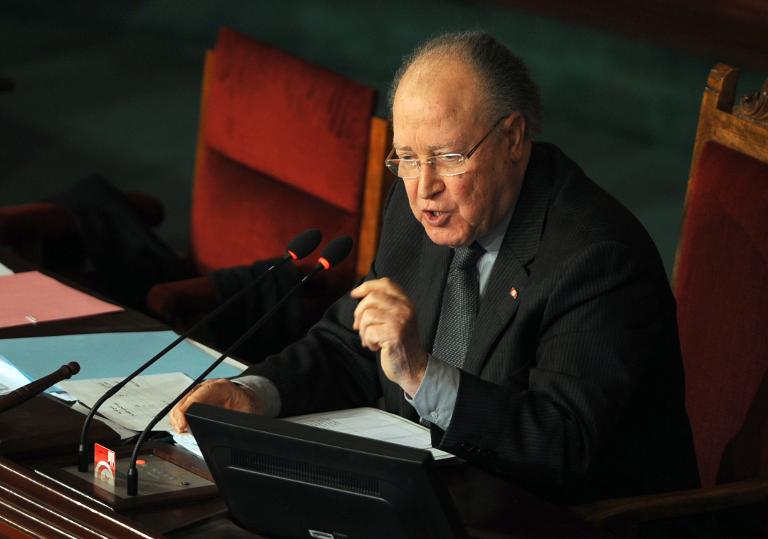
January 27, 2014 will likely be engraved in the collective memory of the Tunisian people as the day they witnessed the adoption of their first post-authoritarian constitution—a charter that will hopefully pave the way for the country’s democratization. This legal framework was ratified by members of the Tunisian National Constituent Assembly (NCA) in a celebratory atmosphere.
The recent attacks against Egypt’s police and military have raised concerns over the return of the militant insurgency that plagued Egypt during the 1980s and 1990s. Ansar Bayt al-Maqdis (ABM), a Sinai-based militant group, has repeatedly and publicly claimed responsibility for the cascade of bombings.
The situation in Egypt has been very complicated, with the democratic process and path toward transitional justice shifting under four different ruling systems—Mubarak, SCAF, the Muslim Brotherhood, and the interim ruling authorities—over a short period of time. All four systems committed abuses against the people, leaving victims and cases to be investigated. The combination of sharp divisions within society, disagreements about transitional justice itself, and delayed government responses to people’s demands has made the situation particularly charged.
Libya's Political Isolation Law: Politics and Justice or the Politics of Justice?
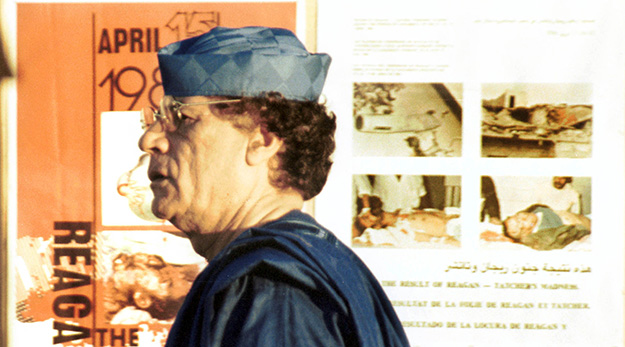
In May 2013, Libya’s General National Congress (GNC) overwhelmingly passed the Political Isolation Law (PIL). The PIL’s enactment represented a far-reaching attempt to prevent members of the regime of Muammar Qaddafi from holding public office during the country’s transition. But the decision also appeared to fit a precarious pattern of post-conflict accountability in Libya, which has been characterized by acts of vengeance and one-sided justice aimed at anyone associated with the defeated regime. The passage of the law also reflects the current state of political instability in Libya wherein decisions are politically motivated and often forced at the barrel of the gun rather than agreed upon through public consultation and democratic decision-making.
Copts in Egyptian Civil Society: Challenge and Hope in Transition
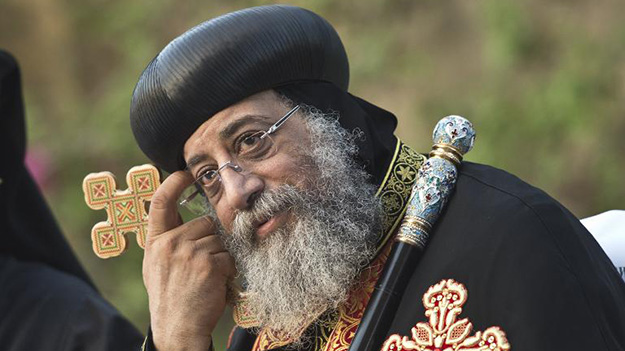
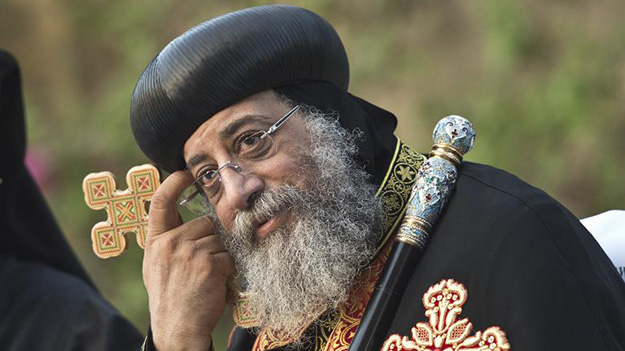
“Through wisdom a house is built, and by understanding it is established.” Pope Tawadros II, the Pope of the Coptic Orthodox Church, tweeted this verse of scripture in December 2012. He wrote it as one of a series of daily reflections on the book of Proverbs. This phrase, however, also provides an entry point into the Coptic Orthodox Church and its place in Egyptian civil society. Egypt is in the midst of rebuilding its government and society following an 18-day revolution in 2011, 18 months of military rule that ended with the election of Mohamed Morsi, and the removal of President Morsi one year later by the Egyptian military in July 2013. Egyptian Christians now have the opportunity and challenge to renegotiate their place in Egyptian civil society during this time of unrest and transition. What wisdom, understanding, and vision will Christian clergy and lay leaders put forth in order to co-labor with their neighbors, the state, and other stakeholders to build a new house for Egyptian society? This new vision must be rooted in Copts’ historical experience and include the possibility for new models of engagement and representation.
Since the inception of its transitional justice and accountability program in November 2012, the Egyptian Initiative for Personal Rights (EIPR) has faced a number of challenges related to its work. Of these, one of the most arduous has been operating in a context of ongoing political and social upheaval. The period since November 2012 can generally be divided into three distinct phases, each marking a change in EIPR’s organizational and conceptual approaches to transitional justice. Though EIPR sees its work in Egypt less in phases and more as a long and complicated struggle against injustice and impunity that will likely continue for the foreseeable future, the three phases are helpful for documenting its approach to transitional justice since 2012.
The oldest peer-reviewed publication dedicated to the study of the modern Middle East, MEI’s flagship journal covers politics, society, and culture in the region.