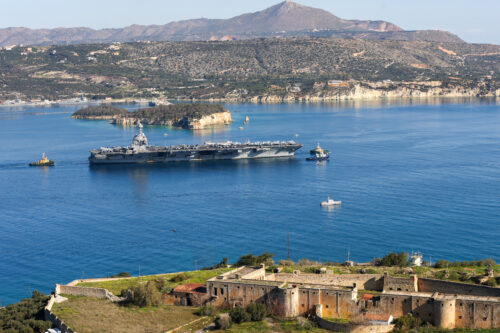
This report explores maritime security conditions in the Mediterranean and the evolving US engagement in the region. As critical infrastructure becomes increasingly vulnerable to sabotage, freedom of navigation is undermined by conflict, and energy disputes generate tension, US policy focus on the region has become fragmented and disengaged. The authors call for a sustained American role to strengthen maritime domain awareness, allied coordination, infrastructure protection, and the capacity to respond when Mediterranean crises affect US and transatlantic interests.
The Multiple Costs of the US–Iran War – From Hormuz to Europe and South Asia: The Widening Economic and Political Geography of the Conflict
Wars are decided by those who hold military power, but their costs are increasingly borne by those who have little or no voice in the decisions that start them. The US–Iran war shows this imbalance very clearly. Its economic consequences have gone far beyond the battlefield and have disrupted energy markets, trade routes, food supplies, public finances and investment in the Gulf, Europe, Africa and Asia. The most striking feature of the conflict, however, is not only the size of the damage but its very unequal distribution.
In less than two decades, a string of offshore discoveries has turned the Eastern Mediterranean into a significant gas-producing region, making Israel an exporter, twice lifting Egypt into the ranks of liquefied natural gas (LNG) exporters, and giving Cyprus finds it has yet to bring to market. This backgrounder explores the potential and challenges of exploiting and managing LNG resources in the region.
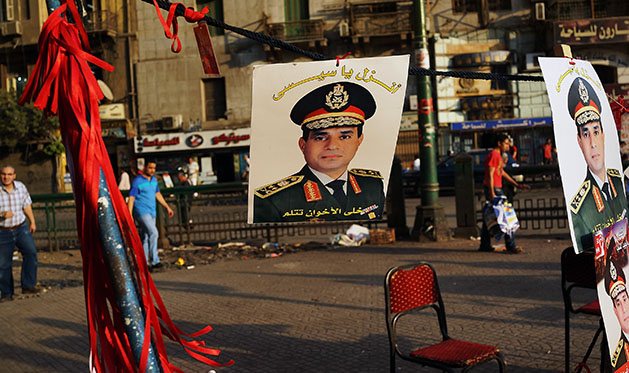
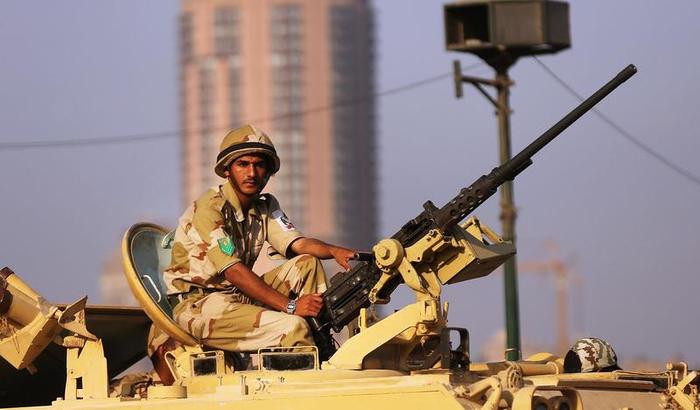
Yesterday, General Abdul Fattah el-Sisi, Egypt’s Minister of Defense and head of the military, called for Egyptians to take to the streets in protest on Friday to “confront terrorism.” Such a call amounts to a public relations one-upmanship vis-à-vis continued Islamist protests since Morsi’s ouster. Clearly, the Egyptian military is in no need of popular protests to confront credible national security threats or armed militias that threaten the security of citizens.
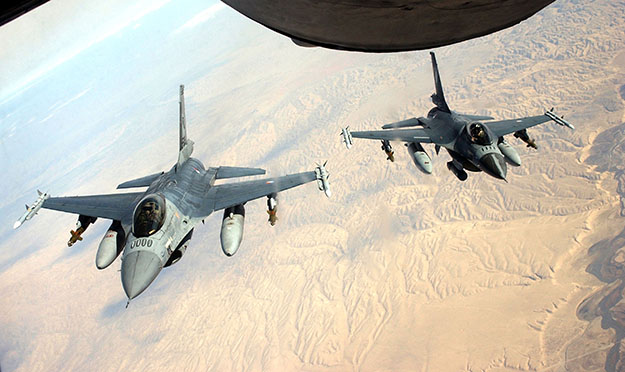
Yesterday, the United States announced that it would delay the delivery of four F-16 fighter jets to Egypt.[1] While such a move might appear to signal a block in U.S. military aid to the country, most Egyptians believe that the United States will, as it always does, provide Egypt with military funding.
Mada Masr’s journalist Lina Attalah spoke to Gehad el-Haddad, spokesperson of the Muslim Brotherhood and senior advisor to its political arm, the Freedom and Justice Party, at the Rabaa el-Adaweya sit-in, where pro-deposed President Mohamed Morsi protesters have been camping to express their rejection of the military coup that ousted him.
What is the current plan? Keep mobilizing to exert pressure? Negotiate at some point?
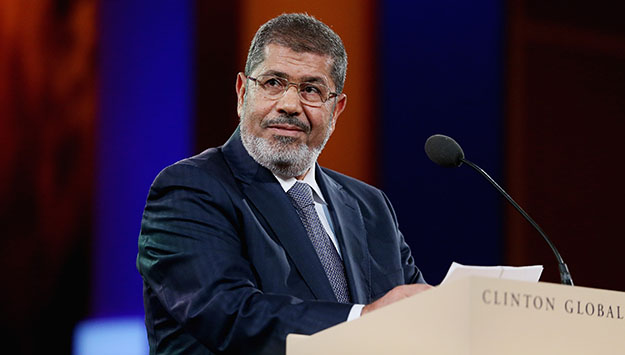
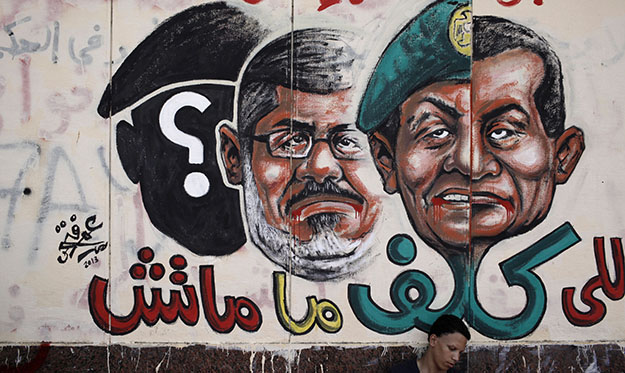
Before 3 July 2013 enters the annals of U.S.-backed anti-Islamist coups[1] it is worth noting that Mohamed Morsi’s ill-fated presidency differs from prior cases. Whereas the Islamic Salvation Front (FIS) and Hamas posed a threat (however chimeric) to Washington, Morsi quickly won plaudits from U.S. officials. Meanwhile, he menaced the domestic opposition with an autocratic panache. When Morsi exceeded his elected mandate and refused to share power, secularists and Salafists rose against him—while the U.S.
The Middle East Institute is proud to host Dr. Mona Makram-Ebeid for a discussion about the state of affairs in Egypt in the wake of the overthrow of Muslim Brotherhood President Mohamed Morsi. Dr. Makram-Ebeid is a prominent Egyptian academic and former member of the Shura Council, who recently resigned in support of the Tamarod movement. She will provide a first-hand perspective on the challenges ahead for Egypt following the recent military takeover of the government and the ensuing violence and unrest.
A white bed sheet had been strung between two trees on a median just opposite the Sayeda Aisha mosque in a working class area of Cairo. Everything had been arranged by volunteers under the protection of Ahmed, a well-known personality in the neighborhood. He helped them pick a spot to set up the projector, screen, and speakers. All that was missing was a functioning street lamp to power the equipment, but those nearby had been disconnected. A generator that was usually rented out to street vendors was used instead.
The Middle East Institute is proud to host Dr. Mona Makram-Ebeid for a discussion about the state of affairs in Egypt in the wake of the overthrow of Muslim Brotherhood President Mohamed Morsi. Dr. Makram-Ebeid is a prominent Egyptian academic and former member of the Shura Council, who recently resigned in support of the Tamarod movement. She will provide a first-hand perspective on the challenges ahead for Egypt following the recent military takeover of the government and the ensuing violence and unrest.Bios:Dr.
The Middle East Institute is proud to host Dr. Mona Makram-Ebeid for a discussion about the state of affairs in Egypt in the wake of the overthrow of Muslim Brotherhood President Mohamed Morsi. Dr. Makram-Ebeid is a prominent Egyptian academic and former member of the Shura Council, who recently resigned in support of the Tamarod movement. She will provide a first-hand perspective on the challenges ahead for Egypt following the recent military takeover of the government and the ensuing violence and unrest.Bios:Dr.
The Middle East Institute is proud to host Dr. Mona Makram-Ebeid for a discussion about the state of affairs in Egypt in the wake of the overthrow of Muslim Brotherhood President Mohamed Morsi. Dr. Makram-Ebeid is a prominent Egyptian academic and former member of the Shura Council, who recently resigned in support of the Tamarod movement. She will provide a first-hand perspective on the challenges ahead for Egypt following the recent military takeover of the government and the ensuing violence and unrest.Bios:Dr.
The Middle East Institute is proud to host Dr. Mona Makram-Ebeid for a discussion about the state of affairs in Egypt in the wake of the overthrow of Muslim Brotherhood President Mohamed Morsi. Dr. Makram-Ebeid is a prominent Egyptian academic and former member of the Shura Council, who recently resigned in support of the Tamarod movement. She will provide a first-hand perspective on the challenges ahead for Egypt following the recent military takeover of the government and the ensuing violence and unrest.Bios:Dr.
The Middle East Institute is proud to host Dr. Mona Makram-Ebeid for a discussion about the state of affairs in Egypt in the wake of the overthrow of Muslim Brotherhood President Mohamed Morsi. Dr. Makram-Ebeid is a prominent Egyptian academic and former member of the Shura Council, who recently resigned in support of the Tamarod movement. She will provide a first-hand perspective on the challenges ahead for Egypt following the recent military takeover of the government and the ensuing violence and unrest.Bios:Dr.
The U.S. Needs to Walk the Walk on Egypt's Human Rights
Originally published July 10, 2013 in U.S. News and World Report
Assertions and opinions in this publication are solely those of the above-mentioned author(s) and do not necessarily reflect the views of the Middle East Institute, which expressly does not take positions on Middle East policy.
The oldest peer-reviewed publication dedicated to the study of the modern Middle East, MEI’s flagship journal covers politics, society, and culture in the region.