This article is part of a collection of short essays written by the Fellows of the Middle East Institute to explore aspects of the ongoing war with Iran. The intent of the collection is to help readers see new and unexpected elements of the dynamics and impact of the ongoing hostilities and to think harder, deeper, and broader about the implications of the conflict.
Egypt: How the Iran War Has Affected Egypt’s Calculations
Egypt, which is not party to the war on Iran, has become a target as well as an intermediary in the conflict. As a result, the war has affected Egypt’s future calculations, particularly in three major areas: its economy, its security, and its regional alliances.
Algeria and Morocco have long been at odds, but recent diplomatic moves may signal a widening geopolitical split in North Africa. Hosts Alistair Taylor and Matthew Czekaj are joined by MEI Senior Fellow Intissar Fakir to unpack Algeria’s decision to sever diplomatic ties with the United Arab Emirates and Morocco’s warming relations with both the UAE and Israel. They also explore linkages between these diplomatic shifts and the Western Sahara conflict, Moroccan domestic concerns, particularly in light of this week’s elections, as well as broader regional stability.
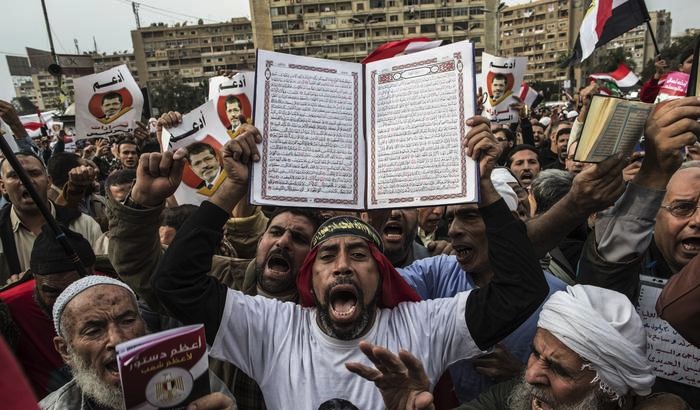
It was with customary gusto that Egyptian President Mohamed Morsi proudly announced that he had submitted his first draft law to the Shura Council under the new constitution that came into effect in December of 2012.
From Muhammad Ali to Mohamed Morsi, modern Egyptian leaders have understood that any attempt to control the state without the endorsement, if not blatant co-option, of key institutions such as al-Azhar is an ill-fated pursuit. The headache for President Morsi is that these institutions are trying to assert their independence and are presenting a range of direct and indirect challenges to his authority and, more broadly, to the Muslim Brotherhood and its political arm, the Freedom and Justice Party (FJP).
Amr Darrag is a senior member of the Muslim Brotherhood and a professor of engineering at Cairo University. He served as the head of the foreign relations committee of the Freedom and Justice Party and as secretary general of the constituent assembly that drafted Egypt’s new constitution in 2012. He was recently appointed Minister of Planning and International Cooperation.
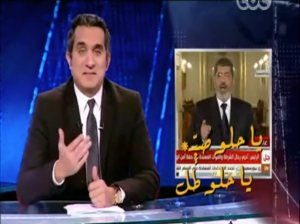
Members of the Egyptian press and media who make it their business to critique high officials know they’ve done a good job when they’re arrested and hauled in for questioning. In January 2013 an Islamist lawyer filed charges against Bassem Youssef, host of the satirical talk show al-Bernameg (The Program), for defaming President Mohamed Morsi, prompting the general prosecutor’s office to launch an investigation.
The main streets of Manshiyat Abdel Moneim Riad, a choked grid of hastily constructed apartment blocks spreading out from a power station at Cairo’s northern edge, are organized according to a simple principle: shops and cafes on the edge, mounds of waste, animals, and rough teenagers from the narrow tributary streets in the middle. Rickshaws and trucks battle for position and skirt potholes in between. Men in search of a bit of air brush away flies at sidewalk cafes and survey the scene with contempt.
Debunking Five Myths of Washington’s Leverage in Egypt
This article was first published by Al-Monitor on April 28, 2013
Assertions and opinions in this publication are solely those of the above-mentioned author(s) and do not necessarily reflect the views of the Middle East Institute, which expressly does not take positions on Middle East policy.
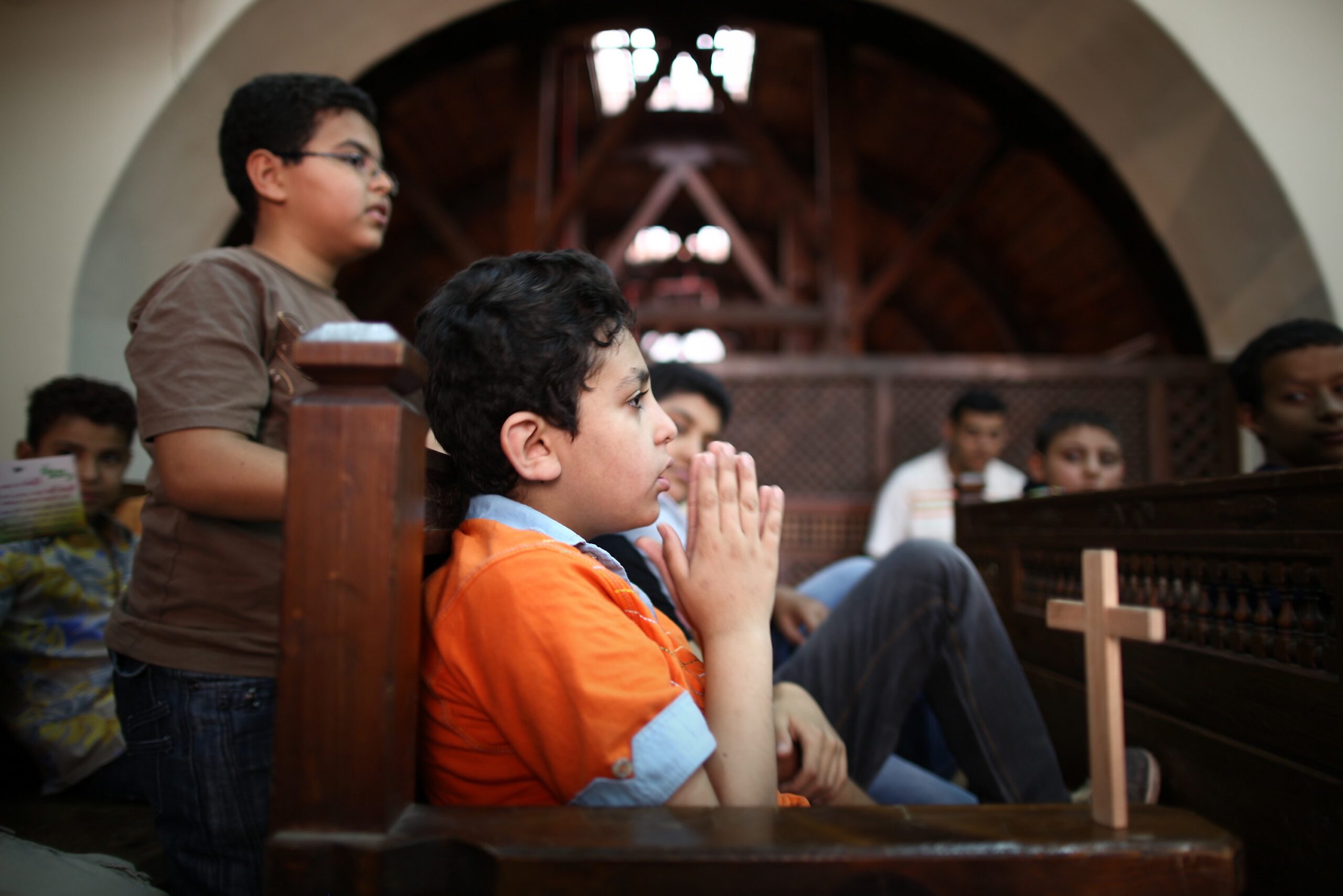
When Mohamed Morsi assumed the mantle of first democratically-elected, civilian president of Egypt, he both resigned from the Freedom and Justice Party‑‑the political arm of the Muslim Brotherhood‑‑and declared himself “president of all Egyptians.” Now, only ten months later, the country’s Coptic Christians are undoubtedly sneering at the insincerity of Morsi’s initial gestures toward magnanimity.
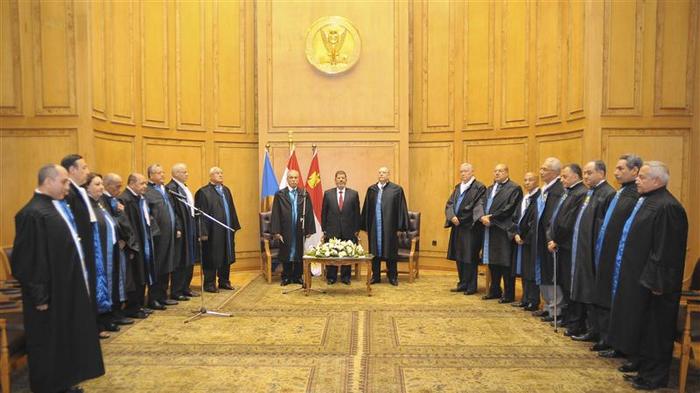
The Egyptian judiciary is facing enormous challenges and hardships while striving to perform its essential role, not only as a judicial institution, but also as a constitutional authority standing alongside the executive and legislative branches. Its difficulties can be seen in a range of problems with which it has been struggling both before and since the outbreak of the revolution in January 2011.
The Case for Women’s Rights in Post-Uprising Egypt
When Egyptian women first gained the vote in 1956, a woman in the cabinet swiftly followed. Women likely thought that all would be clear sailing from that point on, but it hasn’t quite worked out that way. Almost 70 years later, only one woman is in the cabinet.
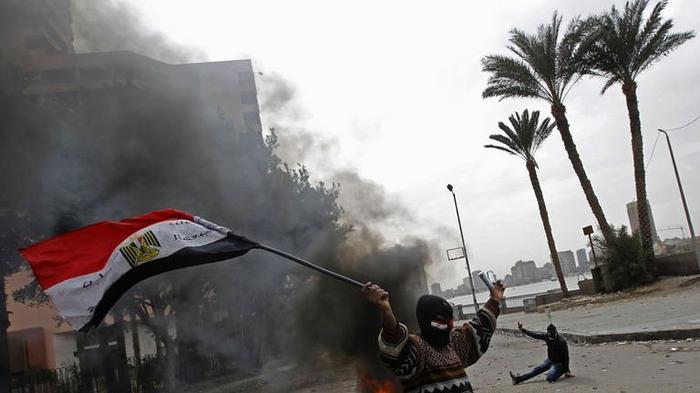
In March, Egypt’s public prosecutor announced the summoning of five members of the largely unknown group the Black Bloc.[1] The group, which takes its inspiration from “black blocs” the world round who wear black masks in order to protest anonymously, is known for such actions as halting public transportation and aiding people in distress.
The Predicament of the Obama Administration and the Muslim Brotherhood
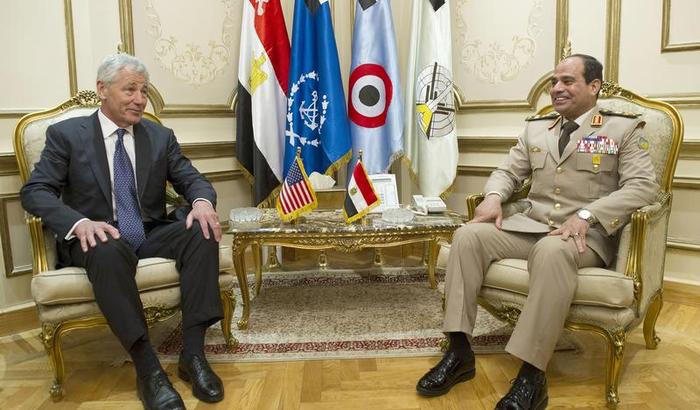
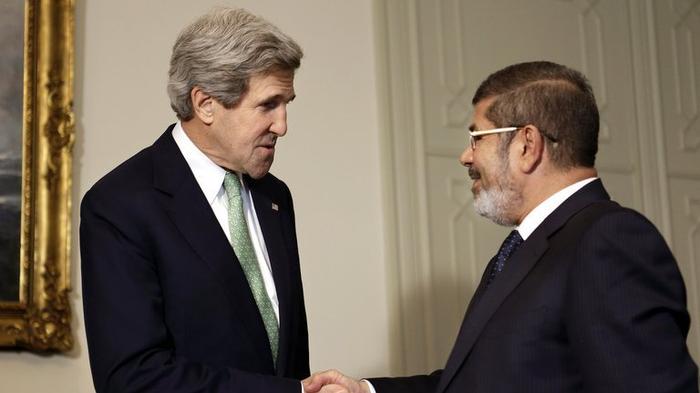
Al-Ahram columnist Ahmed al-Beri wrote on 23 March that “while the United States has often been supportive of President Mohamed Morsi’s regime, Egypt’s security and economic deterioration may be forcing it to reevaluate this support.”[1] Such thoughts are not exclusively al-Beri’s; they are dominating intellectual circles inside Egypt. The emergence of the Muslim Brotherhood as the new political warhorse in Egypt has complicated a delicate strategic relationship between Cairo and Washington.
The oldest peer-reviewed publication dedicated to the study of the modern Middle East, MEI’s flagship journal covers politics, society, and culture in the region.