Egypt: How the Iran War Has Affected Egypt’s Calculations
September 28, 2026
Share
This article is part of a collection of short essays written by the Fellows of the Middle East Institute to explore aspects of the ongoing war with Iran. The intent of the collection is to help readers see new and unexpected elements of the dynamics and impact of the ongoing hostilities and to think harder, deeper, and broader about the implications of the conflict. To read the other essays from this collection, as well as download the full report, please click here.
Egypt’s foreign minister, Badr Abdelatty, has been especially busy over the past six months.
Although you would strain to read it in the Western press, Egypt has played a significant role as a regional mediator in recent years, and as its chief diplomat, Abdelatty has been a very public face of those efforts. While the region has never been short of a crisis or two, the last few years have been especially turbulent. On August 19, Abdelatty had just wrapped up a discussion with his Omani counterpart, Badr Al Busaidi, on regional developments. Near the top of the list of items they discussed was the importance of freedom of navigation and the highly anticipated Iranian-Omani announcement on the reopening of the Strait of Hormuz, which might offer a path toward more constructive US-Iranian talks.
Coming as it did shortly after President Donald Trump had threatened to “bomb the [expletive] out of Oman” if it “got in the way” of an agreement with Iran, the statement must have been particularly carefully phrased. Both ministers were keen to stress that “the repercussions of the current situation are not limited to countries in the region, but … have impacts on the global economy.”
For Egypt, which is not party to the conflict, the Iran war has wreaked various sorts of havoc. The July 29 drone strike that set two vessels alight at the Mediterranean port of Damietta meant Cairo was now a target as well as an intermediary. As a result, the war has affected Egypt’s future calculations, particularly in three major areas: its economy, its security, and its regional alliances. While those areas had already been undergoing changes, the conflict has shifted their directions, and the country’s leadership has had to shift with them. Always pragmatic, Egypt has had to put aside older preferences to keep up with the new regional shifts that the conflict has, if not wrought, precisely, then at least accelerated.
Predictably, the Conflict Came for the Economy First
On February 25, just days before the war began, the International Monetary Fund (IMF) completed its combined fifth and sixth reviews of Egypt’s $8 billion loan program. One could almost sense pursed lips over the country’s slow pace of divestment of state-owned enterprises — a principal IMF demand over many years: “Efforts to reduce the state’s footprint, particularly progress on the divestment agenda, have been slower than envisaged, while high public debt and elevated gross financing needs continue to constrain fiscal space and weigh on medium-term growth prospects.”
That was the IMF telling the Egyptian government that it was simply not moving fast enough on the Fund’s key demand that Cairo loosen its grip on the economy. Despite the state’s 2022 ownership policy, which laid out plans to exit certain sectors of the economy, including construction, hospitality, agriculture, and livestock, the IMF pointed out that there had been only limited progress on the ownership of state and military entities. That was especially relevant since both these types of entities have advantages in terms of tax exemptions, access to real estate, and cheaper labor. That combination, argued the Fund, might reasonably be thought to deter the foreign direct investment (FDI) that Egypt needs.
The Fund did acknowledge significant improvements though, noting the government had pressed on with the implementation of key policies designed to preserve economic stability: “Egypt’s macroeconomic situation has improved amid sustained stabilization efforts. Tight monetary and fiscal policies together with exchange rate flexibility have helped restore macroeconomic stability, reduce inflation, and strengthen the external position.” The result was improvements in growth and the current account deficit, while inflation showed a steady decline, down to 11.9% in January 2026.
The February 28 US-Israeli attack on Iran and the economic shockwaves that followed have hit Egypt hard, exposing an economy whose structural weaknesses leave it acutely vulnerable to conflict-driven crises.
Some problems were shared with the rest of the world — energy prices rose sharply directly after the start of the conflict. At the beginning of March, the Ministry of Petroleum’s Automatic Fuel Pricing Committee pleaded “special circumstances” and raised prices between 15% and 22% for all fuel categories, despite the government having vowed not to raise prices for a year following the last hike the previous October. Egypt, wary of exposure to market volatility, does have fuel price hedging agreements and risk-management mechanisms in place to protect its already overburdened state budget — an unusual arrangement for a state rather than a corporation. They cushioned the budget, but did not spare consumers.Aggravating the situation was the fact that Israel, which normally provides 15-20% of Egypt’s natural gas, shut down the Leviathan gas field as the war began to guard against an Iranian attack.
Disruption to the fuel sector was just the first blow. Exports, which make up almost 20% of Egypt’s GDP, were hit almost immediately with surging insurance and freight costs. Less than two weeks after the start of the war, according to a Ministry of Finance briefing, exports, particularly to Saudi Arabia and the United Arab Emirates, were down sharply compared with the same period the previous year.
Additionally, there is Egypt’s perennially exposed Achilles heel: hot money. Cairo has a persistently tenacious budget deficit and invariably attempts to rectify this problem with another — short-term purchases of Egyptian treasury bills by non-resident investors. In times of political strife, hot money is withdrawn from emerging economies; during Russia’s full-scale invasion of Ukraine in early 2022, approximately $20 billion in hot money fled Egypt, decimating its reserves. According to then-Minister of Finance Mohamed Maait, who admitted this was a problem: “The lesson we have learned [is that] you cannot depend on this type of investment. It is coming just to get high yields, and once there is a shock, it leaves the country.” Unfortunately, this does not seem to have informed subsequent decision-making.
Silver Linings
For Egypt, these were deeply troubling developments. This time, however, being dealt blows from a conflict the country had tried its best to steer clear of appears to have brought on a case of new but welcome flexibility and forward planning.
The most urgent issue was energy. Since there was little that could be done about delayed or cancelled energy shipments, Egypt has worked on alternatives. In the past, the country has relied on floating storage and regasification units (FSRUs) and imported liquefied natural gas (LNG) shipments to manage its domestic energy crunches. It operates multiple import vessels at key hubs like Damietta and Ain Sokhna, with multi-year supply agreements. Despite Israel’s having resumed gas delivery as of early April, that month Egypt acquired 40 LNG cargoes through June, as a partial hedge against expected demand in the summer, when consumption shoots up to an average of 15-20 cargoes per month. Much of this LNG was slated to come from US supplies. At the beginning of April, the Board of Directors of the Export-Import Bank of the United States (EXIM) approved over $2 billion in export credit insurance to support US LNG shipments to Egypt. This is the sort of financial dealing with the US that Egypt ought to aim for; it was profitable for American exporters, but it also financed a vital commodity, rather than providing a loan. Considering that 64% of Cairo’s spending is earmarked for debt servicing in its new proposed budget, this was a smart move.
Cairo is also accelerating oil exploration, with nine new wells in various stages of development: five in deepwater Mediterranean fields, and four in the Gulf of Suez and Nile Delta.
In addition, Egypt is slated to buy output from Cyprus’ Aphrodite gas field when it comes online in six years, while the Cronos gas field, also in Cyprus and developed by Eni and TotalEnergies, could begin production in under two years. Earlier this year, Eni announced the discovery of 2 trillion cubic feet of gas in Egypt’s Temsah field as well.
More important than managing risk for fossil fuel supplies is the expedited pursuit of renewable energy. Egypt had originally set a target of 42% of its electricity generation from renewables by 2030, driven by massive solar and wind projects, including the 1,800-megawatt (MW) Benban Solar Park, 10 gigawatts of renewable energy power purchase agreements (PPAs) with private developers, and various green hydrogen initiatives. The Iran conflict has apparently sped up that timetable, according to industry insiders. That would secure Egypt’s position as a major power producer.
All this forward planning, however, presupposes a few basic requirements, among them the security of the infrastructure.
Neutrality May Not Guarantee Security
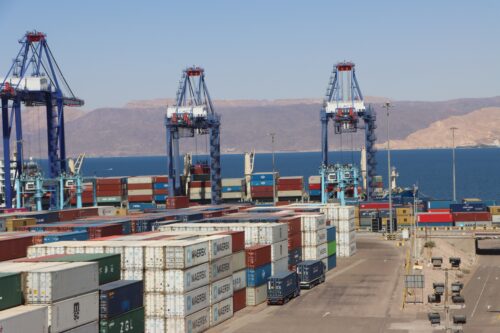
On July 29, a fire broke out on the Energos Winter, a US-owned-and-operated floating LNG storage facility docked at the Mediterranean port of Damietta. The fire, reportedly caused by a drone strike, spread to the Greek-owned GasLog Salem tanker. The blaze was quickly brought under control with no casualties, and normal operations resumed a few hours later.
The following day, Egyptian authorities confirmed a drone strike was the cause. No one has officially taken responsibility, but two unnamed Iranian sources told TheNew York Times that the attack was intended to demonstrate “Tehran’s capabilities to further escalate and disrupt global shipping and energy supplies.” Iranian Foreign Minister Abbas Araghchi flatly denied any Iranian involvement, saying that if Iran had been behind the attack, it would have taken responsibility for it.
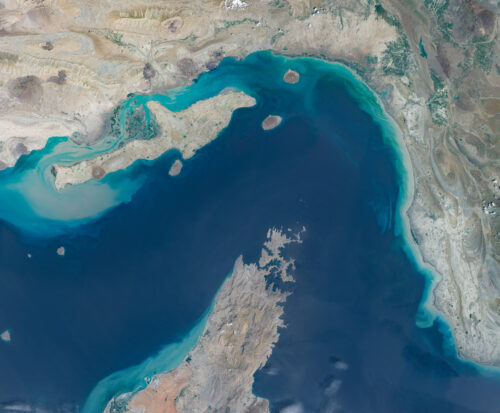
Regardless of who was responsible, the attack illustrated that Egypt was not too far away to be vulnerable. Indeed, it highlighted the vulnerability of Mediterranean energy infrastructure in general. While Egypt immediately increased security around the port, the threat to maritime traffic and LNG storage facilities remains real. That threat has loomed as Egypt’s importance as a key part of the energy corridor has increased — as Hormuz becomes ever more constricted, the Suez Canal and Egypt’s 320-km SUMED pipeline have become even more vital, compounding the potential for chaos if violent actors decide to attack.
All for One? New Regional Alliances Take Shape
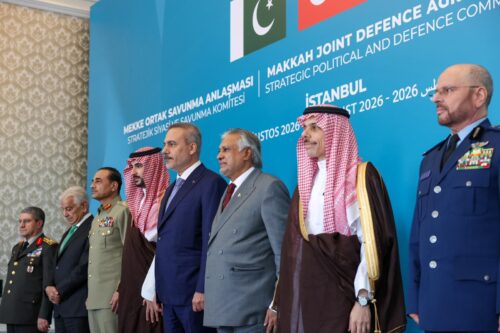
On August 7, Pakistan, Saudi Arabia, and Turkey signed the Mecca Joint Defense Agreement, known as the Mecca Pact. For the casual observer, there were several striking facts about the agreement. Foremost among them is that it states that an attack on any member of the pact is an attack against all of them, which appears to mirror the North Atlantic Treaty Organization’s (NATO) Article 5.
The other striking fact is that Egypt was not a part of it.
There is a lot to unpack with the development of this pact. Its mere formation signals a seismic fissure in the current order. That fissure, while it has been quietly forming since President Trump’s first term began in 2017, finally cracked open under the February 2026 US-Israeli attack on Iran. From the very start of the conflict, Iran rained retribution on its Gulf state neighbors, an eventuality even the most casual observer could have foreseen but that the US administration did not appear to have factored into its decision-making.
From Cairo’s perspective, the US started a war with Iran that its regional allies (other than Israel) overwhelmingly opposed, was unprepared when the plan went badly awry and those same allies became the principal targets of Iranian retaliation, and now seems to have little ability to bring the conflict to a close. Egyptians largely see this as a continuation of their disappointment with the Obama, Trump I, and Biden administrations, all of which paid little attention to their allies or the problems of the Middle East — many of which Washington created or inflamed. The US, it would appear, was no longer the security partner that it once had been.
That realization, in turn, would help shape another: that the region might have to construct its own security framework. What that framework should look like depended on the views and priorities of the parties involved, which slowly, but inexorably, led to a clear demarcation of countries and interests: Egypt, Pakistan, Qatar, Saudi Arabia, and Turkey in one grouping, while the UAE gravitated toward Israel, joined by India, Cyprus, and Greece. Rather than ironclad alliances, at present these groupings are little more than states with seemingly shared priorities.
The first group (minus Qatar), also known as R4 by some and STEP by others, had been coordinating on several matters, among them Gaza and the Horn of Africa in general and Sudan in particular, for well over a year, particularly since the first US-Israeli attack on Iran in 2025. September 2025 saw several important developments — first, Egypt brokered an agreement between Iran and the International Atomic Energy Agency restoring nuclear inspections. A week later, Pakistan and Saudi Arabia signed a mutual defense pact. It is possible that the pact had almost as much to do with the Israeli bombing of Doha, Qatar, that same month, with no apparent US protection or intervention, as with worry over Iranian conduct. Clearly, Egyptians increasingly believed, the region would have to take more responsibility for its safety and stability. The following January, Pakistani Minister for Defense Production Muhammad Raza Hayat Hiraj confirmed that a Pakistani-Saudi-Turkish deal was in the pipeline. The following month, Egypt and Turkey signed a $350 million defense agreement.
These deals reflect a determination on Cairo’s part to rebuild the capacity of its armed forces to defend Egyptian interests in the 21st century. The Egyptian military remains large, but it has languished over the past three decades. The Iran war has demonstrated how far it has fallen behind Israel, and even Iran. In a Middle East that appears increasingly conflictual, in part because the US lacks the will (and possibly even the capacity) to cauterize regional military threats, Egypt is determined to regain its former stature. Apart from Israel, Turkey has the most extensive and advanced military industrial complex in the region — and Turkish weapons tend to be considerably cheaper than American or European versions and have far fewer strings attached. Thus, Turkish arms sales provide both a fast track to resurrect Egyptian military power and another strategic bond between two of the region’s biggest powers.
Given these fast-growing ties between Egypt and the members of the Mecca Pact, more than a few eyebrows were raised when Cairo declined to join. While social media swirled with rumors, the likely reason should not come as a surprise to those familiar with Egypt’s approach to foreign affairs. Egypt maintains a careful, conservative foreign policy that, despite its military heft, hinges more on mediation than might. As it currently stands, the Mecca Pact is a one-page declaration that lacks clear enforcement procedures, unified command structures, and defined military logistics or intervention thresholds. It is vague about what constitutes a threat and what an appropriate response would be. Egypt is significantly more comfortable with bilateral defense agreements — at the beginning of the Iran war, Egypt sent advanced air-defense systems and personnel to Saudi Arabia, the UAE, and Kuwait, alongside a deployment of Rafale fighter jets to the UAE. But while the Mecca Pact may be read as a deterrent to Iranian or Israeli aggression, a shared adversary might be more difficult to pinpoint and might drag Cairo into a war irrelevant to Egyptian interests. For Egypt, the potential diplomatic fallout could be disastrous; Pakistan has been in a state of conflict with India for almost 80 years, and Turkey has persistent issues with Greece and Cyprus. Those three countries are all allies of Egypt, which also has a treaty with Israel and is attempting to mediate with Iran.
That is not to say that Cairo eschews regional alliances entirely — Egypt was one of the first countries to sign on to the Saudi-led multinational maritime defense coalitionaimed at securing the Red Sea, the Bab el-Mandeb Strait, and the Gulf of Aden. However, the Red Sea is of integral interest to Egypt, and those parameters are clear.
Cairo is nothing if not pragmatic, though, and it might eventually sign on to the pact if the details are more carefully ironed out. Interesting as the agreement might be, it is the reasoning behind Egypt’s abstention that is more salient. It is the most important reflection so far of the growing sense that while the US will always remain a major player in the region, it no longer has the bandwidth, desire, or ability to forge and maintain meaningful relationships or peace treaties, and that charity will have to begin at home. The pact is indicative of a new consultative framework, not of a total alignment of interests and alliances. That flexibility is where Egypt excels. It allows Cairo to mediate when it can be useful or to resort to its military if it deems it necessary, all while juggling a complex web of relationships.
Thus, for Egypt too, the significant geostrategic shifts of the region have largely been driven by the increasingly erratic actions of the US. The Iran war has simply accelerated these shifts, and that should not come as a surprise. Nor should the US regard this new framework with suspicion. While Washington may no longer have the energy or interest to heavily involve itself in the Middle East, the region remains of vital importance to the US. Admittedly, there are still myriad storms to weather. However, more harmony, less acrimony is by far the most desirable outcome, and it would likely be to Washington’s advantage to view the situation accurately and deal with it appropriately.
Mirette F. Mabrouk is a senior fellow at the Middle East Institute, where she focuses on economic development, regional security, and sustainable development issues in the Middle East and North Africa.
Top image: A Cairo street where lights have been switched off to conserve energy during the Iran war, on March 29, 2026. Photo by Islam Safwat/Bloomberg via Getty Images.
The Middle East Institute (MEI) is an independent, non-partisan, not-for-profit, educational organization. It does not engage in advocacy and its scholars’ opinions are their own. MEI welcomes financial donations, but retains sole editorial control over its work and its publications reflect only the authors’ views. For a listing of MEI donors, please click here.