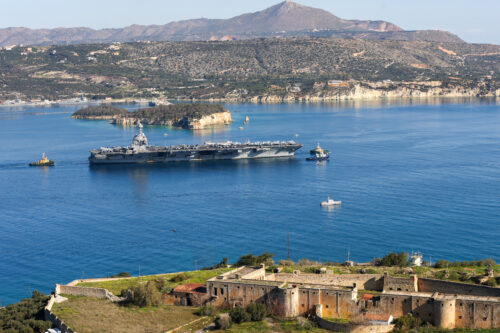
This report explores maritime security conditions in the Mediterranean and the evolving US engagement in the region. As critical infrastructure becomes increasingly vulnerable to sabotage, freedom of navigation is undermined by conflict, and energy disputes generate tension, US policy focus on the region has become fragmented and disengaged. The authors call for a sustained American role to strengthen maritime domain awareness, allied coordination, infrastructure protection, and the capacity to respond when Mediterranean crises affect US and transatlantic interests.
The Multiple Costs of the US–Iran War – From Hormuz to Europe and South Asia: The Widening Economic and Political Geography of the Conflict
Wars are decided by those who hold military power, but their costs are increasingly borne by those who have little or no voice in the decisions that start them. The US–Iran war shows this imbalance very clearly. Its economic consequences have gone far beyond the battlefield and have disrupted energy markets, trade routes, food supplies, public finances and investment in the Gulf, Europe, Africa and Asia. The most striking feature of the conflict, however, is not only the size of the damage but its very unequal distribution.
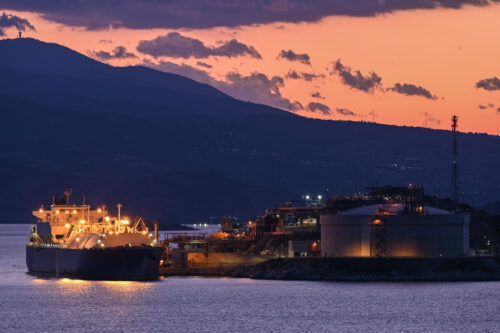
In less than two decades, a string of offshore discoveries has turned the Eastern Mediterranean into a significant gas-producing region, making Israel an exporter, twice lifting Egypt into the ranks of liquefied natural gas (LNG) exporters, and giving Cyprus finds it has yet to bring to market. This backgrounder explores the potential and challenges of exploiting and managing LNG resources in the region.
This Opinion was first published on Reuters.com on October 11, 2012
Assertions and opinions in this policy paper are solely those of the above-mentioned author(s) and do not necessarily reflect the views of the Middle East Institute, which expressly does not take positions on Middle East policy.
After Benghazi: Diplomacy With a State; War Within
This article was first published by The Huffington Post on October 2, 2012
Assertions and opinions in this publication are solely those of the above-mentioned author(s) and do not necessarily reflect the views of the Middle East Institute, which expressly does not take positions on Middle East policy.
Libya, the third largest country in the African continent (1.75 million km²), shares 4,400 km of border with six other countries, four of which are Arab countries. It has a vast coastal area on the Mediterranean (nearly 2,000 km). For such a large country, its population density is very thin — there are barely six million inhabitants.
Slain U.S. Ambassador Thrived On Tough Assignments
This story first appeared on NPR.com on September 12, 2012
Chris Stevens, the U.S. ambassador killed in an attack on the U.S. consulate in Benghazi, Libya, was a very special diplomat. He made a career of going to difficult places and insisting that he witness tumultuous events firsthand.
Stabilizing the Sinai Peninsula – An Agenda For Action
MEI Podcast, 7 September, 2012 Foundation for Middle East Peace, Middle East Institute, Churches for Middle East Peace, and Americans for Peace Now invite you to a program Stabilizing the Sinai Peninsula – An Agenda For Action with Ambassador (ret.) Arthur Hughes Former Director General of the Sinai Multinational Forces and Observers (MFO) and Geoffrey Aronson Director for Research and Publications Foundation for Middle East Peace Friday September 7, 12:00-1:30 PM Carnegie Endowment for International Peace 1779 Massachusetts Ave., NW Washington, DC Rising lawlessness and violence and an inc
The first volume of the migration and the Arab World series dealt primarily with the trends in, consequences of, and policy responses to labor migration in the Gulf Cooperation Council (GCC) states since the “oil boom” period of the 1970s. This volume focuses on the countries of the Mashreq (i.e., Egypt and the Levant) as source and destination countries for various migrant groups, dating from the late 19th century up to the present day.
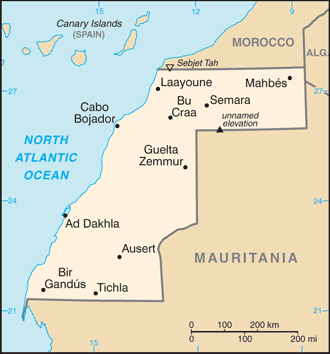
Western Sahara: It’s Time for the People to Choose
The latest diplomatic dance on whether or not former US Ambassador Christopher Ross should be allowed to continue to mediate UN-led talks between the Frente Polisario and Morocco on the future of Western Sahara is symptomatic of a much bigger problem ― the large powers’ unwillingness to advance an end to a dispute that they mistakenly see as peripheral to their strategic interests, and their resultant acquiescence in the brutal and illegal occupation of Western Sahara by Morocco for more than 35 years.
Iran’s President Mahmoud Ahmadinejad had high hopes for the visit to Tehran by new Egyptian President Mohamed Morsi. His trip on Thursday for the Non-Aligned Movement (NAM) summit might have been brief — his spokesman emphasized ahead of time that he would spend only four hours on Iranian soil, including getting stuck in traffic — but Iran’s leaders relished the opportunity to demonstrate progress in overcoming its isolation in the Arab world and to gain some democratic and revolutionary legitimacy by proxy.
Informal Governance and Role of State in Cities in Developing Countries: Comparing Karachi and Cairo
The 21st century has been called the “Century of the City,” as half of the world’s population lives in urban areas.[1] Virtually all of the projected global population growth will be in cities of the developing world, and most of it will be concentrated in informal settlements.
The oldest peer-reviewed publication dedicated to the study of the modern Middle East, MEI’s flagship journal covers politics, society, and culture in the region.