Reflections on a Diplomatic Career in the Middle East: A Conversation With Ambassador Yael Lempert
Brian is joined by Amb. (ret.) Yael Lempert, Vice President for Outreach at MEI, to discuss her career in diplomacy and the importance of US diplomatic efforts abroad. She shares stories from postings across the Middle East in Baghdad, Cairo, Tripoli, Jerusalem, and Amman and examines how her personal and professional experiences shaped her approach to the work. Together, Brian and Yael discuss the realities of life in the Foreign Service, the core tenets of American diplomacy, and why it matters in today’s Middle East.
This summer, brutally hot temperatures, deepening water scarcity, and spiking fertilizer costs have put North Africa’s agricultural sector under intense pressure. Host Alistair Taylor is joined by Mohammed Mahmoud, CEO and founder of the Climate and Water Initiative and lead for Middle East Climate and Water Policy at the United Nations University Institute for Water, Environment, and Health, to unpack the region’s food and water security challenges. Drawing on Mahmoud’s new report card on agricultural sustainability in North Africa, they explore the diverging picture across the region, why some countries have weathered the strain better than others, and what it will take to build a more resilient and secure food system.
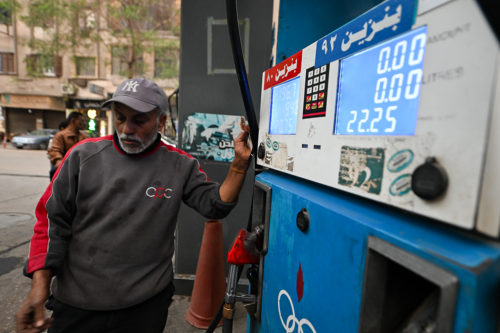
Battered but Still Standing, Egypt Tries to Weather the Economic Ravages of the Iran War
While Egypt is not in the direct line of fire in the US-Israeli war with Iran, its economy is acutely vulnerable to the conflict. In addition to the rising energy prices and shortages that have affected much of the world, it also struggled with issues that reflected its economy’s own underlying structural vulnerabilities.
Significant numbers of Egyptians again poured into the streets on July 26 in response to Defense Minister Abdul-Fattah el-Sisi’s call to demonstrate “against terrorism.” While some may argue over the merit of el-Sisi’s call, the deluge of people into the streets reflects a rejection of what they believe is a Brotherhood campaign of political violence waged not just against security forces but against civilians.
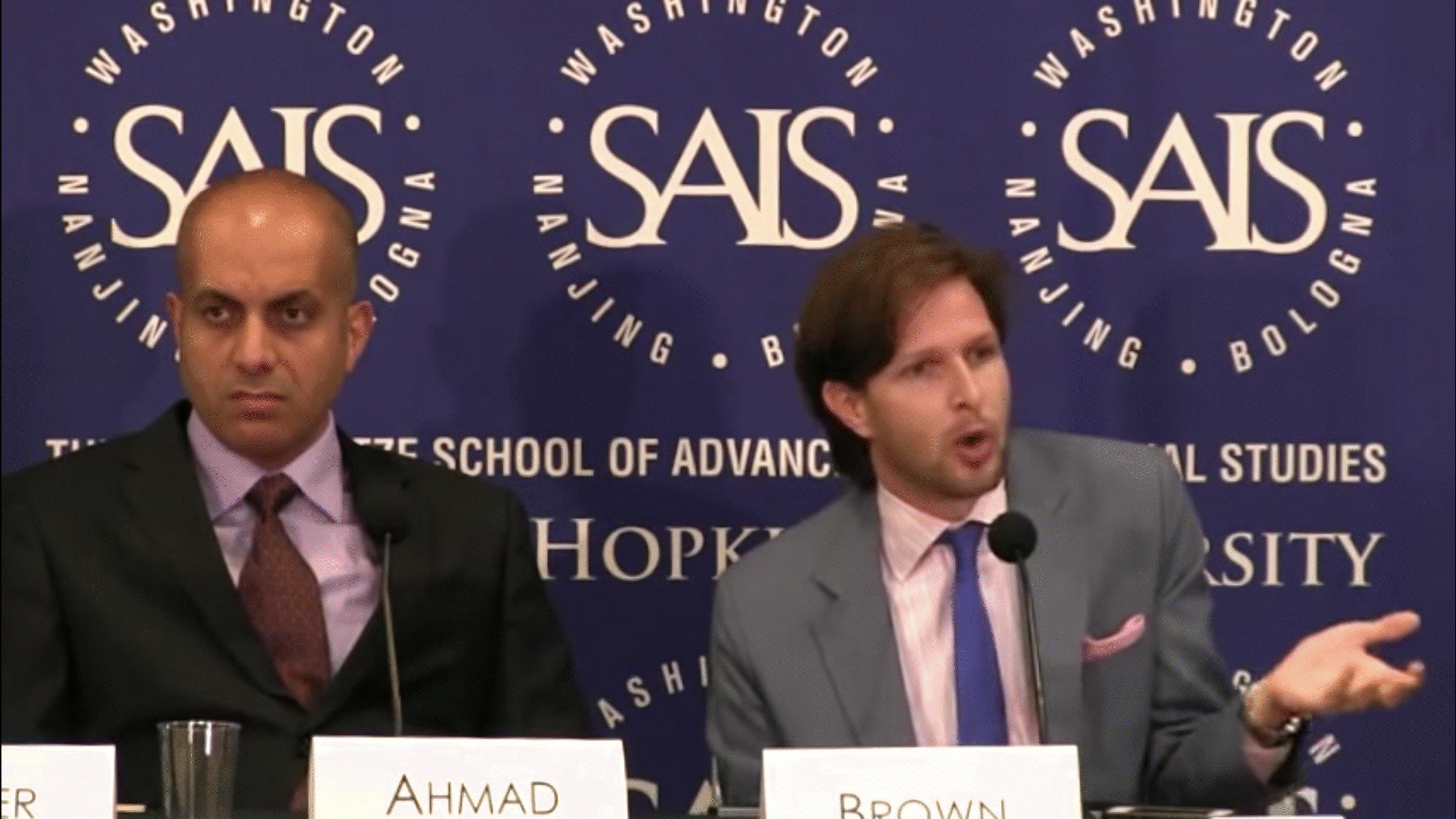
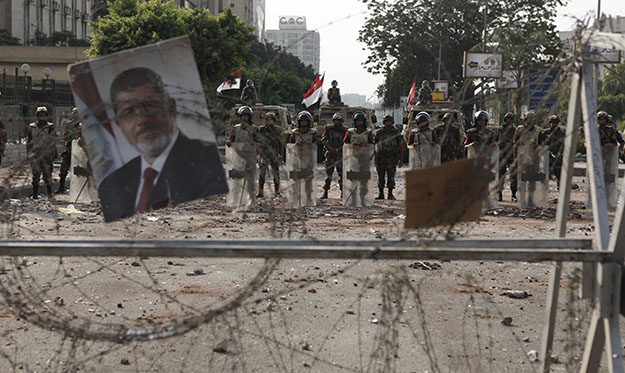
The Middle East Institute, in conjunction with the Conflict Management Program at SAIS, is pleased to welcome Dr. Ahmad Atif Ahmad, Professor of Religious Studies at the University of California, Santa Barbara, and Dr. Jonathan A. Brown, Associate Professor of Islam and Muslim-Christian Understanding at the Edmund A. Walsh School of Foreign Service, for a discussion about the thinking and strategy of Islamist actors in Egypt in the wake of Egyptian president Mohamed Morsi’s ouster.
The Middle East Institute, in conjunction with the Conflict Management Program at SAIS, is pleased to welcome Dr. Ahmad Atif Ahmad, Professor of Religious Studies at the University of California, Santa Barbara, and Dr. Jonathan A. Brown, Associate Professor of Islam and Muslim-Christian Understanding at the Edmund A. Walsh School of Foreign Service, for a discussion about the thinking and strategy of Islamist actors in Egypt in the wake of Egyptian president Mohamed Morsi’s ouster.
The Middle East Institute, in conjunction with the Conflict Management Program at SAIS, is pleased to welcome Dr. Ahmad Atif Ahmad, Professor of Religious Studies at the University of California, Santa Barbara, and Dr. Jonathan A. Brown, Associate Professor of Islam and Muslim-Christian Understanding at the Edmund A. Walsh School of Foreign Service, for a discussion about the thinking and strategy of Islamist actors in Egypt in the wake of Egyptian president Mohamed Morsi’s ouster.
The Middle East Institute, in conjunction with the Conflict Management Program at SAIS, is pleased to welcome Dr. Ahmad Atif Ahmad, Professor of Religious Studies at the University of California, Santa Barbara, and Dr. Jonathan A. Brown, Associate Professor of Islam and Muslim-Christian Understanding at the Edmund A. Walsh School of Foreign Service, for a discussion about the thinking and strategy of Islamist actors in Egypt in the wake of Egyptian president Mohamed Morsi’s ouster.
The Middle East Institute, in conjunction with the Conflict Management Program at SAIS, is pleased to welcome Dr. Ahmad Atif Ahmad, Professor of Religious Studies at the University of California, Santa Barbara, and Dr. Jonathan A. Brown, Associate Professor of Islam and Muslim-Christian Understanding at the Edmund A. Walsh School of Foreign Service, for a discussion about the thinking and strategy of Islamist actors in Egypt in the wake of Egyptian president Mohamed Morsi’s ouster.
The United States government announced last week that it would not, after all, make a determination as to whether the ouster of Egypt’s Mohamed Morsi constituted a “coup.”[1] This decision has both important strategic and financial implications for the United States. By not designating Morsi’s expulsion as a military coup, U.S. law allows the United States to continue its $1.5 billion in annual aid to Egypt.
Earlier this month, Interim President Adli Mansour appointed Judge Mohamed Amin el-Mahdi as Egypt’s first-ever Minister of Transitional Justice and National Reconciliation. It’s an encouraging move for a country that has, for decades, endured an oppressive environment of fear due to successive regimes’ use of power and the security apparatus to suppress and torture dissidents. After Hosni Mubarak’s ouster in 2011, many Egyptians hoped that their long list of abused rights could find justice, but until now very little has been accomplished.
The Future of Democracy in Egypt: Notes from the Ground
The Middle East Institute is proud to host Sahar F. Aziz, associate professor of Law at Texas Wesleyan University, and Mirette F. Mabrouk, deputy director for Regional Programs at the Atlantic Council’s Rafik Hariri Center for the Middle East, for a discussion about the impact and implications of the ouster of President Mohamed Morsi. Mirette Mabrouk will provide a macro-perspective of the current situation and discuss some of the key turning points that precipitated the recent crisis.
The Future of Democracy in Egypt: Notes from the Ground
The Middle East Institute is proud to host Sahar F. Aziz, associate professor of Law at Texas Wesleyan University, and Mirette F. Mabrouk, deputy director for Regional Programs at the Atlantic Council’s Rafik Hariri Center for the Middle East, for a discussion about the impact and implications of the ouster of President Mohamed Morsi. Mirette Mabrouk will provide a macro-perspective of the current situation and discuss some of the key turning points that precipitated the recent crisis.
The Future of Democracy in Egypt: Notes from the Ground
The Middle East Institute is proud to host Sahar F. Aziz, associate professor of Law at Texas Wesleyan University, and Mirette F. Mabrouk, deputy director for Regional Programs at the Atlantic Council’s Rafik Hariri Center for the Middle East, for a discussion about the impact and implications of the ouster of President Mohamed Morsi. Mirette Mabrouk will provide a macro-perspective of the current situation and discuss some of the key turning points that precipitated the recent crisis.
The Future of Democracy in Egypt: Notes from the Ground
The Middle East Institute is proud to host Sahar F. Aziz, associate professor of Law at Texas Wesleyan University, and Mirette F. Mabrouk, deputy director for Regional Programs at the Atlantic Council’s Rafik Hariri Center for the Middle East, for a discussion about the impact and implications of the ouster of President Mohamed Morsi. Mirette Mabrouk will provide a macro-perspective of the current situation and discuss some of the key turning points that precipitated the recent crisis.
The oldest peer-reviewed publication dedicated to the study of the modern Middle East, MEI’s flagship journal covers politics, society, and culture in the region.