This summer, brutally hot temperatures, deepening water scarcity, and spiking fertilizer costs have put North Africa’s agricultural sector under intense pressure. Host Alistair Taylor is joined by Mohammed Mahmoud, CEO and founder of the Climate and Water Initiative and lead for Middle East Climate and Water Policy at the United Nations University Institute for Water, Environment, and Health, to unpack the region’s food and water security challenges. Drawing on Mahmoud’s new report card on agricultural sustainability in North Africa, they explore the diverging picture across the region, why some countries have weathered the strain better than others, and what it will take to build a more resilient and secure food system.
After over a decade of division between rival factions in eastern and western Libya, the Trump administration has put forward a plan to unite the two sides through a power-sharing agreement. Hosts Alistair Taylor and Matthew Czekaj are joined by MEI Distinguished Diplomatic Fellow Jonathan M. Winer to unpack the details of this proposal and its potential consequences for the Libyan people. Winer, who served as United States Special Envoy for Libya, offers analysis of the plan’s viability, the response of various actors on the ground, and whether it can stabilize the country and help resolve its deep-seated challenges.
Libya’s Fragile Equilibrium: Succession Risk and Energy Stability
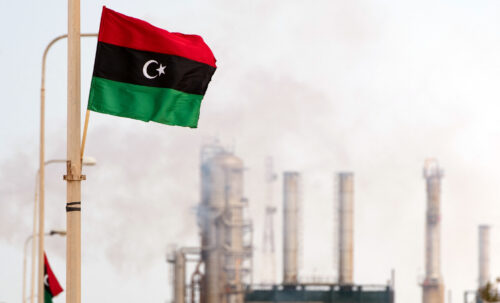
Libya’s stability has taken on renewed strategic importance as the impact of the US and Israeli war with Iran reverberates through global energy markets. Sustaining existing Libyan oil production depends on a governing arrangement capable of keeping ports open, pipelines flowing, and revenues distributed without triggering conflict.
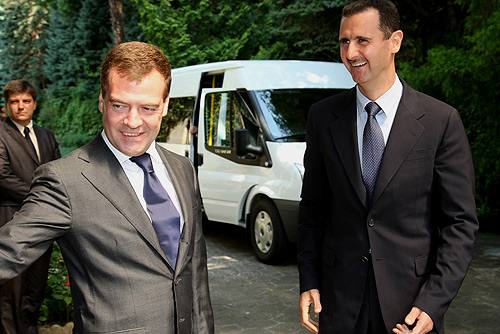
The Russian government, like its counterparts in the West, the Middle East, and elsewhere, was caught off guard by the outburst of Arab uprisings beginning in January 2011 that swept away long-ruling authoritarian regimes in Tunisia, Egypt, Libya, and (it appears) Yemen, and have threatened to topple those in Bahrain and Syria. The response of the Russian government to these events has, like that of Western governments, often been confused and inconsistent. Just as Western governments have done, Moscow has sought to protect its interests in the region.
Introduction to Revolution and Political Transformation in the Middle East: Government Action and Response
Originally posted September 2011
On August 21, 2011, rebel forces in Libya rolled into the capital Tripoli, seemingly finishing off months of armed combat and foreign intervention and bringing down yet another Arab head of state. At the same time, sporadic but violent repression of protests in Syria continues, while other states remain calm or have seen their protest movements fizzle. We open this second volume of our series, Revolution and Political Transformation¸ at a time of uncertainty and transition for the region.
In his article for NPR.com, Middle East Institute scholar Greg Myre examines the new dynamics of war reporting. As the nature of warfare shifts from traditional army-to-army combat to more assymetrical government vs. non-state opposition warfare, journalists are having to embed – alone – with rebels groups in order to get the story. In the wake of multiple journalist deaths in Syria, Myre looks at the increasing risk faced by war correspondents in covering the front lines of conflict.
The oldest peer-reviewed publication dedicated to the study of the modern Middle East, MEI’s flagship journal covers politics, society, and culture in the region.