This summer, brutally hot temperatures, deepening water scarcity, and spiking fertilizer costs have put North Africa’s agricultural sector under intense pressure. Host Alistair Taylor is joined by Mohammed Mahmoud, CEO and founder of the Climate and Water Initiative and lead for Middle East Climate and Water Policy at the United Nations University Institute for Water, Environment, and Health, to unpack the region’s food and water security challenges. Drawing on Mahmoud’s new report card on agricultural sustainability in North Africa, they explore the diverging picture across the region, why some countries have weathered the strain better than others, and what it will take to build a more resilient and secure food system.
From Brightest Hope to Open-Air Prison: How Tunisia Lost Its Democratic Promise
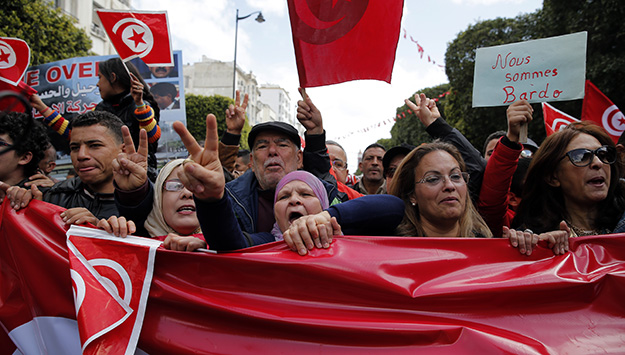
Thousands of Tunisians marched in the capital last week against what they called ‘injustice and repression,’ accusing President Kais Saied of cementing one-man rule through the police and judiciary. The protest is part of a wider wave of unrest—journalists, NGOs, fractured political parties, doctors, bankers, and transport workers all say Saied has turned the country into an open-air prison and demand relief from Tunisia’s deepening political and economic crisis.
Sovereignty first: Reshaping international cooperation in North Africa
Countries in North Africa and around the world are increasingly prioritizing a strict definition of sovereignty and tending toward transactional diplomacy. Understanding the motivations behind North Africa’s “sovereignty-first” approach can help the United States and Europe build mutually beneficial and durable links with the region in this new reality.
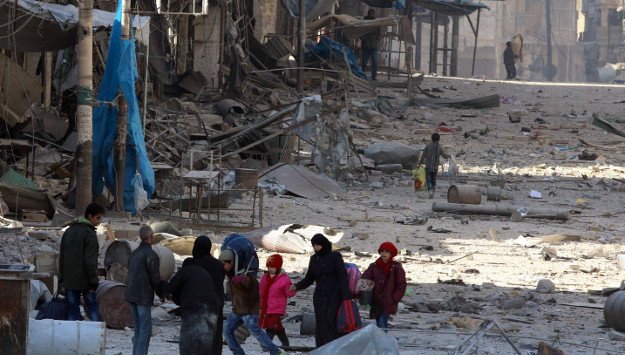
In this week’s Monday Briefing, MEI experts Charles Lister, Yousef Munayyer, and Mabrouka M’Barek provide analysis on recent and upcoming events including the Assad regime’s advances in Aleppo, Fatah’s annual conference, and Tunisia’s upcoming conference for its economic plan.
To be a cinephile in Tunis is a patriotic act. Tunisians came out in droves to last year’s Carthage Film Festival, which occurred a day after a terror attack targeting security forces.
“Everyone came out in defiance of the situation, to show their solidarity and love of cinema,” Tunisian journalist and festival staffer Yosr Hazgui said.
“Together for Tunisia”: Tribal Structures and Social and Political Mobilization
This essay demonstrates that national unity was constructed and utilized as a tool by the Tunisian state for the purpose of consolidating power, and that traditional kin-based and family ties have existed parallel to the formal structures of both the state and civil society as frames for social and political activity.The essay shows that these historical frames for organization were revitalized and renewed after the popular uprising in 2011.
Tunisia's Evolving Islamic Charitable Sector and Its Model of Social Mobilization
This essay discusses the evolution of Islamic charities in Tunisia since 2011 as new actors of associational life. In particular, it considers the extent to which they represent an alternative model of social mobilization.
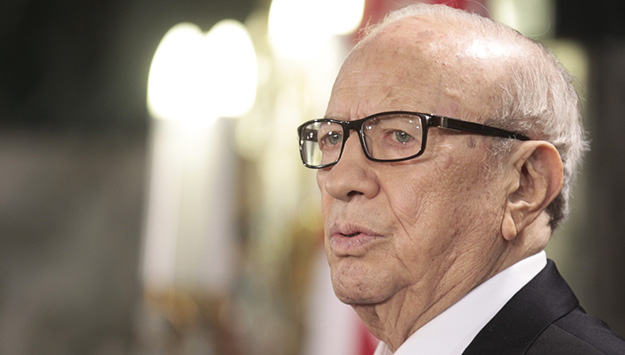
Essebsi’s Power Grab Imperils Tunisia’s Nascent Democracy
The Tunisian parliament on August 27 endorsed the new government led by Youssef Chahed, a month after the assembly dismissed the previous Essid government.
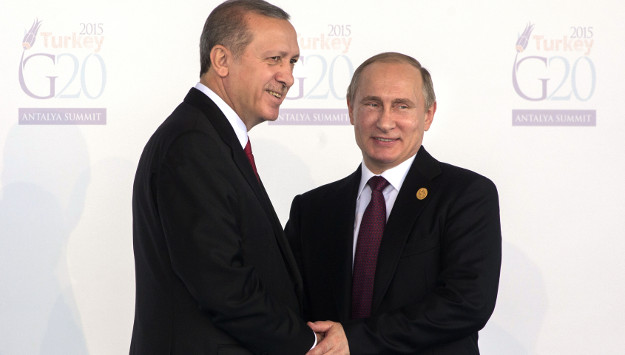
Monday Briefing: Erdogan Reaching Out to Russia; Update on Battle for Aleppo
In this week’s Monday Briefing MEI experts provide analysis on recent and upcoming events including Turkish President Erdogan’s trip to Russia tomorrow, Iranian President Rouhani’s upcoming meeting with President Putin in Baku, the ongoing battle for Aleppo, strains in U.S.-Pakistan relations over the Haqqani Network, and what’s next for Tunisia’s political transition following the vote of no confidence in the current government.
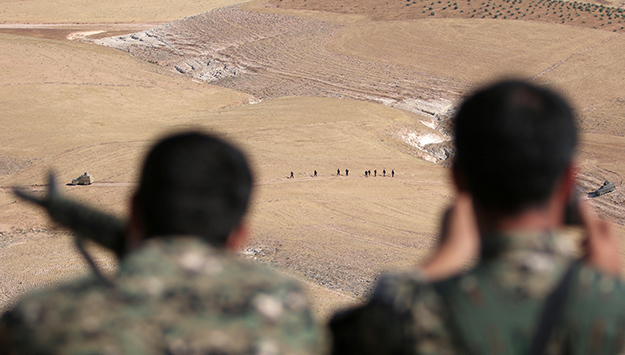
Monday Briefing: Manbij Offensive, Yemen Talks, Turkey-Israel, Tunisia Unity Government
In this week’s Monday Briefing, MEI experts Robert S. Ford, Charles Schmitz, Gonul Tol, and Mabrouka M’Barek provide analysis on recent events including Manbij offensive, Yemen talks, Israel-Turkey rapprochement, and Tunisia national unity government.
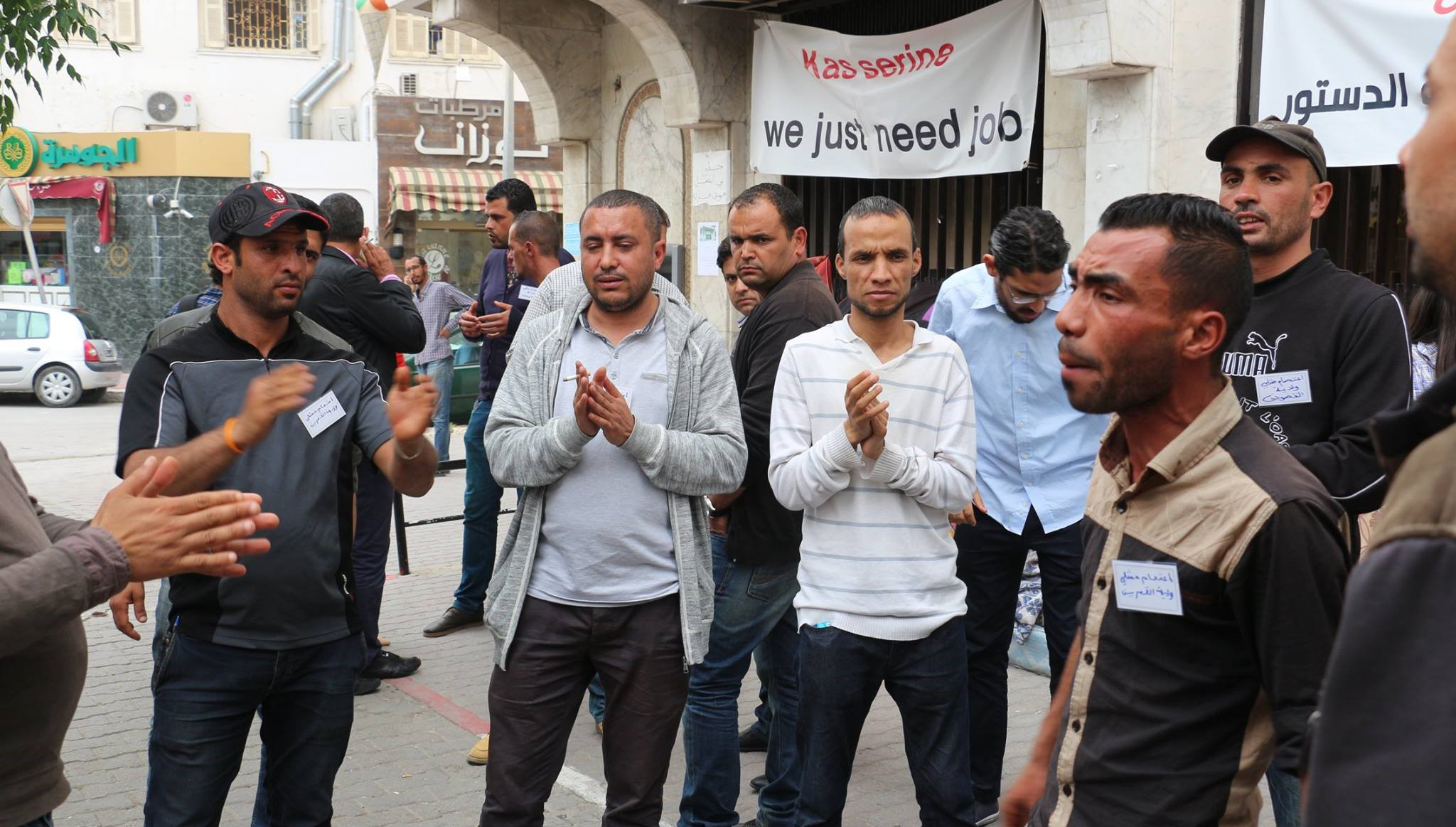
More Jobs, Higher Wages Essential for Tunisian Growth
U.N. Secretary-General Ban Ki-moon was in Tunisia last month to participate in the first round of the National Dialogue on Employment, which gathered 270 representatives of the government, political parties, unions, civil society and experts.. The participation of the secretary-general underscores the international importance of preserving Tunisia’s democratic gains, as well as the U.N.’s hope to offer Tunisia as a successful model of reform for the region.
Monday Briefing: Iraq's Political Storm and U.S. Efforts to Salvage the Syrian Cease-fire
In this week’s Monday Briefing, MEI experts Hassan Mneimneh, Robert S. Ford, and Mabrouka M’Barek provide analysis on recent events including Iraq’s political storm, efforts to salvage the Syrian cease-fire, and the first Tunisia-U.S. Joint Economic Commission meeting starting later this week.
Tunisia is facing multiple pressures that, if not handled well by its current leaders, could undermine its stability as it continues to grapple with the post-Arab Spring era. The March 7 attack on Ben Gardane in Tunisia was a vivid reminder that the threat of ISIS and other extremist groups with safe haven in Libya is alive and well.
Women’s Rights Organizations and Democratic Transitions: North Africa and Southeast Asia Compared
This paper spotlights women’s rights organizations as key players in civil society in Tunisia and Morocco, with a comparative glance at the Philippines and South Korea, two Asian participants in democracy’s third wave. Applying the existing literature on women, gender, and democratic transitions, we draw attention to the role of women’s rights organizations in civil society and as agents of democratization; examine the organizations’ role and influence during protests and transitions; and analyze the gendered outcomes in terms of laws and policies affecting women’s rights.
At face value, the targets of the Bardo Museum attack on March 18 in Tunis were Tunisia and the West, the former as the sole survivor of the “Arab Spring,” a country that has been successful in bridging the transition toward a democratic order, and the latter as the foe that radical Islamism seeks to defeat and supplant. A more extreme secular reading of the event may even see in it a punishment for Tunisia for having denied Islamist parties the coveted electoral victory and a reminder that, even from the margins, Islamism will dictate the course of the nation.
Tunisia will hold its first presidential elections on Sunday, November 23. Main candidates include former Interim Prime Minister Beji Caid Essebsi of the Nidaa Tounes Party, Moncef Marzouki of the Congress for the Republic (CPR), and Mustapha Kamel Nabli, a former governor of the Central Bank of Tunisia. The Islamist Ennahda party did not present a candidate, wrongly assuming that it would regardless become the strongest voice in politics.
The oldest peer-reviewed publication dedicated to the study of the modern Middle East, MEI’s flagship journal covers politics, society, and culture in the region.