Skip to Content

Analysis

Filter by
5934 Results
The Rhetoric of “Civilization” in Chinese–Egyptian Relations
  • Analysis
  • The Rhetoric of “Civilization” in Chinese–Egyptian Relations

    Chinese authorities have a long history of trying to highlight their historical heritage in their interactions with other countries. Nowhere is this phenomenon more evident than in China’s relations with Egypt, another country that can claim descent from ancient heritage. Chinese and Egyptian leaders speak to each other not merely on behalf of their own governments, but also as the representatives of grand civilizations stretching millennia into the past. By tracing how Chinese and Egyptian thinkers and policymakers have discussed one another’s claims about their connections to ancient civilizations since the early twentieth century, it is possible to understand in greater detail the evolution of the rhetoric that facilitates Sino–Egyptian relations.
    August 1, 2017

    Iran Complains to U.N. over Latest U.S. Sanctions, Threatens Firm Response
  • Analysis
  • Iran Complains to U.N. over Latest U.S. Sanctions, Threatens Firm Response

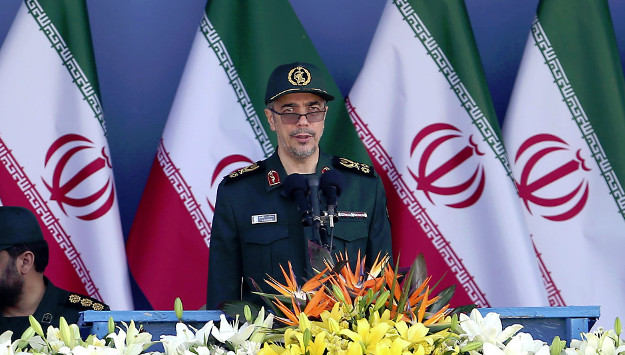
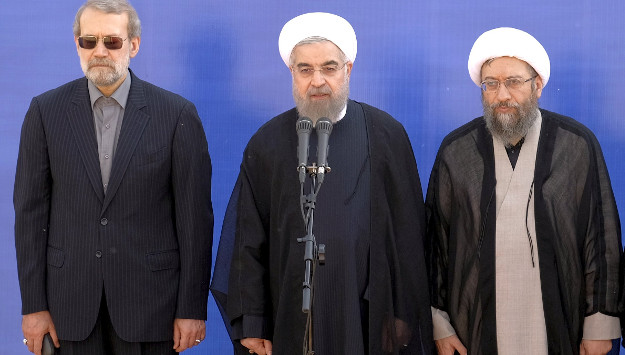
    Iranian Parliament Speaker Ali Larijani said today that the country’s committee monitoring the Joint Comprehensive Plan of Action – the nuclear agreement Iran signed with the United States and five other world powers two years ago – has determined that the latest U.S. sanctions violate the accord and added that the committee has filed a complaint with the Iran-P5+1 Joint Commission about it.

    August 1, 2017

    Iran-Backed Iraqi Militia Leader Intensifies Propaganda against U.S. and Its Allies
  • Analysis
  • Iran-Backed Iraqi Militia Leader Intensifies Propaganda against U.S. and Its Allies

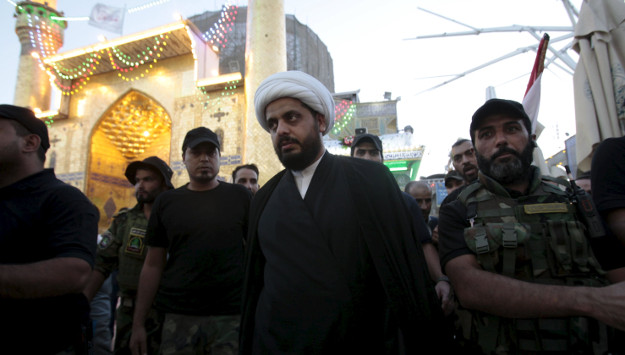
    Qais al-Khazali, the secretary-general of Iraq’s Asaib ahl al-Haq armed group, has accused the United States, Israel, Saudi Arabia and Turkey of supporting the Islamic State in Iraq and the broader region, according to Iran’s Fars News Agency. “The heroic forces of Hashd al-Shaabi [Popular Mobilization Forces] easily chop the heads of these forces,” he said while describing the Islamic State as the “special forces” of the United States and its allies.

    August 1, 2017

    Influential Iraqi Cleric Muqtada al-Sadr’s Saudi Visit Triggers Worries in Tehran
  • Analysis
  • Influential Iraqi Cleric Muqtada al-Sadr’s Saudi Visit Triggers Worries in Tehran

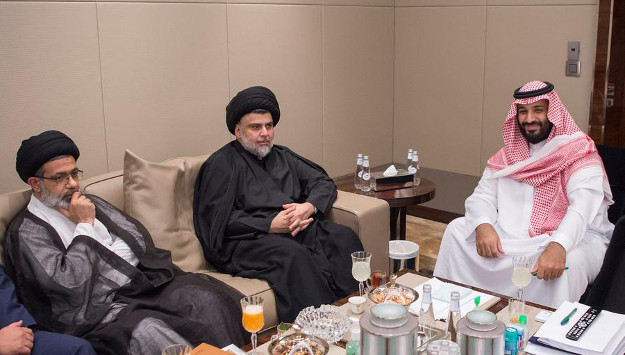
    Prominent Iraqi Shiite cleric Muqtada al-Sadr’s weekend visit to Saudi Arabia has raised concerns in Tehran. While the Iranian government and media outlets affiliated with the Islamic Revolution Guards Corps (I.R.G.C.) largely refrained from commenting on Sadr’s trip and his meeting with Saudi Arabia’s Crown Prince Mohammad bin Salman, some conservative newspapers and Iranian analysts cautioned that the Saudi government is attempting to court Iraqi Shiite leaders to influence Iraqi politics at the expense of Iran’s interests.

    Leaning toward Riyadh?

    July 31, 2017

    Netanyahu's Shrewd Political Game Behind Jerusalem Violence
  • Analysis
  • Netanyahu's Shrewd Political Game Behind Jerusalem Violence

    Jerusalem’s Old City is a tinderbox that could  set off a regional conflagration. This is a demonstrably true statement: when Ariel Sharon, then an opposition politician, stood surrounded by security guards on the steps in front of the Dome of the Rock in September 2000, and proclaimed that it would remain in Israeli hands forever, the consequence of his populist blustering was the Second Intifada.

    July 31, 2017

    New Saudi Outreach with Iraqi Shiite Leaders | Monday Briefing
    Middle East Institute
  • Analysis
  • New Saudi Outreach with Iraqi Shiite Leaders | Monday Briefing

    In this week’s Monday Briefing, MEI experts Randa Slim, Paul Salem, and Marvin G. Weinbaum analyze new Saudi diplomatic engagement with Iraq, the escalating G.C.C. crisis, and the continuation of dynastic politics in Pakistan.

    Saudi Reaches out to Iraqi Shiite Leaders
    Randa Slim, Director of the Initiative for Track II Dialogues

    July 31, 2017

    India’s Middle Eastern Naval Diplomacy
    Middle East Institute
  • Analysis
  • India’s Middle Eastern Naval Diplomacy

    This essay examines India’s recent naval diplomatic forays in the Middle East within the broader context of its strategy to strengthen maritime cooperation across the Asian littorals. The essay describes the activities comprising India’s expanding naval operations in the Arabian Sea and maritime cooperation with the G.C.C. states and with Iran, and discusses the strategic imperatives that are driving these efforts, as well as the limits to India’s raising its security profile.

    July 27, 2017

    Women in Idlib Challenge Islamic Extremists
  • Analysis
  • Women in Idlib Challenge Islamic Extremists

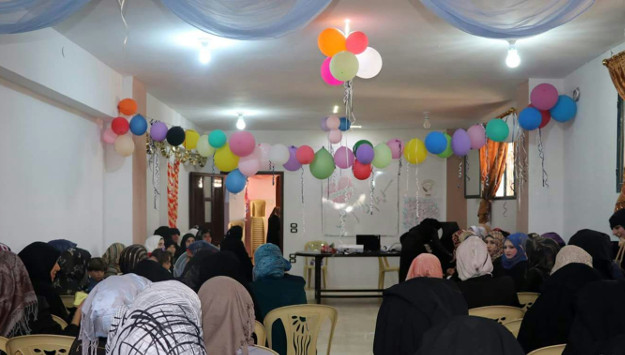
    In the middle of the main market in Idlib City, during one of the busiest days of the year, Eid day, Amal, a local resident, was stopped by the Islamic police. She was chastised because of her refusal to wear the required long dark coat, the mantou. Instead of looking down or profusely apologizing, Amal shot back at the Islamic police that is affiliated with Jaish al-Fatah, “No one has anything to do with what I wear!

    July 26, 2017

    Red Sea Islands Deal Undermines Arab Peace Initiative
  • Analysis
  • Red Sea Islands Deal Undermines Arab Peace Initiative

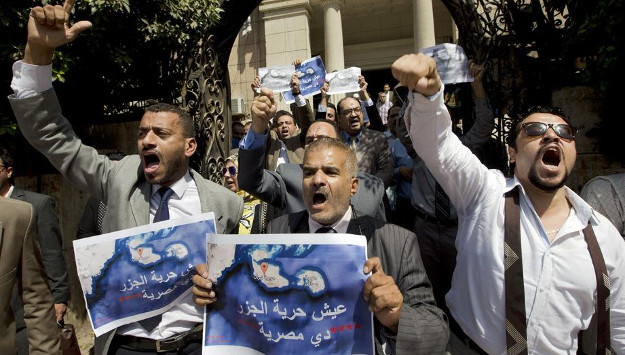
    The Saudi-led Arab Peace Initiative is losing its value in the wake of Egypt’s decision to return the Red Sea islands of Tiran and Sanafir to Saudi Arabia, and the latter’s participation as a security guarantor of the Egypt-Israel peace treaty.

    Last month, the Egyptian parliament, bucking widespread public and institutional opposition, acknowledged Saudi sovereignty over the islands.

    Most attention has focused on the dispute over sovereignty, which has been under Egyptian administration for more than half a century. But the real significance of the deal lies elsewhere.

    July 25, 2017

    U.S. Absent as Israel-Palestine Violence Escalates | Monday Briefing
    Middle East Institute
  • Analysis
  • U.S. Absent as Israel-Palestine Violence Escalates | Monday Briefing

    In this week’s Monday Briefing, MEI experts Eran Etzion, W. Robert Pearson, Charles Lister, Alex Vatanka, and Randa Slim weigh in on the implications of Israel-Palestinian violence for U.S. foreign policy, Turkish involvement in the Gulf crisis, al-Qaeda’s response to the U.S. decision to terminate support for a program arming anti-Assad Syrian rebels, confrontational U.S. policy towards the Iran nuclear deal, and a former Iraqi Prime Minister’s power play.

    Israeli Sisters Make Yemenite Music Cool Again
  • Analysis
  • Israeli Sisters Make Yemenite Music Cool Again

    Yemenite pop music has seen a resurgence. The band A-Wa (pronounced “ai-wah,” informal Arabic for “yes!”) and their infectious blend of Yemenite folk, electronic, and hip-hop music can be heard all over the world—from Cairo taxi cabs to Dubai pool parties and Parisian nightclubs. The band, whose mission is to elevate Yemenite music on the international stage, is composed of three Israeli sisters of Yemenite heritage.

    July 20, 2017

    Reverse Moralism and the Response to the Syrian Refugee Crisis
  • Analysis
  • Reverse Moralism and the Response to the Syrian Refugee Crisis

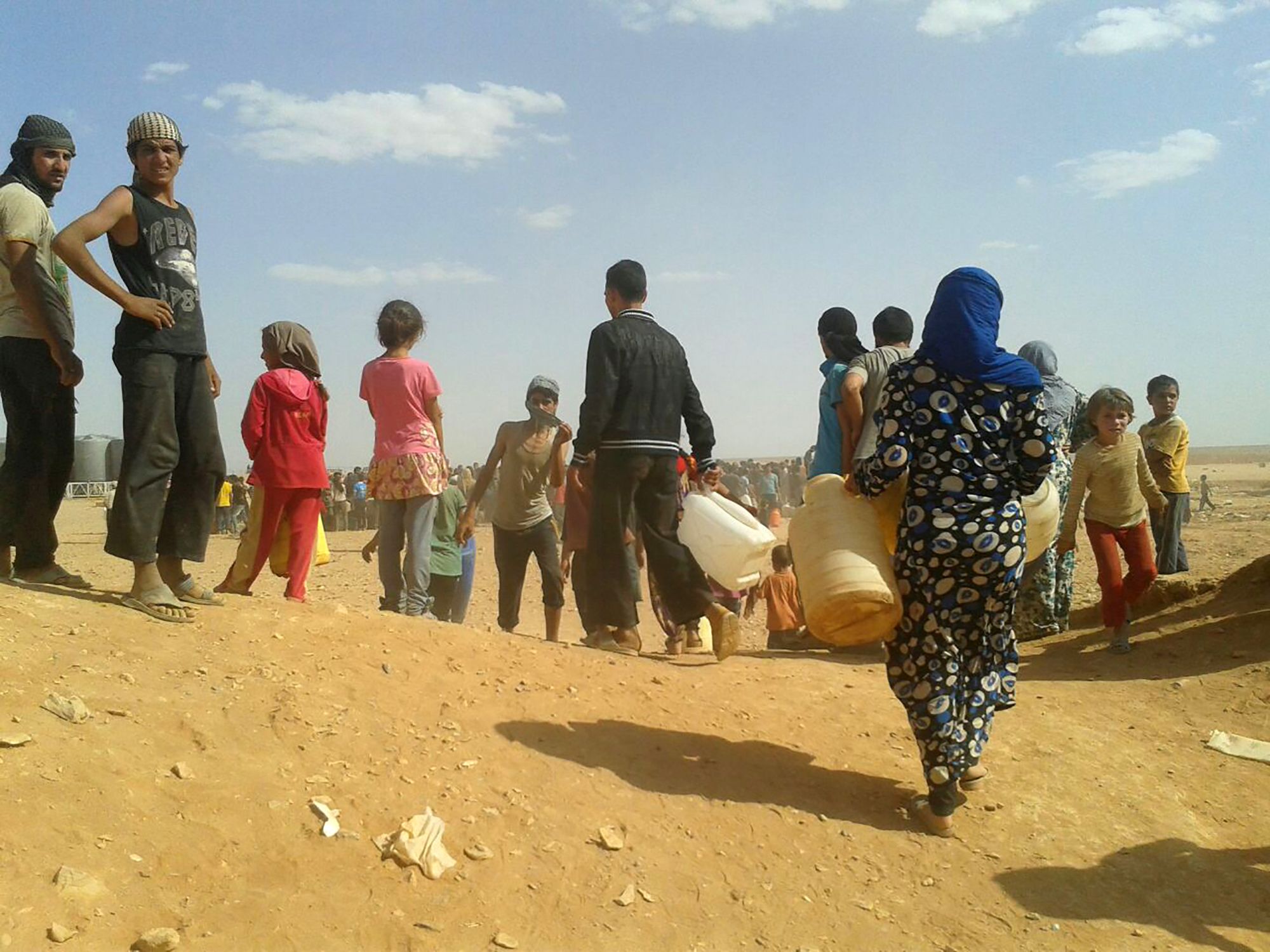
    Non-refoulement is a well-recognized principle of customary international law that forbids the forced deportation of refugees and asylum seekers to their country of origin. This essay discusses the increasingly common practice of refoulement in Jordan and the circumstances in which this development is taking place.

    July 20, 2017

    Can Avi Gabbay Revive Labor’s Fortunes in Israel?
  • Analysis
  • Can Avi Gabbay Revive Labor’s Fortunes in Israel?

    Avi Gabbay, the new leader of Israel’s Labor party, stormed through his first primaries with surprising ease. Fifty-two percent of the 30,000 actual voters decided to crown the new contender, who only joined their party seven months ago. Gabbay, a former minister for environmental protection in Netanyahu’s government and a member of the center-right “Kulanu” (“All of Us”) party, had resigned in May 2016, citing “wrongdoings” in connection with the government’s natural gas policies.

    Debt-Ridden and Broke: The Syrian Regime’s Colossal Reconstruction Challenge
  • Analysis
  • Debt-Ridden and Broke: The Syrian Regime’s Colossal Reconstruction Challenge

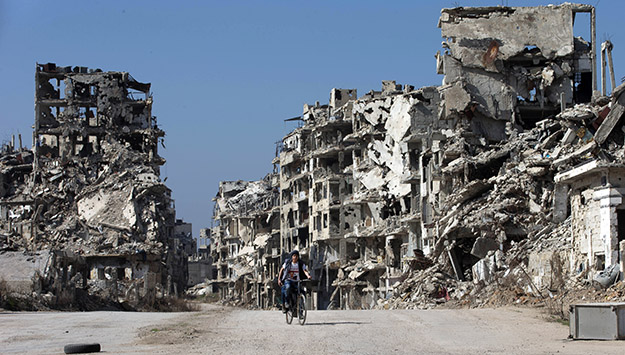
    As the Syrian civil war—at least from Damascus’s point of view—enters its final stages, the Assad regime will likely begin looking beyond narrow military goals, and focus more on the socio-economic stability and viability of its captured statelet. After six years of war, the Syrian regime finds itself in a disastrous fiscal situation, unable to shift funds to meet humanitarian and stabilization needs.

    July 18, 2017