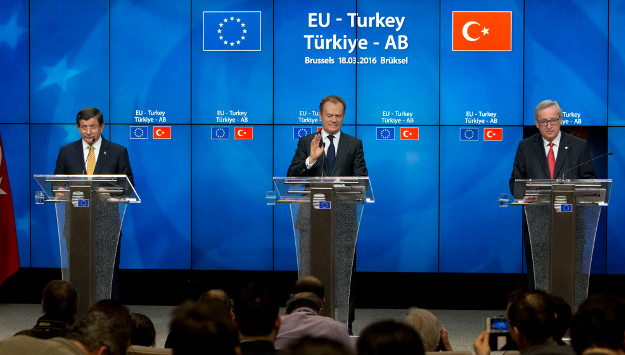
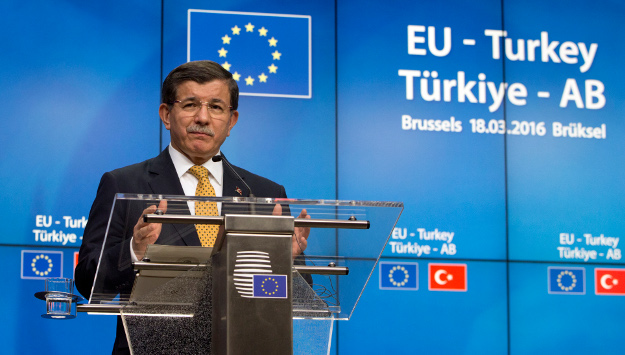
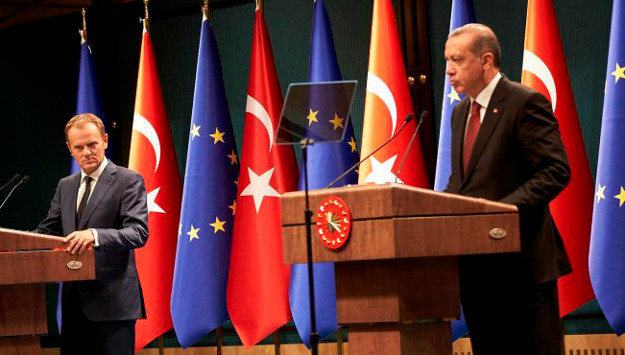
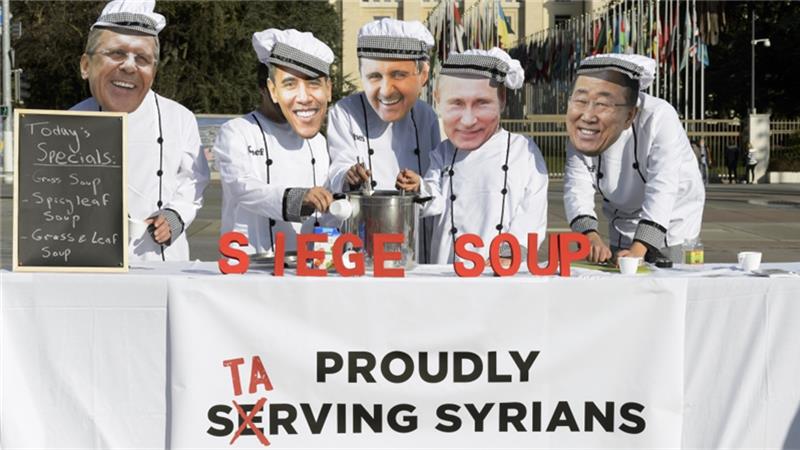
Turkey and the European Union have reached what they have labelled an “historic” agreement. The Europeans believe they have papered over an expanding and divisive refugee problem, while the Turks think they have a wider door for E.U. membership. The Europeans, however, have no intention of bringing Turkey into its fold anytime soon as it would dramatically accelerate the growth of its rightwing parties. Neither do the Turks have a genuine interest in solving Europe’s refugee crisis, since the crisis itself is Turkey’s leverage to gain concessions from Europe.
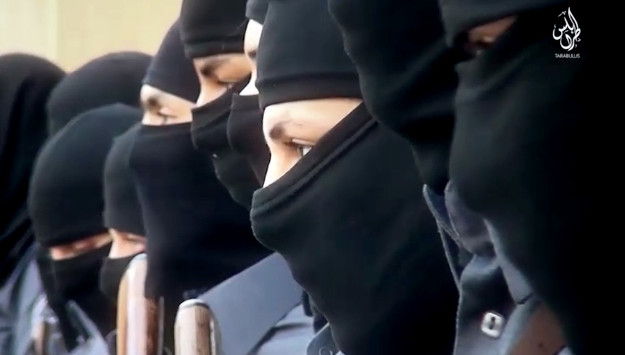
The Islamic State has been steadily losing territory in its self-declared caliphate in Syria and Iraq, where a U.S. bombing campaign and a host of rival forces chip away at its holdings.
Support for civil society and civil society organizations (CSOs) has been an integral part of endeavors by most major policy makers to advance democratization across the globe, with particular emphasis on the Middle East North Africa (MENA) region since the late 1980s. The role envisaged for CSOs within this context is to increase government accountability, filter the interests of ordinary citizens into policy processes, and advance democratization generally, this process is often connected with human rights and social progress. This essay investigates how this vision of civil society is constituted in the case of Turkey, using empirical evidence gathered through 38 in-depth qualitative interviews with women’s organizations from across the political, religious, and geographical spectrum.
A Look at Oman and South Korea’s Strategic Partnership
Since Oman and South Korea established official diplomatic ties in 1974, trade has largely defined the Muscat-Seoul relationship. Oman’s oil and liquefied natural gas (L.N.G.) and South Korea’s automobiles, electronics, and large vessels have dominated bilateral trade. Yet as Seoul stakes out increasingly vital national interests in the volatile Middle East, a host of geopolitical and security trends will more meaningfully influence the future of Omani-Korean relations.
Between Security and Protection: The E.U'.s Refugee and Migration Policy Crisis
Most scholars and NGOs argue that the measures adopted by the European Union to tackle illegal migration and smuggling, characterized by the strengthening of border security, are the principal causes of the ongoing refugee and migrant crisis. This essay will examine the E.U.’s refugee and migration policy crisis by providing an overview of the most recent policy responses proposed by the European institutions and by highlighting the implications of Member States’ tendency to maintain sovereignty on migration policies.
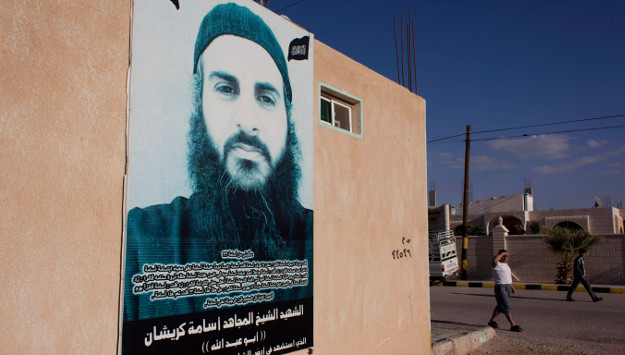
The pre-emptive security operation against a suspected ISIS-linked cell in the northern Jordanian city of Irbid earlier this month was a rude awakening. That all members of the cell were Jordanians added to public anxiety. While praise of the security forces and Jordan’s General Intelligence Department (GID) came from all sides, starting with King Abdullah himself, a sense of unease permeates throughout the kingdom. This was the first armed confrontation with ISIS, called Daesh locally, within the kingdom’s borders.
The European Union and Turkey agreed March 17 on a plan to address the Syrian refugee crisis. Under the deal any migrants arriving in Europe, starting next week, will be sent back to Turkey. Ankara, in exchange, will receive expedited aid intended to help Syrians in Turkey, as well as the promise of reignited E.U. membership talks.
Monday Briefing: Latest Analysis on Yemen, Turkey, and Syria
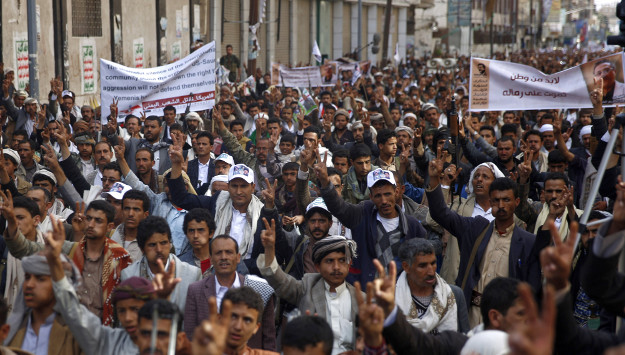
In this week’s Monday Briefing, MEI experts Charles Schmitz, Gonul Tol, Randa Slim, and Charles Lister provide analysis on recent events including the announced cease-fire between the Saudi’s and Yemen’s Houthis, the consequences of the recent terrorist attacks in Turkey and the P.Y.D’s move to declare an autonomous Kurdish zone in northeastern Syria, expectations for Secretary Kerry’s visit to Moscow this week to discuss the Syrian conflict, and the impact of the cease-fire on conditions on the ground in Syria.
Iran’s Uneasy Relationship with its Sunni Minority
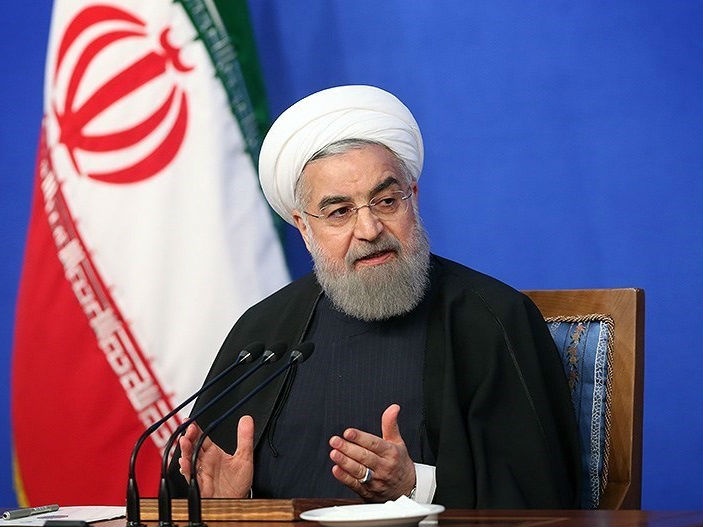
The threat of militant extremism among Iran’s Sunnis is being taken very seriously in Tehran. Iranian authorities have been exerting considerable effort to stem the spread of Salafism and Wahhabism into Iran’s mainly Hanafi Sunni majority regions. One strategy that authorities are not pursuing, however, is development. Indeed, the continued underdevelopment of these regions is leaving the door open to radical Islam. Iran’s Sunnis have long struggled with poverty and discrimination, and are suspiciously viewed as the country’s fifth column.
After first surprising the world by entering the fray in Syria last year, Vladimir Putin again shocked observers by announcing he was partially pulling out. On March 14, the Russian president declared his objectives “generally accomplished” and announced the withdrawal of part of his Russian military forces in Syria.
Turkey first applied for associate membership in the European Economic Community in 1959, and Europe has ever since had the upper hand in relations with Ankara. But the EU’s relationship with Turkey has been turned upside down by the Syrian refugee crisis, and the alarm it has caused in European countries.
The Syrian Refugee Crisis and Lebanon’s Endemic Deadlocks: Trading Reform for Resilience
The huge influx of Syrian refugees into Lebanon has placed an enormous strain on the country’s already fragile economy, society and politics. In absorbing this massive external shock, Lebanon has thus far displayed extraordinary community resilience. In that sense, Lebanese communities have actually something to teach the world about welcoming refugees and sharing limited resources despite social, political, and economic grievances caused by the crisis. But international donors’ promotion of the narrative of Lebanon’s resilience has come at a cost, namely the further delay of structural and political reforms that are of critical importance to the country’s future.
The intensifying rivalry between Saudi Arabia and Iran is raising sectarian temperatures in some smaller Gulf Cooperation Council (G.C.C.) states. Kuwait’s fractious parliament has seen growing tension and even physical confrontation between its Sunni and Shiite MPs in response to regional developments. Growing tension in Kuwait is also evident in the national media and online forums.
One of the positive and significant aspects of the Syria crisis is its effect on US-Russian relations. Russian President Vladimir Putin’s unexpected decision to withdraw forces from Syria is merely the latest chapter of this fast-moving engagement.