Skip to Content

Analysis

Filter by
5935 Results
What Iranians Are Saying about the Nuke Deal
  • Analysis
  • What Iranians Are Saying about the Nuke Deal

    Read full article at The National Interest.

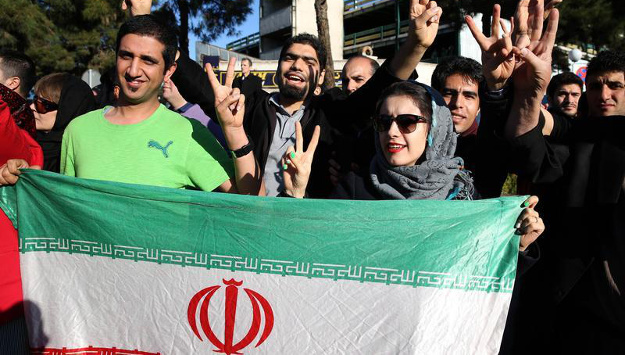
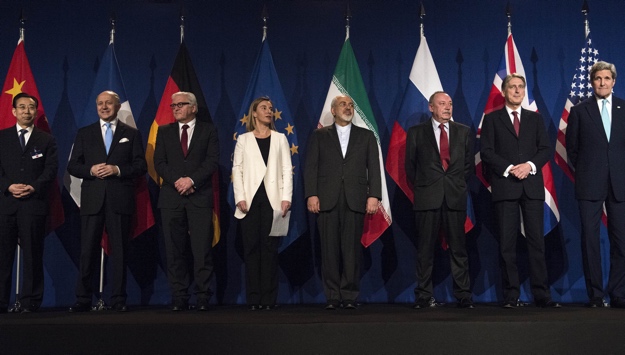
    Iran’s foreign minister, Javad Zarif, was on his way back to Tehran from Lausanne as accolades began to pile up. At the airport, he received a rapturous reception, as if the Team Melli, Iran’s national soccer team, had beat Germany.

    Will the Nuclear Deal Help or Harm Regional Stability?
  • Analysis
  • Will the Nuclear Deal Help or Harm Regional Stability?

    As the United States and other world powers pursued nuclear negotiations with Iran over the past 18 months, the Middle East descended into one of the worst periods of chaos and proxy conflict in its modern history, with Iran engaged aggressively in many of the region’s hotspots. Most leaders in the region fear that a nuclear deal with Iran will abet its aggressive interventionism and lead to further geopolitical and sectarian confrontation. But could the agreement—if it is completed—also create conditions for rebuilding stability?

    April 3, 2015

    Mosques and Islamic Identities in China
    Middle East Institute
  • Analysis
  • Mosques and Islamic Identities in China

    The great trading routes connecting medieval Eurasia by land and sea brought Islam, like Buddhism centuries earlier, to China. Somewhere between 20 and 40 million Muslims—reliable data remains elusive—now live in China. They acknowledge a variety of official and unofficial ethnic identities due to the diverse origins of Islam in China as well as the complexities of modern Chinese ethnic policies. The architecture of China’s mosques, both historic and modern, reflects this diversity. This essay examines the development of mosque architecture in southern China, in the old central capitals, and in the Xinjiang Uighur Autonomous Region from earliest times up to the present. In the twenty-first century, modern construction techniques allow patrons to choose from a variety of styles and materials as they design mosques to reflect a particular version of Islamic identity.

    April 2, 2015

    Misadventures in Violence in Yemen: Operation Resolute Storm
  • Analysis
  • Misadventures in Violence in Yemen: Operation Resolute Storm

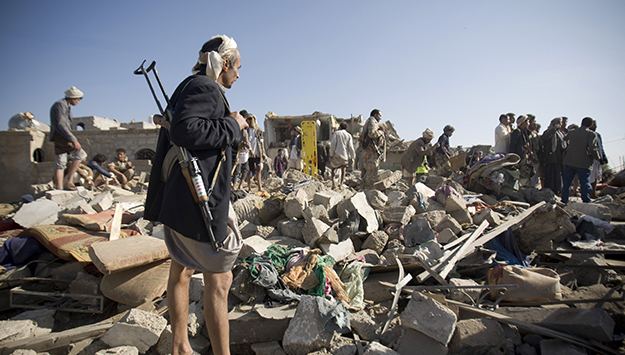
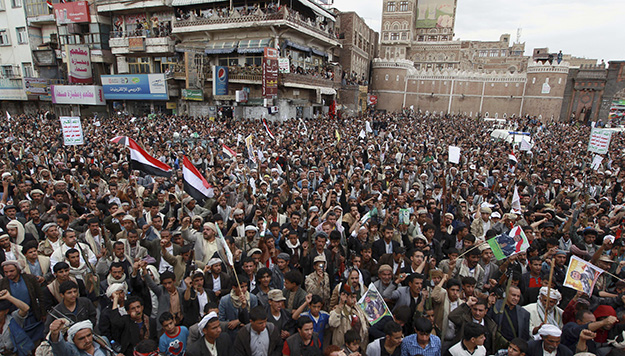
    Saudi Arabia’s military intervention in Yemen is a risky move motivated by various Saudi objectives in Yemen and in the region. The immediate objective is to save President Abdu Rabbu Mansour Hadi from Ansar Allah’s advance on Aden and reinstall him as head of state by forcing Ansar Allah to make major political concessions. But the operation also marks the increasing willingness of the Saudis to use their own military rather than rely on the United States.

    April 2, 2015

    Middle East Dialogue Report: Berlin
  • Analysis
  • Middle East Dialogue Report: Berlin

    The Middle East Dialogue is a regional Track 1.5 forum that meets twice a year under Chatham House rules. It brings together current and former officials as well as senior experts from the Middle East, the United States, Russia, China, and the EU to discuss emerging political & security trends in the region.  What follows is a report from the latest meeting of the Dialogue in Berlin, Germany, December 5-7, 2014.

    April 1, 2015

    Erdogan: His Own Worst Enemy
  • Analysis
  • Erdogan: His Own Worst Enemy

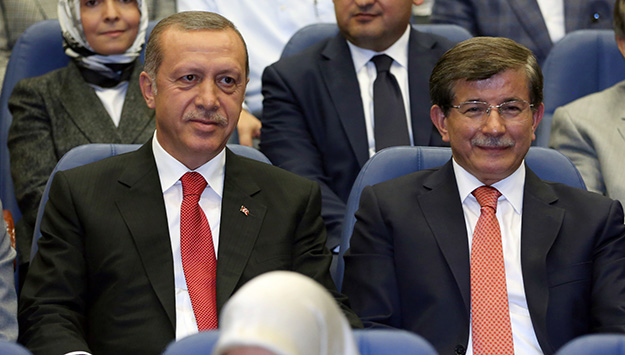
    The recent public row between Deputy Prime Minister Bulent Arinc and Ankara Mayor Melih Gokcek marked the latest fallout from a widening rift between the country’s president, Recep Tayyip Erdogan, and his handpicked prime minister, Ahmet Davutoglu. If the crack continues to widen, it will not only deal a blow to Erdogan’s presidential dream but also to the future of the ruling party.

    Tunisia in the Midst of the Islamist Civil War
  • Analysis
  • Tunisia in the Midst of the Islamist Civil War

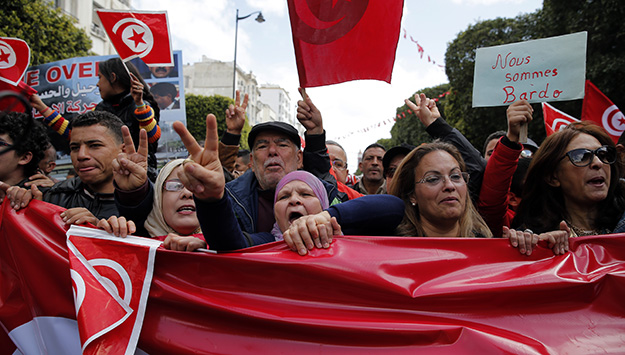
    At face value, the targets of the Bardo Museum attack on March 18 in Tunis were Tunisia and the West, the former as the sole survivor of the “Arab Spring,” a country that has been successful in bridging the transition toward a democratic order, and the latter as the foe that radical Islamism seeks to defeat and supplant. A more extreme secular reading of the event may even see in it a punishment for Tunisia for having denied Islamist parties the coveted electoral victory and a reminder that, even from the margins, Islamism will dictate the course of the nation.

    March 31, 2015

    Israeli Elections and U.S. Policy Reevaluation: What Lies Ahead?
    Middle East Institute
  • Analysis
  • Israeli Elections and U.S. Policy Reevaluation: What Lies Ahead?

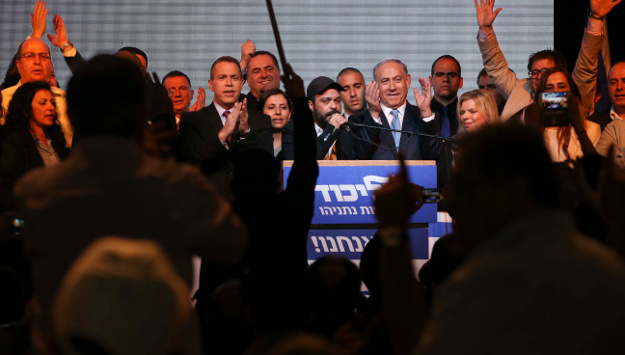
    The Obama administration has lost all patience with Israeli Prime Minister Benjamin Netanyahu’s defiant challenges to two basic U.S. goals: a two-state Israeli-Palestinian peace and a nuclear deal with Iran. Netanyahu’s hostility and the emergence after the March 15 elections of a new, more right-wing coalition, have triggered a major crisis in relations and an apparent decision by Obama to “reevaluate” U.S. policy.

    March 30, 2015

    Among Old Friends: A History of the Palestinian Community in China
    Middle East Institute
  • Analysis
  • Among Old Friends: A History of the Palestinian Community in China

    Following the Bandung Conference in 1955, the People’s Republic of China (PRC) espoused―in an unusual contrast with other major powers of the “socialist” and “nonaligned” camps―a pro-Palestinian stance in its foreign policy toward the Middle East. This did not entail, however, any direct contact with the Palestinians, a development that did not appear until the mid-1960s emergence of a more autonomous and coherent Palestinian national movement embodied in the PLO. Contact prior to the establishment of formal channels of communication took place through a number of unofficial and semi-official conduits, ranging from the Algerian National Liberation Front (FLN), the Chinese embassies in Egypt and South Yemen after 1967, and the “underground” Communist networks (mainly Iraqi, Sudanese, and Yemeni) to such bodies as the Chinese Committee for Afro-Asian Solidarity and the Chinese People’s Association for Friendship with Foreign Countries. These contacts enabled the PRC to eventually extend formal diplomatic recognition of the PLO in 1964, making it the first non-Arab country to do so.
    March 27, 2015

    Saudi Arabia’s High-Stakes Gamble
  • Analysis
  • Saudi Arabia’s High-Stakes Gamble

    With its bold and public intervention in Yemen’s civil war, Saudi Arabia has cast off a half-century of caution and restraint in regional security affairs.

    March 27, 2015

    The Regional Response to the Crisis in Yemen
    Middle East Institute
  • Analysis
  • The Regional Response to the Crisis in Yemen

    March 26, 2015 – Paul Salem discusses the new challenge the unfolding crisis in Yemen poses to the region, and how the Arab League and the United States are responding as the fight against ISIS continues.

    March 26, 2015

    The Egypt Economic Development Conference: Success or Failure?
  • Analysis
  • The Egypt Economic Development Conference: Success or Failure?

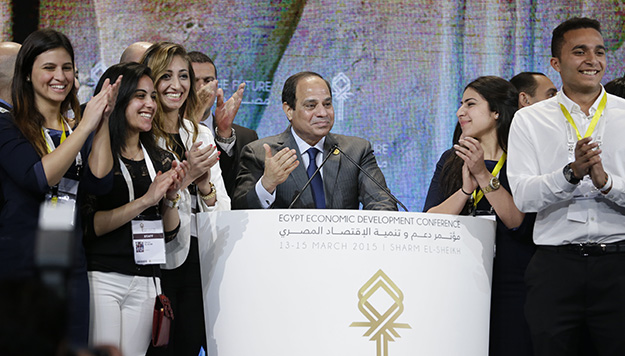
    Saudi Arabia’s late King Abdullah first conceived of the Egypt Economic Development Conference (EEDC) as a means of supporting Egypt and its new government after the toppling of President Mohamed Morsi in June 2013. The plan was to provide a forum through which donors could coordinate their economic assistance, and lengthy preparations finally culminated in a well-organized event on March 13-15.

    March 26, 2015

    The Day After an Iran Nuclear Deal
    Middle East Institute
  • Analysis
  • The Day After an Iran Nuclear Deal

    March 24, 2015: Alex Vatanka, senior fellow at The Middle East Institute, discusses the mood in Tehran as the deadline for negotiations approaches, the state of U.S.-Iranian relations, and what reaching a deal could mean to that relationship and the Arab world, in a brief interview.

    The Egyptian Family House: Fostering Religious Unity
  • Analysis
  • The Egyptian Family House: Fostering Religious Unity

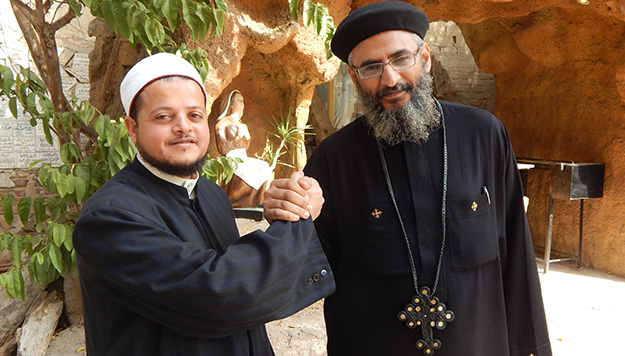
    Egypt’s President Abdel Fattah el-Sisi has not been shy about the need to reform religious discourse and relations.[1] He is concerned about how the image of Islam has been marred by Muslims themselves, and how extremist thought has torn the fabric of Muslim-Christian unity. Visiting the Coptic Orthodox cathedral on Christmas Eve, he told the cheering audience, “We will build Egypt together.

    March 24, 2015