
The Syrian Brotherhood: On the Sidelines
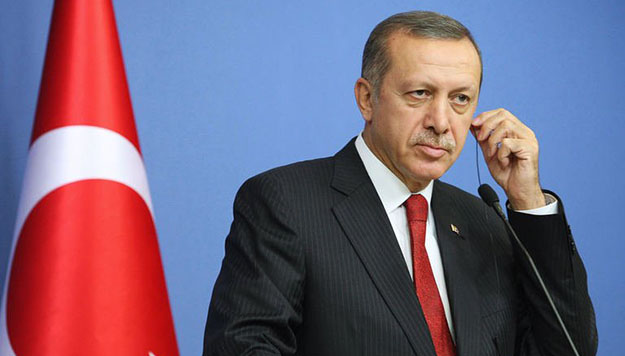
History weighs heavily on any political movement, and the Muslim Brotherhood in Syria is no different. Over eight decades, the group has adapted to survive. This malleability has kept the Brotherhood, or Ikhwan, alive as an independent organization, but historical experiences have changed it in profound ways and are helping to marginalize it during the current crisis.
Rural Egypt and Electoral “Counting”
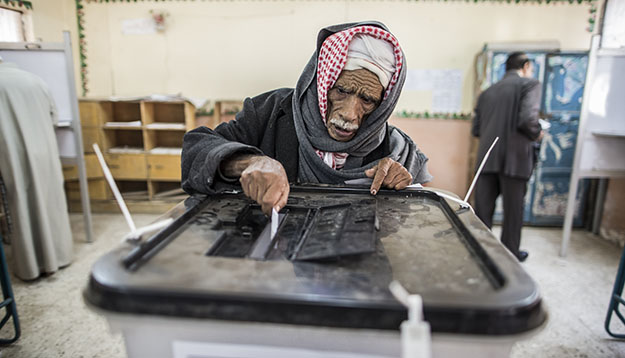
In early 2012, Hagg Hassan had a complaint. A resident of the village of Ab’adeyet Wally Mizar in Fayoum, 65 miles southwest of Cairo, Hagg Hassan had been receiving a monthly pension of 300 Egyptian pounds. But one day, he was given only 250. Hagg Hassan was livid. The budget cut would also apply to his wife and widowed daughter—a loss of 150 pounds for the household. Hagg Hassan lit a cigarette and asked his daughter to write a petition.
Dubai — The Middle East-Asia Hub
Over the past two decades, Dubai has risen to become a global financial, commercial shipping, aviation, and art hub. These essays examine Dubai’s key role in revitalizing the historic ties between the countries of the Middle East and Asia-Pacific regions.
The Saudis Aren't Going Anywhere
This article first appeared on Lobe Log.
Whenever a Saudi Arabian king or senior prince publicly criticizes U.S. policy, they inevitably touch off speculation about how the Saudis may be rethinking their security alliance with the United States.
East Meets East – A Shakuhachi and Nay Duo
Instruments such as the shakuhachi and the nay—though both many centuries old—have seldom met because they come from very distant places. The nay is a piece of reed from the Middle East, while the shakuhachi is bamboo from Japan. Although very simple in substance and shape, their sound has a strong character because they have grown to represent in the most complex ways what they have inherited from the past. When Kamal Helou, my musical partner, and I made these two instruments converse, we knew that we were forcing the laws of time. We found the first musical contact timid—both the shakuhachi and the nay imposing their characters, clinging to their traditional aesthetics. The shakuhachi is sharp and focused, the nay moving and warm. Yet the similarities were evident, both instruments having come to reflect similar ethical questions—the universality of being and the intuition of the soul.
Collection Spotlight: No War for Oil: U.S. Dependency and the Middle East

No War for Oil: U.S. Dependency and the Middle East, by Ivan Eland, 2011
Deeper Militarism in Egypt
There can be no doubt that revolutionary activities gripped Egypt after the January 2011 uprising began. Yet, just as revolutionary waves pushed for greater freedoms and social justice, counterrevolutionary forces responded to maintain some semblance of a Mubarakist-regime without Mubarak. The prospects for increased political freedom look dim at the moment.
After the Financial Crisis: Dubai-China Economic Relations
Dubai is strategically located at a junction between Europe, Africa, and the Far East. For China, an emerging global leader in trade and international business, Dubai is a promising place in which to conduct business. Exploring Dubai-Sino economic relations beckons a more comprehensive understanding of both the level of Dubai’s economic diversification and the impact of the global financial crisis. Dubai’s private sector is extensively engaged in foreign trade, with an emphasis on the service industry. The service industry has three subsectors—tourism, finance, and real estate. Assessing the trajectory of China’s involvement in these three sectors of Dubai’s economy sheds light on how Dubai-Sino economic relations have been affected by the global financial crisis.
Sinai: Tipping Point or Pretext for Ouster?
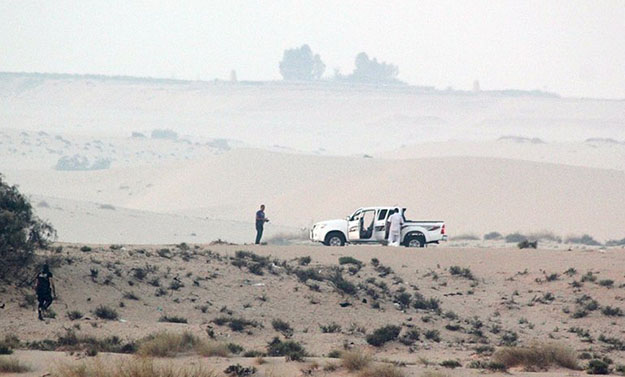
Much of the analysis on the causes for the military’s ouster of Mohamed Morsi focuses on the Muslim Brotherhood’s performance, or lack thereof, in domestic affairs. Glaringly absent, however, is an examination of the preeminence of Sinai in the military’s decision to intervene in otherwise civilian political disputes between the burgeoning liberal parties and the veteran Muslim Brotherhood and its Islamist allies.
Gulf Governments Offer Financing for U.S. Strike on Syria
Like pieces fitting together in a jigsaw puzzle, Arab governments – presumably from the oil-rich Gulf Cooperation Council – offered to finance a U.S. military strike on Syria, according to comments made by Secretary of State John Kerry during testimony September 4 with the House Foreign Affairs Committee. In an exchange with Representative Ileana Ros-Lehtinen (R-FL) on the potential cost of U.S. military action in Syria, Kerry said,
The Lessons of Benghazi: One Year Later, Never More Urgent
The situation in Libya one year after the attack on the U.S. Special Mission in Benghazi on September 11, 2012 is chaotic, dysfunctional and disheartening. It remains not as abjectly horrible as it could be—the General National Congress did this summer finally approve a framework (however imperfect) for electing a constitutional assembly, and UN-backed efforts are under way to create an unofficial dialogue of national reconciliation—but these advances paper over ever-deeper failings, many of which were not inevitable.
Dubai: Trade, Transit, and Cultural Amalgamation
“Open Doors; Open Minds”—the tagline of the Sheikh Mohammed Center for Cultural Understanding (SMCCU), a non-profit organization advocating awareness and understanding among the various cultures that live in Dubai—epitomizes Dubai’s emergence as an international trade and transit hub as well as a place of cultural symbiosis that hosts diverse nationalities from almost all corners of the globe.
The Lost Land of Egypt
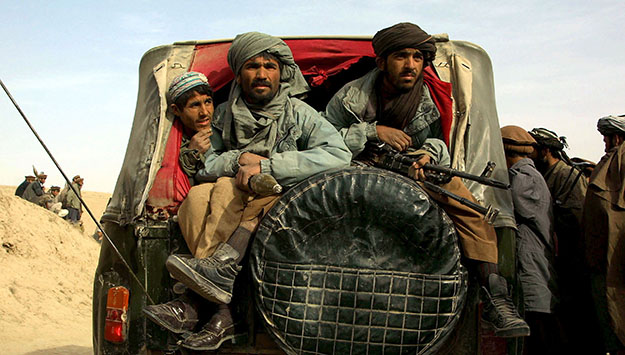
Egyptians call their desert country “the protected” (al-mahrousa) in homage to its longevity and the idiosyncratic features that have consistently saved it from destitution: a geostrategic location, Nile-fed farmland, and a stunning array of in situ antiquities. While much has remained unchanged in Egypt since the 2011 uprising, including the authoritarian nature of its government, alarming quantities of the country’s precious agricultural and archeological land have been vanishing to make way for cheaply-built homes of low-income citizens.