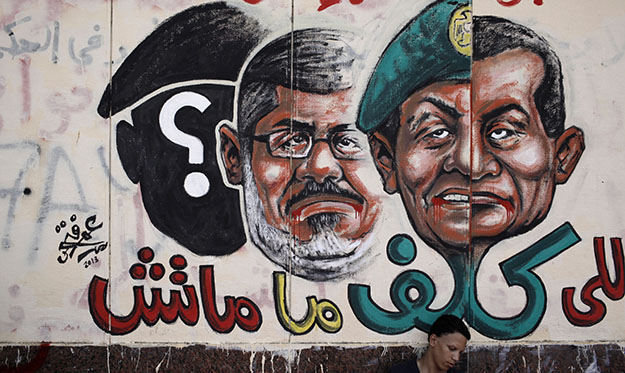
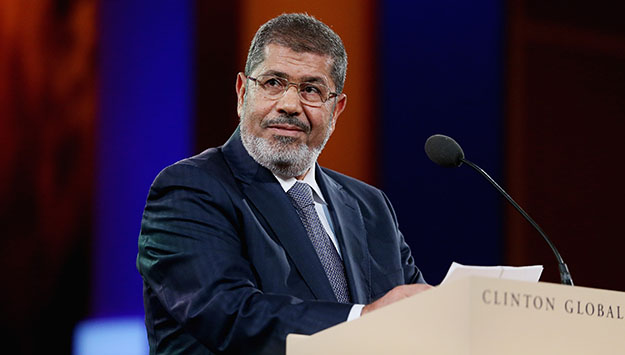
Before 3 July 2013 enters the annals of U.S.-backed anti-Islamist coups[1] it is worth noting that Mohamed Morsi’s ill-fated presidency differs from prior cases. Whereas the Islamic Salvation Front (FIS) and Hamas posed a threat (however chimeric) to Washington, Morsi quickly won plaudits from U.S. officials. Meanwhile, he menaced the domestic opposition with an autocratic panache. When Morsi exceeded his elected mandate and refused to share power, secularists and Salafists rose against him—while the U.S.
Announcement: Paul Salem Joining as Vice President of Middle East Institute to Lead Initiative on Arab Transitions
WASHINGTON, D.C. – The Middle East Institute (MEI) is pleased to announce that Paul Salem will join the Institute as a vice president in October to direct the Arab Transitions initiative. Dr. Salem comes to MEI after having served as the founding director of the Carnegie Middle East Center in Beirut, Lebanon since 2006.
The sun is beating down and it isn’t even midday. Clutching the all-important paperwork that will get them coveted UN food vouchers, Syrian refugees look harried. The women pull at their children to hurry through the litter-filled yard of the sports club in the town of Bar Elias that serves as a distribution center for the UN’s hard-pressed World Food Program (WFP). Unlike their men, who head for the shade to smoke and exchange news, the women don’t dally, making for the snaking lines into a crowded hall where they will be called in groups by registration numbers.
A white bed sheet had been strung between two trees on a median just opposite the Sayeda Aisha mosque in a working class area of Cairo. Everything had been arranged by volunteers under the protection of Ahmed, a well-known personality in the neighborhood. He helped them pick a spot to set up the projector, screen, and speakers. All that was missing was a functioning street lamp to power the equipment, but those nearby had been disconnected. A generator that was usually rented out to street vendors was used instead.
The U.S. Needs to Walk the Walk on Egypt's Human Rights
Originally published July 10, 2013 in U.S. News and World Report
Assertions and opinions in this publication are solely those of the above-mentioned author(s) and do not necessarily reflect the views of the Middle East Institute, which expressly does not take positions on Middle East policy.
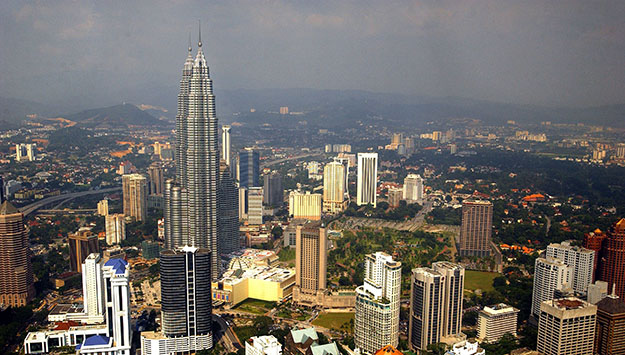
The Iranian Diaspora in Malaysia: Emergent Pluralism
The Iranian diaspora in Malaysia is incredibly diverse. Supporters of the Green Movement, students, individuals who fast and pray and those who do not know the direction of the qibla, clerics who promote secularism and those who promote the authority of the vilayat-i faqih, Iranian Kurds, Turks, and Arabs, journalists, artists, and environmentalists: all these—and more—constitute the community of Iranians who have fled or quietly moved to Malaysia.
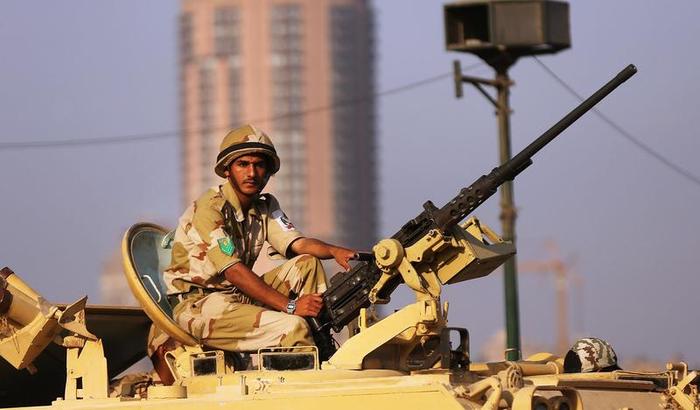
The dramatic events of July 3, which saw the unseating of Egypt’s first and only democratically-elected government by a military coup stimulated by enormous popular demonstrations, has created a huge question mark as to the future governance of the Arab world’s largest and most important country. The ramifications and repercussions will be playing out for months and years, whatever steps are taken in the next days and weeks. However, two parties acutely affected by these events are watching with particular concern.
Amid last week’s uproar, now deposed Egyptian President Mohamed Morsi issued a statement in English via top aide and advisor on foreign relations Essam el-Haddad, citing cases of sexual assault in or around Tahrir Square as evidence that “Tahrir crowds are out of control.”[1] Essam el-Haddad’s son, Gehad, took to Twitter, also in English, to stand up for the “protection of women.” With these moves, the Muslim Brotherhood sunk to a new low in its propaganda war against its detractors.
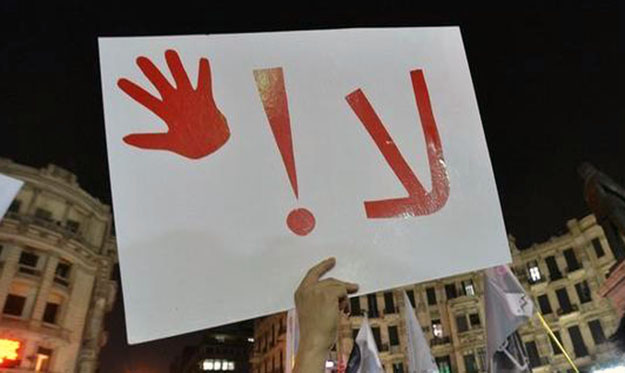
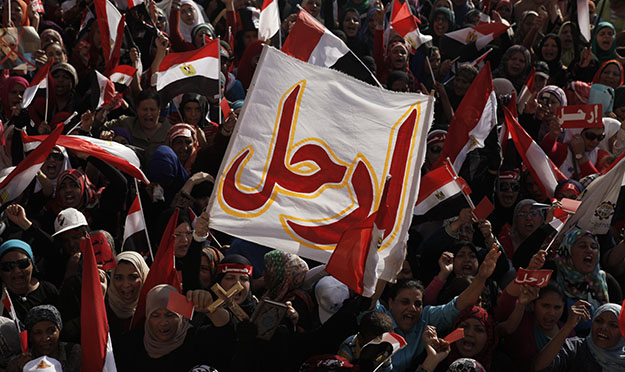
Over the past two days, millions of Egyptians have taken to the streets, most of them calling for early presidential elections with the aim of ousting Mohamed Morsi. June 30 marked Morsi’s one-year anniversary as president, and while he was elected democratically in 2012, his actions since have been more in the authoritarian style of a Mubarak than a reformer with the demands of the Egyptian street in mind.
In the wake of yesterday’s outbreak of what has been called the largest protest ever, against Egyptian president Mohamed Morsi, observers are left with one question: What comes next? None of the major players appear to have a practical answer to this question. For instance, no one has produced a politically sound “exit strategy” beyond the loud demand to remove Morsi and to hold a new presidential election.
The negotiations for a potential loan from the International Monetary Fund (IMF) to Egypt have been one of the most contested issues in the country since the January 2011 revolution.
Everyone in Egypt is bracing for June 30. Demonstrations against President Mohamed Morsi on the day marking his first year in office were always expected, but a grassroots campaign has reinvigorated a waning street movement and has provided an initiative embraced by most of the country’s opposition.
In a speech on 23 May 2013, President Obama declared the war on terror over. “We must define our effort not as a boundless ‘global war on terror,’” he said, “but rather as a series of persistent, targeted efforts to dismantle specific networks of violent extremists that threaten America.”[1] He argued that al-Qa`ida is on the run in Afghanistan and Pakistan and no longer threatens the U.S. homeland.

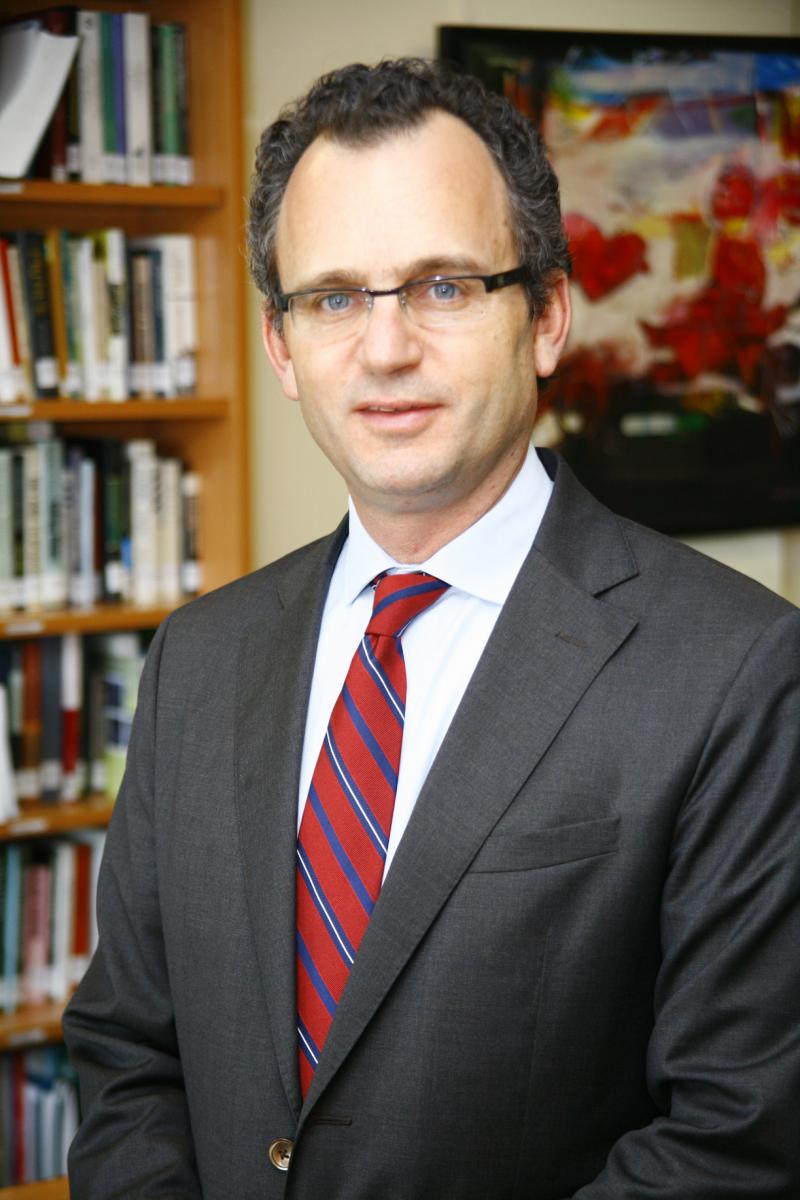 WASHINGTON, D.C. – The Middle East Institute (MEI) is pleased to announce that Paul Salem will join the Institute as a vice president in October to direct the Arab Transitions initiative. Dr. Salem comes to MEI after having served as the founding director of the Carnegie Middle East Center in Beirut, Lebanon since 2006.