Policy Privatization and Empowerment of Sub-National Forces: The Case of Private English Language Institutes in Iran
Originally posted July 2010
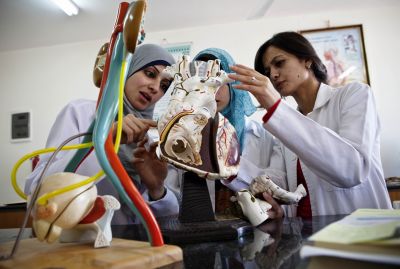
In the past, there was no need for learning a foreign language. Today, however, learning foreign languages should be included in school curricula … Today is not like yesterday, when our voice could not reach beyond the national boundary. Today, we can stay in Iran but publicize [our ideology] and export our revolution to other parts of the world in different languages.
Western Education in the Gulf: The Costs and Benefits of Reform
Originally posted July 2010
Educational reform from the West has arrived on a grand scale in the Gulf, particularly in higher education. American, Canadian, Australian, and British universities are being established throughout the region. In addition, Western-style methodologies and best-practices are being employed. Although there are considerable benefits to adopting Western models of education, such reform does not come without a price.
Tertiary Education in the Gulf: "A Colossal Wreck, Remaining Boundless and Bare?"
Originally posted July 2010
… “My name is Ozymandias, king of kings:
Look on my works, ye Mighty, and despair!” Nothing beside remains. Round the decay Of that colossal wreck, boundless and bare The lone and level sands stretch far away.[1]
In an article in the Fall 2008 issue of The New Atlantic, the Doha-based Egyptian science writer Waleed Al-Shobakky, advanced the proposition that the center of creative initiative in higher education in the Arab world has shifted from the traditionally influential lands of Egypt and the Levant to the Gulf Cooperation Council (GCC) countries.
A Rentier Social Contract: The Saudi Political Economy since 1979
Originally posted October 2009
The year 1979 was the last year of the pivotal decade in which the Saudi economy took its modern shape; no other decade before or since has seen more change. The patterns of oil-driven politics that emerged at the time still define the Kingdom’s political landscape today — even if some of the players in the political game have subtly shifted their roles.
The Middle East Institute Remembers Anthony Shadid
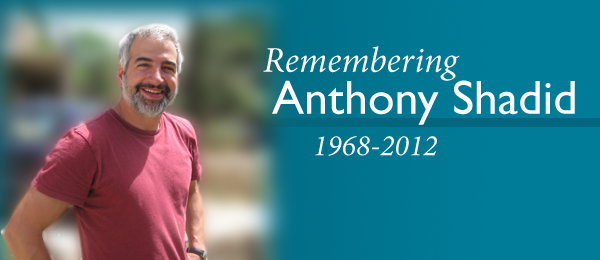
The Middle East Institute is deeply saddened by the untimely death of Anthony Shadid, the Pulitzer Prize-winning journalist who covered the Middle East for the Boston Globe, Washington Post, and most recently the New York Times. Shadid died of an apparent asthma attack while on assignment in Syria. His insightful, humane reporting on the Middle East painted an uncommonly nuanced portrait of a region and people in turmoil, and will be sorely missed. Shadid's death is a terrible loss for journalism and the Middle East community.
Over the last year, relations between Pakistan and the United States have been driven to ever-lower depths. The leaderships of both countries are struggling to rebuild the semblance of a working relationship, especially regarding Afghanistan. Pakistan has long been convinced that the United States and its allies were bound to fail in Afghanistan and that the American war on terrorism is responsible for the threats Pakistan faces from its own extremists.