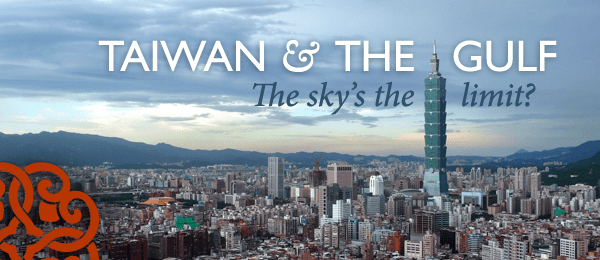
Dubai’s Burj Khalifa and Taiwan’s Taipei 101 tower, the world’s two tallest skyscrapers, differ in height by a stunning 1,076 feet, are separated by nearly 4,000 miles of ocean, and are situated in countries and regions which, linguistically and culturally, have little in common ― except business.
The Impacts of the Global Economic Crisis on Migration in the Arab World
Originally posted March 2010
“The current global financial crisis adds further serious complications…we are concerned about the loss of migrants’ jobs; a decrease in migrant remittances; a reduction in Official Development Assistance (ODA) and Foreign Direct Investment (FDI) and most seriously of all, the stigmatization and scapegoating of migrants tending towards xenophobia.” — William Lacy Swing, IOM Director General at 106th Executive Committee Session, Geneva, June 26, 2009
Terrorist Rehabilitation and Succession Politics in Libya: Opportunities for the United States?
While Washington’s attention was focused on the aftermath of Iraq’s election and a growing confrontation between the Obama Administration and Israel’s Binyamin Netanyahu, another remarkable event was taking place in Libya: the release of hundreds of security prisoners, many with terrorist ties, under the auspices of a rehabilitation program which some in Libya hope could be a model for the rest of the region.
This Commentary first appeared as an op-ed in the The National, March 14, 2010.
Iraq’s parliamentary elections have just concluded, but the major political battles are about to begin. At stake is what kind of country Iraq will become. Will Iraq’s progress toward greater stability continue? Will it look east towards Tehran for support and encouragement, or to the United States and its fellow Arabs? The stakes are high, and no one can afford to remain uninterested while Iraq continues its dramatic political evolution.
Beyond Iraq’s National Elections: Planning a New Phase in American Policy
This Commentary is an adaptation of a longer piece published by the Institute for the Theory and Practice of International Relations at the College of William and Mary on February 25, 2010.
Introduction to The State of the Arts in the Middle East: Volume IV
Literature, visual art, and photography not only serve an aesthetic purpose, but often act as mediums through which their creators explore deeply personal experiences and their broader social implications. In this, the fourth volume of MEI’s “The State of the Arts in the Middle East,” Najat Rahman considers the works of the Palestinian artists Emily Jacir and Eman Haram, and W. Scott Chahanovich (with Pauline Pannier) discusses the memoirs of the Moroccan-born writer Abdellah Taïa.
Turkey and Israel: What Lies Behind the Recent Volte Face
In recent months, the Israeli-Turkish relationship, strong and stable during the 1990s, has been placed under severe pressure. Tensions began in January 2009 when Israel launched military operations in Gaza, later prompting Turkish Prime Minister Recep Tayyip Erdogan to walk out of a televised debate with Israeli President Shimon Peres following a heated exchange over the issue.
Al Qaeda has a major, long term, existential problem in the Middle East and the greater Muslim world. It is a problem that it certainly cannot fix on its own. However, America’s counterterrorism policy has given Al Qaeda hope for the short term and if we continue that policy, it may well assist them in their ultimate goal of establishing a hegemonic Caliphate in the Muslim world.
This Op/Ed was published first on February 3, 2010 by McClatchy Tribune.
The bipartisan Kerry Lugar Bill provides a multi-year, super-sized economic aid program to the people of Pakistan. This is the right approach to improved US-Pakistan relations. The majority of Pakistanis distrust the US because they believe we favor military dictators over civilian democrats and are quick to abandon promised economic aid programs once we have achieved our security goals.
The convergence of multiple crises in an already vulnerable environment has left Yemen and aid agencies at a crossroads. The context has become an extremely complex and challenging one within which to reduce hunger, malnutrition, and fragility. Yet it is precisely because of these challenges that humanitarian intervention is vital to keep struggling populations from tipping into utter disaster.
Sri Lankan Migration to the Gulf: Female Breadwinners – Domestic Workers
Several waves of Sri Lankan migration have taken place since the country gained independence in 1948. Beginning in the mid-1950s, wealthy, educated, English-speaking elites have migrated to Commonwealth countries such as Australia and the United Kingdom. In addition, since the upsurge in ethnic hostilities in the early 1980s, Tamil-speaking Hindu migrants have left the country, with many settling in Canada. In contrast with these permanent migrants, since 1976 a growing number of Sri Lankans have become migrant workers.