Skip to Content

Research & Commentary Results

Filter by
2002 Results
The United States, the GCC, and Iran: The Crisis that Wasn’t
Middle East Institute
  • Analysis
  • The United States, the GCC, and Iran: The Crisis that Wasn’t

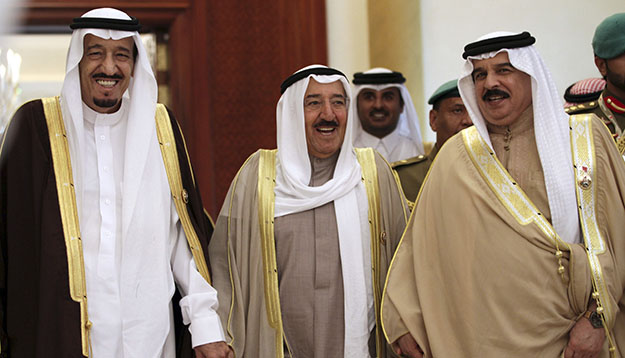
    Whatever eventually comes of the security agreements and mutual pledges of support made at last week’s summit conference between President Obama and leaders of the Arab Gulf monarchies, one result is clear: Saudi Arabia and the others may not be enthusiastic about the pending nuclear agreement with Iran, but they will not actively oppose it.

    May 19, 2015

    The Alawi Community and the Syria Crisis
  • Analysis
  • The Alawi Community and the Syria Crisis

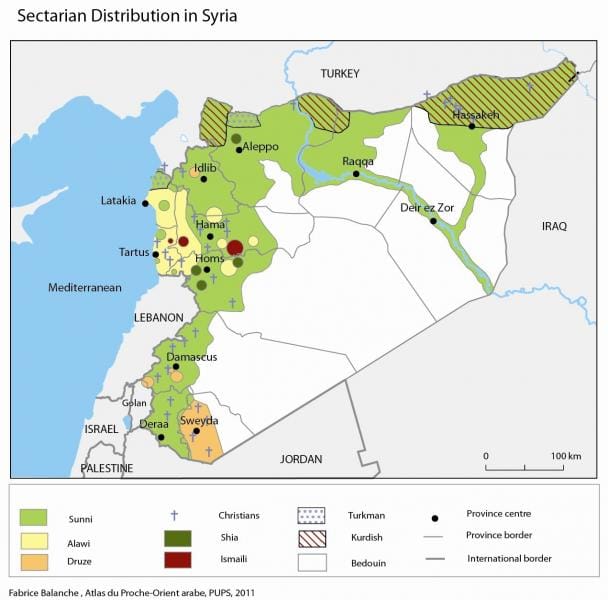
    “Alawis to the grave and Christians to Beirut!” This troubling slogan was chanted during demonstrations against the Assad regime in spring 2011, and who was behind the chanting remains a controversial question. The Syrian opposition claimed that the slogan’s authors were members of the intelligence services who had infiltrated the demonstrations. According to this view, Syrian government agents were seeking to portray the opposition as primarily motivated by sectarianism and dominated by Salafis in order to frighten minorities and those wishing to live in a secular Syria.

    May 14, 2015

    U.S.-Russian Cooperation on Syria: The Fear Factor
  • Analysis
  • U.S.-Russian Cooperation on Syria: The Fear Factor

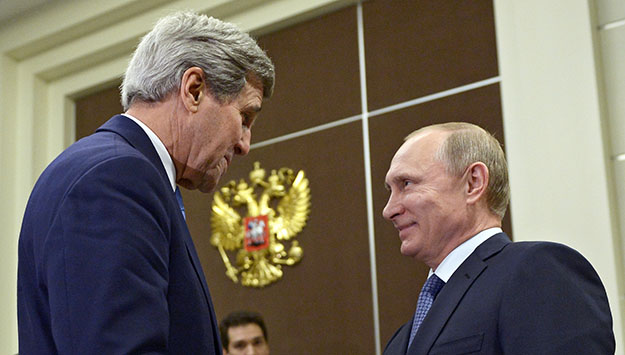
    The announcement of a meeting between Vladimir Putin and John Kerry related to Syria, as well as the subsequent visit to Moscow of Daniel Rubinstein of the State Department’s Near East Bureau, may have stunned some pundits on the outside, but for those who have been following the evolution of leadership opinions on Syria in both countries, the surprise is that these official meetings have not come sooner.

    May 13, 2015

    Stability in Yemen: A Matter of Gulf Collaboration
  • Analysis
  • Stability in Yemen: A Matter of Gulf Collaboration

    Yemen, like many other states in the region, has never conformed to the norms of an integral nation state; it has been in a state of crisis since at least the 1990s due to constant competition between the ruling state authority and various clans, tribal groups, transnational movements, and secessionists. In addition to these layers of conflict, regional players have tried to exploit domestic instability to further their own interests.

    May 8, 2015

    The Assad Regime: The Beginning of the End?
  • Analysis
  • The Assad Regime: The Beginning of the End?

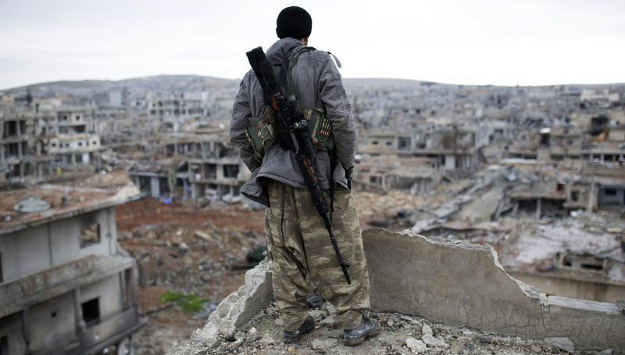
    Bashar al-Assad’s regime in Syria did not have a good winter. His forces lost a provincial capital, Idlib, and despite repeated efforts could not even seize northern and eastern suburbs adjoining Damascus. There were also failures in Aleppo and Dara‘a. He had to relieve heads of two of the regime’s four secret police services. The economic situation worsened.

    Atrocities in Syria: Who Will Be Left to Speak for Me?
  • Analysis
  • Atrocities in Syria: Who Will Be Left to Speak for Me?

    “Then they came for me—and there was no one left to speak for me.” – Martin Niemöller, German anti-Nazi theologian

    April 23, 2015

    Is Iran Overstretched in Syria?
  • Analysis
  • Is Iran Overstretched in Syria?

    Read the full article on Foreign Policy.

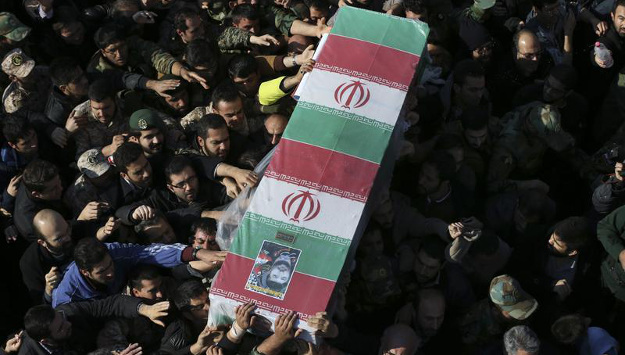
    For the majority of Arabs, Syria symbolizes all that is wrong with Iranian influence in the Middle East. Since 2011, Tehran and its regional proxies have poured men, money, and weapons into Syria to prevent President Bashar al-Assad’s military defeat. In June 2013, Hezbollah’s intervention in the western city of Qusayr single-handedly turned the tide of the war in Assad’s favor.

    April 20, 2015

    The Middle East in China’s Silk Road Visions: Business as Usual?
    Middle East Institute
  • Analysis
  • The Middle East in China’s Silk Road Visions: Business as Usual?

    Chinese President Xi Jinping’s 2013 proclamation of the Silk Road Economic Belt (“One Belt, One Road”) and Twenty-First Century Maritime Silk Road initiatives provided an overarching framework for understanding China’s strategic priorities over the coming decade. The land-based and sea-based Silk Roads will link Asia and Europe via the Middle East and Central Asia through a series of transcontinental railroads, pipelines, ports, airports, and other infrastructure projects.

    April 14, 2015

    Collection Spotlight: In the Name of Oil: Anglo-American Relations in the Middle East, 1950-1958
    Middle East Institute
  • Analysis
  • Collection Spotlight: In the Name of Oil: Anglo-American Relations in the Middle East, 1950-1958

     Ivan L. G. Pearson’s In the Name of Oil: Anglo-American Relations in the Middle East, 1950-1958 provides a comprehensive analysis of the extent to which British interests in the Middle East influenced or were furthered by the United States between 1950 and 1958.

    March 20, 2015

    The GCC States and the Viability of a Strategic Military Partnership with China
    Middle East Institute
  • Analysis
  • The GCC States and the Viability of a Strategic Military Partnership with China

    The term “strategic partnership” has been increasingly used in GCC circles to signify that relations with China are important and worthy of long-term investment. In a March 14, 2014 speech during his visit to Beijing, Saudi Arabia’s then Crown Prince Salman announced that “we are witnessing the transformation of the relationship with China to one of strategic partnership with broad dimensions, to the benefit of both our countries.” Saudi Arabia’s position was echoed by the emir of Qatar during a 2014 visit to China in which issues of common concern to all GCC states, especially combating terrorism, were discussed. Abdel-Aziz Aluwaisheg, GCC general assistant secretary for negotiations and strategic dialogue, has also noted that there is growing interest in the Gulf to develop a “strategic dialogue” with China.

    March 17, 2015

    Do Kerry’s Remarks on Syria Represent a Break with Previous Policy?
  • Analysis
  • Do Kerry’s Remarks on Syria Represent a Break with Previous Policy?

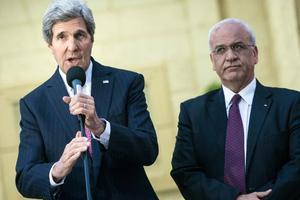
    Over the weekend, the Western and Arab media reported extensively on U.S. Secretary of State John Kerry’s remarks, given on the fourth anniversary of the Syrian revolution, that the United States must negotiate “in the end” with Bashar al-Assad. Are his remarks anything new, or do they represent a continuation of previous policy? MEI’s Robert Ford weighs in.

    The Return of Iraqi Shi‘i Militias to Syria
  • Analysis
  • The Return of Iraqi Shi‘i Militias to Syria

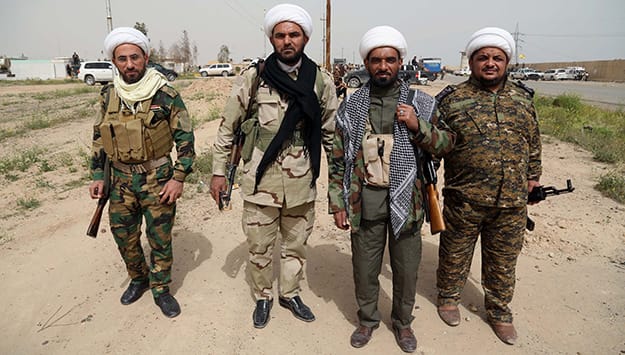
    It has long been known that the Assad regime, facing a shortage of manpower in its regular army, has had to rely on irregular paramilitaries in its bid to reverse rebel advances. This became particularly apparent in 2013, when Hezbollah openly declared its participation in the capture of Qusayr, a town in Homs Province on the border with Lebanon.

    March 16, 2015