Skip to Content

Research & Commentary Results

Filter by
2686 Results
Bombings in Beirut Indicate New Escalation
Middle East Institute
  • Analysis
  • Bombings in Beirut Indicate New Escalation

    Earlier today, double explosions near the Iranian embassy in Beirut killed at least 23, including an Iranian diplomat. The Abdullah Azzam Brigades, an Islamist group with links to al-Qa`ida, took responsibility for the attack. MEI sat down with its Vice President for Policy and Research, Paul Salem, to discuss the significance of the bombings in Lebanon as well as their regional and global implications.

    Tell us about the bombing and the group that claimed responsibility for it.  

    November 19, 2013

    Perspectives on India-Iran Relations
    Middle East Institute
  • Analysis
  • Perspectives on India-Iran Relations

    Iran-India relations are far-reaching and multidimensional. However, a variety of issues, including the upheaval in the Middle East and North Africa, U.S and Israeli influence over the region, Iran-Israel belligerence, and terrorism all constrain bilateral diplomacy.

    November 13, 2013

    A Discussion with Ken Pollack, Author of Unthinkable
  • Video
  • A Discussion with Ken Pollack, Author of Unthinkable

    On Wednesday, October 16, 2013, the Middle East Institute hosted author and Brookings senior fellow Ken Pollack for a discussion of his book, Unthinkable: Iran, the Bomb, and American Strategy(Simon & Schuster, 2013). In his latest work, Pollack explores the protracted tensions underlying the U.S.-Iranian relationship, how it evolved to its current status, and how the U.S. should best address Iran’s nuclear ambitions.

    October 16, 2013

    A Discussion with Ken Pollack, Author of Unthinkable
    Middle East Institute
  • Podcast
  • A Discussion with Ken Pollack, Author of Unthinkable

    The Middle East Institute is proud to host author and Brookings senior fellow Ken Pollack for a discussion of his book, Unthinkable: Iran, the Bomb, and American Strategy (Simon & Schuster, 2013). In his latest work, Pollack explores the protracted tensions underlying the U.S.-Iranian relationship, how it evolved to its current status, and how the U.S. should best address Iran’s nuclear ambitions.

    October 16, 2013

    America and Iran: Always Winter, Never Christmas
    Middle East Institute
  • Analysis
  • America and Iran: Always Winter, Never Christmas

    In C.S. Lewis’ fantasy land of Narnia, the white witch put a spell on her realm to ensure that there would be perpetual winter and that Christmas would never come. For 34 years American-Iranian relations have been similar: a long, hard freeze unbroken by any cracks or signs of thaw.

    October 7, 2013

    Gulf Governments Offer Financing for U.S. Strike on Syria
    Middle East Institute
  • Analysis
  • Gulf Governments Offer Financing for U.S. Strike on Syria

    Like pieces fitting together in a jigsaw puzzle, Arab governments – presumably from the oil-rich Gulf Cooperation Council – offered to finance a U.S. military strike on Syria, according to comments made by Secretary of State John Kerry during testimony September 4 with the House Foreign Affairs Committee. In an exchange with Representative Ileana Ros-Lehtinen (R-FL) on the potential cost of U.S. military action in Syria, Kerry said,

    September 11, 2013

    Support for el-Sisi: What’s in it for al-Saud?
  • Analysis
  • Support for el-Sisi: What’s in it for al-Saud?

    When King Abdullah of Saudi Arabia and his foreign minister, Prince Saud al-Faisal, issued unequivocal pledges of support for Egypt’s military government and its crackdown on the Muslim Brotherhood, their move was widely depicted in the news media as a logical extension of the kingdom’s opposition to revolutionary movements in the Arab world. This simplistic view overlooks the fact that Saudi Arabia has responded differently to different uprisings—it supports the rebels in Syria, helped to crush them in Bahrain—and that aligning itself with Egypt’s new rulers could be a risky strategy.

    September 3, 2013

    Snapshots of the Iranian Diaspora in Malaysia
    Middle East Institute
  • Analysis
  • Snapshots of the Iranian Diaspora in Malaysia

    The Iranian diaspora in Malaysia is a diverse and vibrant community of educators, students, artists, and entrepreneurs. The following essays provide snapshots of the historical and cultural connections between Iran and Malaysia, as well as the personal and professional experiences and creative output of some of the members of this community.


    August 17, 2013

    “Invisible” White-Collar Indians in the Gulf
    Middle East Institute
  • Analysis
  • “Invisible” White-Collar Indians in the Gulf

    Since the 1970s oil boom, the Gulf region has been one of the principal destinations for workers from South Asia, with the result that today Indians constitute a large percentage of the non-nationals living in the region. Indeed, at five million out of an estimated 15 million people, the Indian community forms the largest expatriate group in each of the Gulf countries. Most Indian immigrants are from the south Indian state of Kerala, while many of the rest originate from Tamil Nadu, Punjab, Uttar Pradesh, and Bihar.

    August 14, 2013

    Iranians in Malaysia: Artist Asghar Yaghoubi and His "Journey Within"
    Middle East Institute
  • Analysis
  • Iranians in Malaysia: Artist Asghar Yaghoubi and His "Journey Within"

    Artist Asghar Yaghoubi, who was born in Shiraz, Iran, moved to Malaysia in 2008. An accomplished painter and sculptor, he also teaches art at the Cube Gallery, of which he is the founder and director. The gallery is the first and only art gallery in Southeast Asia owned by an Iranian.

    July 26, 2013

    Iranians in Malaysia: Batik Artist Pegah Jahangiri
    Middle East Institute
  • Analysis
  • Iranians in Malaysia: Batik Artist Pegah Jahangiri

    Artist Pegah Jahangiri hails from Tehran, but is currently a doctoral student in visual arts at the University of Malaya, Malaysia. She recently spoke to MEI about her work with batik, strikingly dyed cloth found all over the world, but particularly popular and refined in Southeast Asia.

    July 19, 2013

    Transition in Qatar: Lessons for the GCC States
    Middle East Institute
  • Analysis
  • Transition in Qatar: Lessons for the GCC States

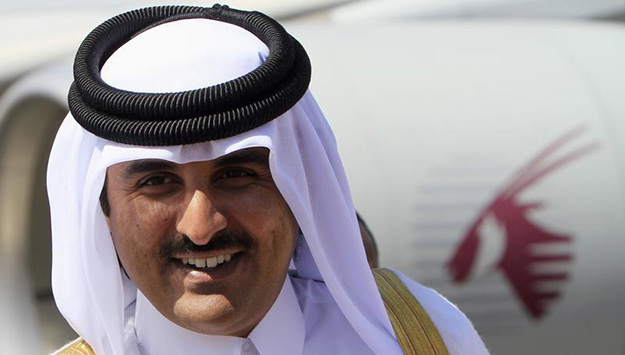
    When the young Shaykh Tamim bin Hamad al-Thani became ruler of Qatar last month after his father stepped aside in a seamless transition, one of his first official acts was to seal the generational shift by appointing a new prime minister.

    July 17, 2013

    The Iranian Diaspora in Malaysia: Emergent Pluralism
  • Analysis
  • The Iranian Diaspora in Malaysia: Emergent Pluralism

    The Iranian diaspora in Malaysia is incredibly diverse. Supporters of the Green Movement, students, individuals who fast and pray and those who do not know the direction of the qibla, clerics who promote secularism and those who promote the authority of the vilayat-i faqih, Iranian Kurds, Turks, and Arabs, journalists, artists, and environmentalists: all these—and more—constitute the community of Iranians who have fled or quietly moved to Malaysia.

    July 10, 2013