Several months ago on a Tuesday afternoon, a local girls football team was practicing on a dirt field in Sidi Moumen, a notorious 350,000-person shantytown on the outskirts of Casablanca, Morocco. A crowd of boys had gathered along the fence. One of the boys began making comments. “Look at her touch on the ball,” he mumbled to his friend, “where did she learn to play football?” “My five-year old brother has better control,” shot back the other, slapping his friend’s hand and laughing.
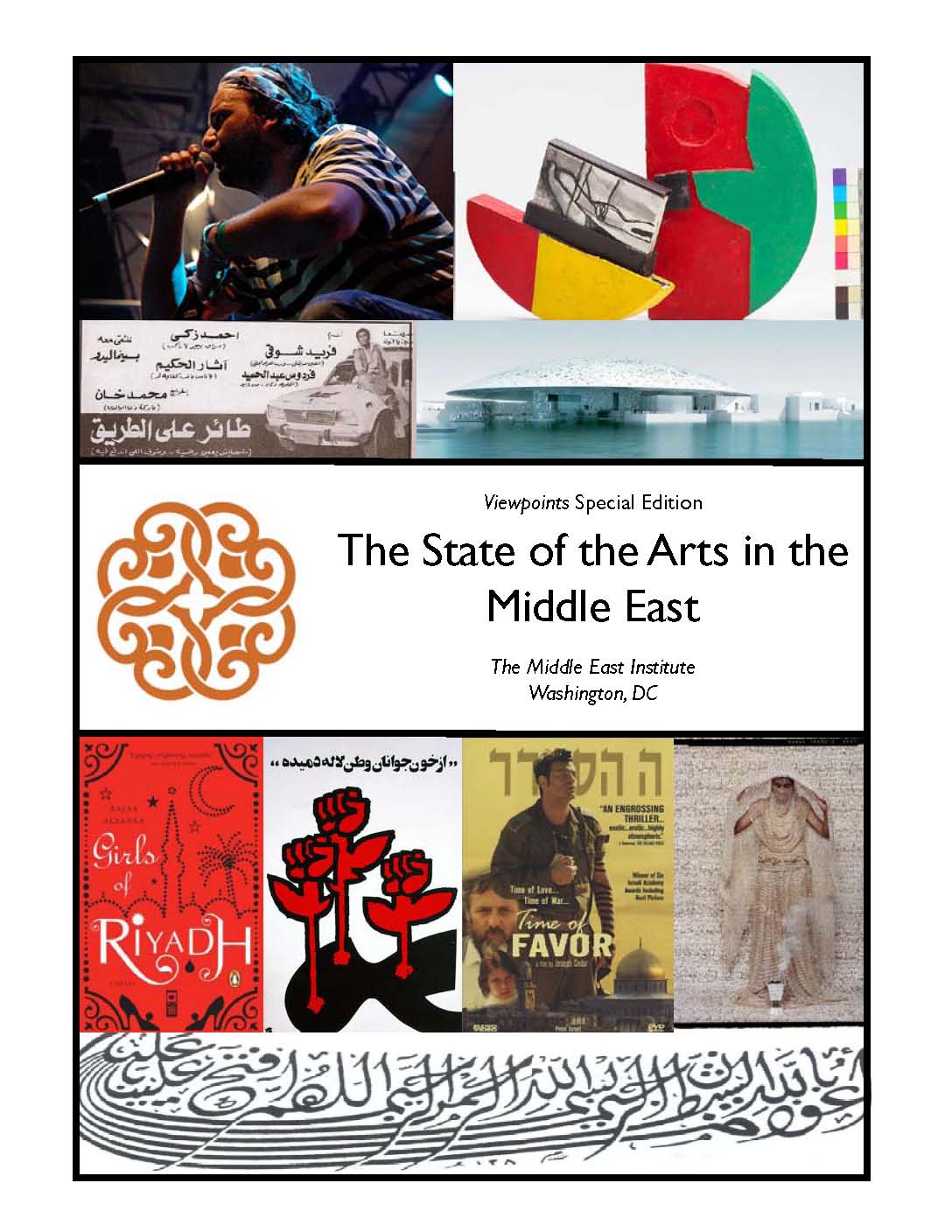
Introduction to The State of the Arts in the Middle East: Volume IV
Literature, visual art, and photography not only serve an aesthetic purpose, but often act as mediums through which their creators explore deeply personal experiences and their broader social implications. In this, the fourth volume of MEI’s “The State of the Arts in the Middle East,” Najat Rahman considers the works of the Palestinian artists Emily Jacir and Eman Haram, and W. Scott Chahanovich (with Pauline Pannier) discusses the memoirs of the Moroccan-born writer Abdellah Taïa.
The Middle East Institute is proud to host Moroccan scholar and author Dr. Mohsine El Ahmadi. Dr. El Ahmadi has written extensively on Islamist movements in Morocco and will examine the government’s efforts to fight radical Islamist movements in the wake of the Casablanca bombings of 2003.
The Plucky Little King Reconsidered: King Husayn of Jordan and the First Gulf War
The late King Husayn of Jordan, charismatic, compelling, idolized, was regarded, in his mature years, as the West’s best friend in the Arab world. A perspective assessment over the length of his reign, and particularly during the first Gulf War, however, reveals a far more complex figure: courageous, often wise and far-sighted, but preoccupied with lineage, haunted by ambition, and often plagued by poor judgment. During the first Gulf crisis, Husayn’s demonization of his resource-poor country’s traditional financiers, the Gulf States and Saudi Arabia, cost Jordan dearly.
The Jordan Valley is a lush, wetland ecosystem that is the biological heart of the Middle East region at large. As the meeting point of the Asian, African, and European continents, the valley is at the crossroads of biodiversity. In addition to the unique flora and fauna, the valley is one of the world’s most important migratory pathways for birds. Over 500 million birds migrate from Europe to Africa twice a year, dependent on the Jordan Valley as a stopping ground on their long journey.
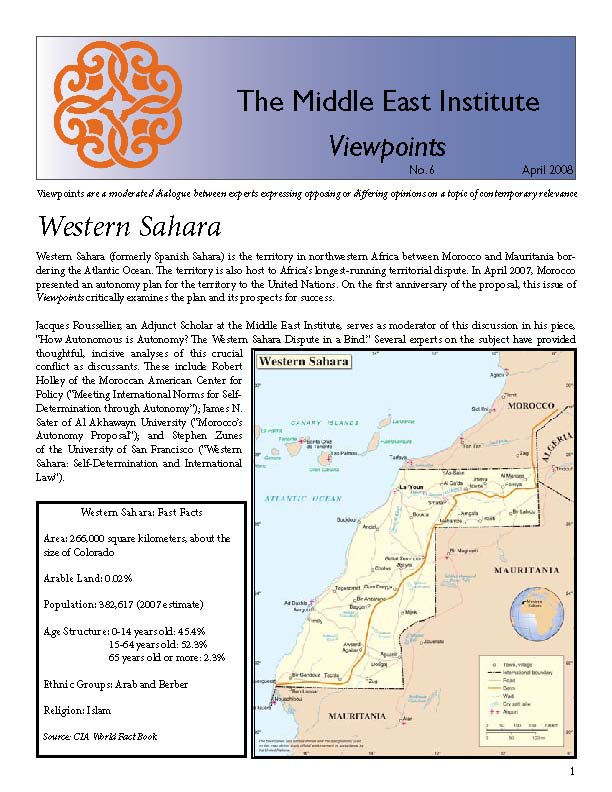
Western Sahara: Self-Determination and International Law
Originally posted April 2008
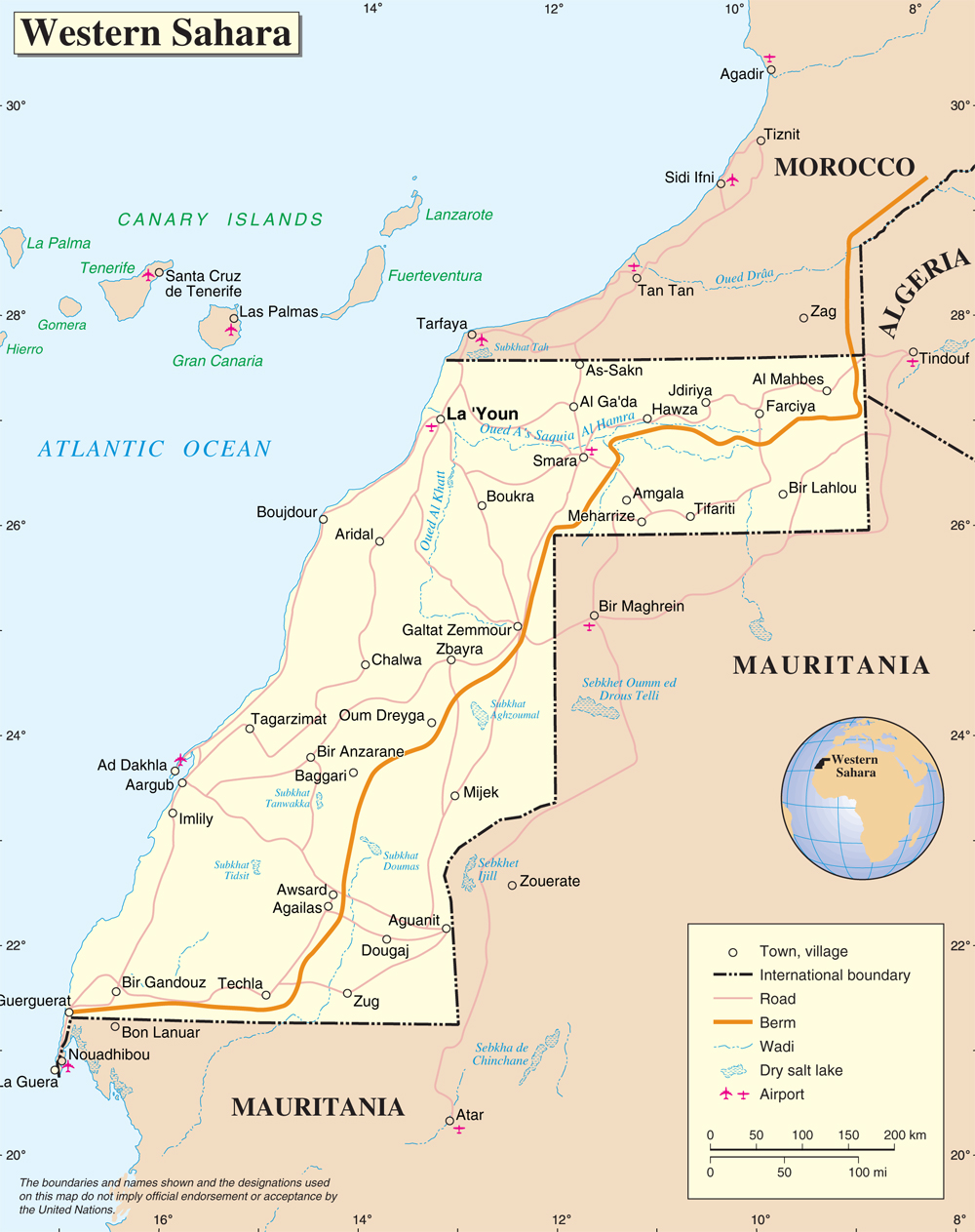
The failure of the Kingdom of Morocco and the Polisario Front to agree on the modalities of the long-planned United Nations-sponsored referendum on the fate of Western Sahara, combined with a growing nonviolent resistance campaign within the territory against Morocco’s 31-year occupation, has led Morocco to propose granting the former Spanish colony special autonomous status within the kingdom.
Western Sahara (formerly Spanish Sahara) is the territory in northwestern Africa between Morocco and Mauritania bordering the Atlantic Ocean. The territory is also host to Africa’s longest-running territorial dispute. In April 2007, Morocco presented an autonomy plan for the territory to the United Nations. On the first anniversary of the proposal, this issue of Viewpoints critically examines the plan and its prospects for success.
Democratization in Morocco: Political Transition of a North African Kingdom
Mounia was in the midst of her PowerPoint presentation, held in the seminar room opposite the office of the Dean of the School of Humanities and Social Sciences (SHSS) at al-Akhawayn University in Ifrane (AUI). It was the last week of the Spring 2000 semester, the last meeting of the Capstone seminar on “Contemporary Morocco,” that Mounia, like all graduating seniors of the SHSS, had to pass in order to get her B.A.