This Op/Ed was published first on February 3, 2010 by McClatchy Tribune.
The bipartisan Kerry Lugar Bill provides a multi-year, super-sized economic aid program to the people of Pakistan. This is the right approach to improved US-Pakistan relations. The majority of Pakistanis distrust the US because they believe we favor military dictators over civilian democrats and are quick to abandon promised economic aid programs once we have achieved our security goals.
Iranian Migrants in the Arab Countries of the Persian Gulf
This essay examines migration from the Iranian coastal region of the Persian Gulf to the nearby Arab countries. At the center of this research are questions of cross-border relationships, the construction of transnational spaces in border migration, and strategies for maintaining networks in both the home and host countries.
Migrant Workers in Kuwait: The Role of State Institutions
The treatment of migrant domestic workers is one of the defining stories told about the Arab Gulf states. Every year hundreds of news media and human rights reports detailing migrant domestic workers’ experiences of exploitation and abuse circulate globally. The narratives of these accounts are remarkably consistent. They often begin with the story of an impoverished woman from the global South, who, in order to improve the situation of her family, migrates to the oil-rich Gulf states in search of work and a more prosperous future.
The Middle East Institute is proud to host Dr. Mark Katz, professor at George Mason University, for a discussion of current relations between Iran and Russia. The Obama Administration has attempted to improve US relations both with both countries. However, neither Tehran nor Moscow has responded favorably toward the new administration's initiatives. While Tehran and Moscow continue to distrust Washington, they also distrust each other.
Secretary Clinton’s visit to Pakistan has been a serious attempt to use public diplomacy to help the troubled US Pakistan relations. Her reaching out to people with a mix of soft power and hard talk was refreshing. It is time to ‘clear the air’ she said. But a lot more work needs to be done in the realm of policy to bring about a meaningful change in the relationship. The problems between Pakistan and the United States, referred to as the “trust deficit” for want of a better word, are many and mask much complexity at the heart of policy and systemic issues on both sides.
Kuwait Looks towards the East: Relations with China
Originally posted September 2009
There is a growing tendency among the Gulf Cooperation Council (GCC) states to benefit from the favorable conditions in the rapidly growing economies of the East. As was amply demonstrated at a symposium organized by the Centre for Gulf and Arabian Peninsula Studies at Kuwait University in May 2009 on the “Reality of GCC-Asian Relationship — opportunities and challenges,” Kuwait exemplifies this trend.
Iran’s political system has not yet developed stable party structures. Most parties are still loose coalitions of individuals and interest groups that combine their own interpretation of Ayatollah Ruhollah Khomeini’s legacy with their personal interests. As party affiliation remains relatively weak, members of one party often have run as candidates for another party or are on several electoral lists. Similarly, unregistered parties or electoral platforms also field candidates for both presidential and parliamentary elections on an ad hoc basis.
Ten years ago, in the summer of 1998, I arrived in Tehran after an absence of more than two decades. Three vignettes describe some of what I experienced and why I decided to stay.
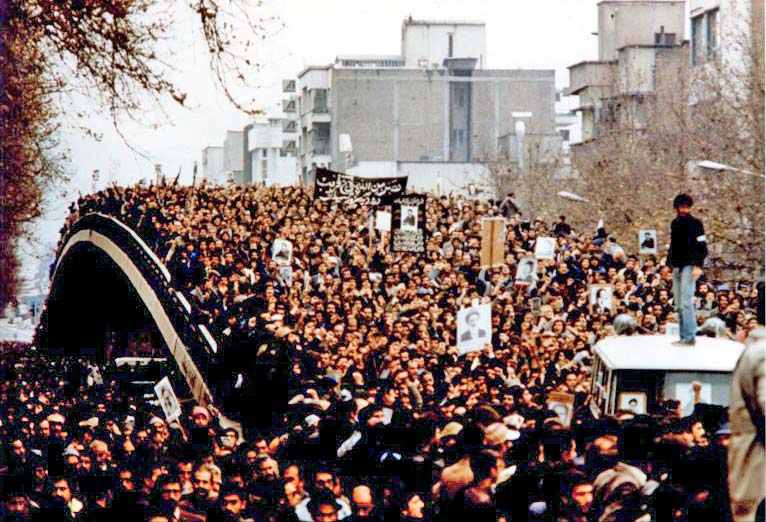
In assessing the progress of the revolution in Iran, it might be useful to recall how other revolutions of the 20th century fared at the 30-year interval. Using their commencement rather than the actual seizure of power as the baseline, the 30th anniversaries of major 20th century revolutions were 1940 for Mexico, 1947 for the Soviet Union, 1964 for China (using the “Long March” as the year), 1975 for Vietnam, 1983 for Cuba (dating its beginning with the attack on the Moncada Barracks), 1984 for Algeria, and 2008 for Nicaragua.