Skip to Content

Research & Commentary Results

Filter by
3038 Results
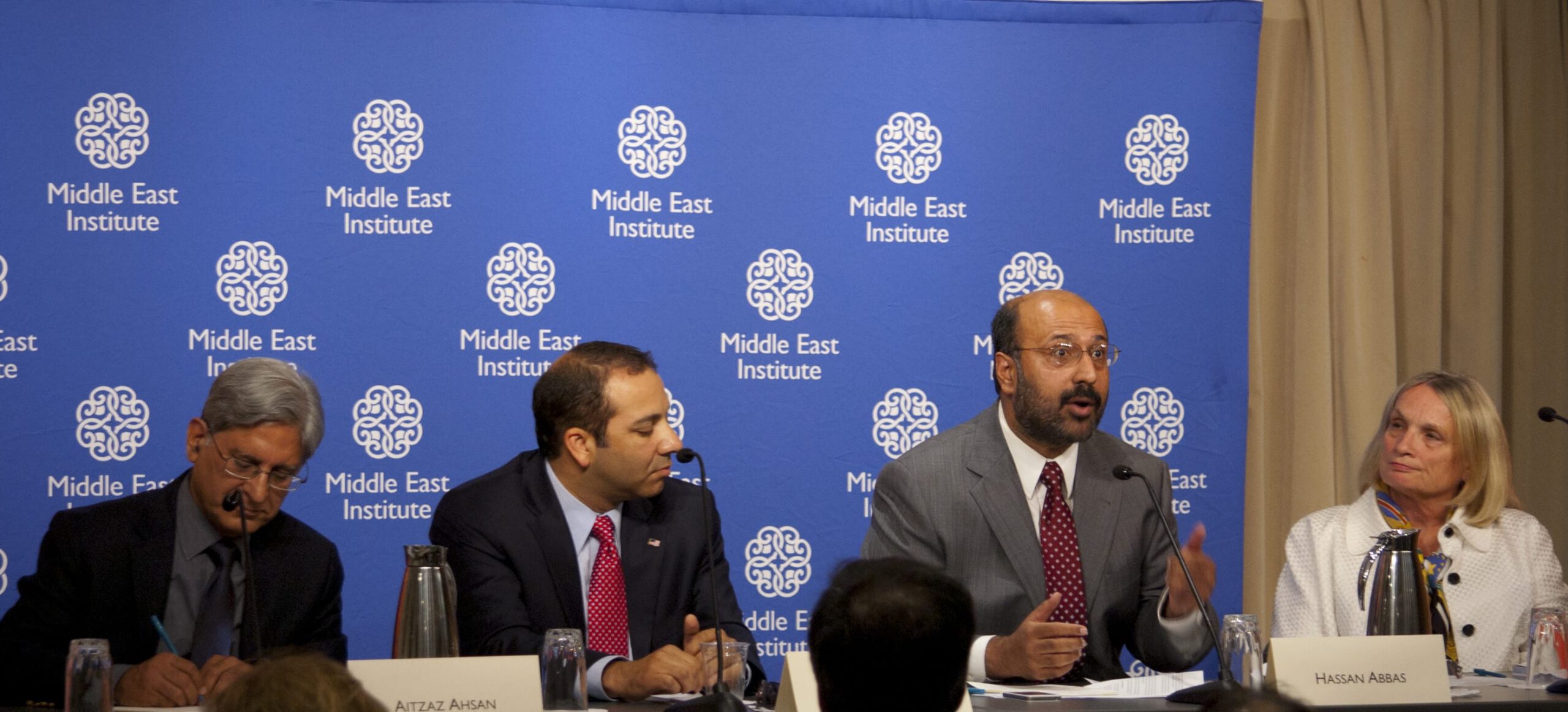
A Postmortem on Pakistan's 2013 Elections
Middle East Institute
  • Podcast
  • A Postmortem on Pakistan's 2013 Elections

    In the wake of Pakistan’s recently concluded elections, this panel will offer insight and analysis into what the results are likely to mean for the future of the country and region. The speakers will reflect on the possible composition of a new government and the implications of the election for the future of Pakistan’s democratic system.

    May 15, 2013

    What Pakistan’s Democratic Future Holds for the United States
  • Analysis
  • What Pakistan’s Democratic Future Holds for the United States

    With elections set to take place on May 11, Pakistan stands at an important juncture of its history. The Election Commission of Pakistan, arguably the most independent and impartial that the country has had, is working diligently to ensure that the electoral process is free and fair. A democratically elected government could, for the first time in Pakistan’s history, relinquish power to another civilian government. Such a development, which marks a new phase in the Pakistan’s democratic struggle, indicates the need for a reassessment of U.S.

    May 9, 2013

    Pakistan's Jihadi Problem and the Middle East
    Middle East Institute
  • Analysis
  • Pakistan's Jihadi Problem and the Middle East

    Along with countries such as Syria and Iraq, Pakistan has become a theater of doctrinal differences between Shia and Sunni Muslims, signifying that rifts between local groups have become linked to the wider violent sectarianism in the Middle East.

    April 11, 2013

    Supreme Showdown in Tehran
    Middle East Institute
  • Analysis
  • Supreme Showdown in Tehran

    This piece was first published by ForeignPolicy.com on February 4, 2013.

    February 6, 2013

    The Blasphemy Case Against Ambassador Sherry Rehman
  • Analysis
  • The Blasphemy Case Against Ambassador Sherry Rehman

    The dust of speculation on the Supreme Court’s role during populous cleric Tahir-ul-Qadri’s recent march in Islamabad had hardly settled down when it lent itself to more speculation.  A two-member bench of the Supreme Court has admitted for hearing the petition of a citizen against Pakistan’s Ambassador to the US Sherry Rehman for allegedly making blasphemous remarks during a television program in 2010. This petition had earlier been rejected by the session court as well as the Multan bench of the Lahore High Court.

    February 4, 2013

    Tangle in the Caucasus
    Middle East Institute
  • Analysis
  • Tangle in the Caucasus

    This piece was originally published by ForeignAffairs.com on January 15, 2013

    Assertions and opinions in this publication are solely those of the above-mentioned author(s) and do not necessarily reflect the views of the Middle East Institute, which expressly does not take positions on Middle East policy.

    War with Iran in 2013?
    Middle East Institute
  • Analysis
  • War with Iran in 2013?

    This piece was originally published by Reuters on January 3, 2013 under the title Will This Be the Year That Israel Goes to War with Iran?

    Assertions and opinions in this publication are solely those of the above-mentioned author(s) and do not necessarily reflect the views of the Middle East Institute, which expressly does not take positions on Middle East policy.

    Israel did not bomb Iran last year. Why should it happen this year?

    January 4, 2013

    Could South Korea “Save” America’s Relations with Pakistan?
    Middle East Institute
  • Analysis
  • Could South Korea “Save” America’s Relations with Pakistan?

    This piece was originally published by The Diplomat on December 21, 2012

    Assertions and opinions in this publication are solely those of the above-mentioned author(s) and do not necessarily reflect the views of the Middle East Institute, which expressly does not take positions on Middle East policy.

    December 21, 2012

    What Pakistan Seeks in Afghanistan
    Middle East Institute
  • Analysis
  • What Pakistan Seeks in Afghanistan

    This piece was originally published by Foreign Policy Blogs on December 20, 2012

    Assertions and opinions in this publication are solely those of the above-mentioned author(s) and do not necessarily reflect the views of the Middle East Institute, which expressly does not take positions on Middle East policy.

    China and the Middle East: Rising Power and a Region in Turmoil
    Middle East Institute
  • Podcast
  • China and the Middle East: Rising Power and a Region in Turmoil

    China and the Middle East: Rising Power and a Region in Turmoil Featuring:Dr. Yitzhak Shichor, Professor of political science and Asian studies, University of Haifa Dr. Dawn Murphy, Princeton-Harvard China and the World Postdoctoral Fellow Moderated by: Sam Chester, Masters candidate in China and the Middle East studies, Johns Hopkins University’s School of Advanced International Studies Tuesday, December 4, 201212:00-1:30pm Middle East InstituteBoardman Room1761 N Street, NWWashington D.C., 20036 This program features three experts on China’s relations with the Middle East.

    December 4, 2012

    China and the Middle East: Rising Power and a Region in Turmoil
    Middle East Institute
  • Podcast
  • China and the Middle East: Rising Power and a Region in Turmoil

    China and the Middle East: Rising Power and a Region in Turmoil Featuring:Dr. Yitzhak Shichor, Professor of political science and Asian studies, University of Haifa Dr. Dawn Murphy, Princeton-Harvard China and the World Postdoctoral Fellow Moderated by: Sam Chester, Masters candidate in China and the Middle East studies, Johns Hopkins University’s School of Advanced International Studies Tuesday, December 4, 201212:00-1:30pm Middle East InstituteBoardman Room1761 N Street, NWWashington D.C., 20036 This program features three experts on China’s relations with the Middle East.

    December 4, 2012

    China and the Middle East: Rising Power and a Region in Turmoil
    Middle East Institute
  • Podcast
  • China and the Middle East: Rising Power and a Region in Turmoil

    China and the Middle East: Rising Power and a Region in Turmoil Featuring:Dr. Yitzhak Shichor, Professor of political science and Asian studies, University of Haifa Dr. Dawn Murphy, Princeton-Harvard China and the World Postdoctoral Fellow Moderated by: Sam Chester, Masters candidate in China and the Middle East studies, Johns Hopkins University’s School of Advanced International Studies Tuesday, December 4, 201212:00-1:30pm Middle East InstituteBoardman Room1761 N Street, NWWashington D.C., 20036 This program features three experts on China’s relations with the Middle East.

    December 4, 2012

    China and the Middle East: Rising Power and a Region in Turmoil
    Middle East Institute
  • Podcast
  • China and the Middle East: Rising Power and a Region in Turmoil

    China and the Middle East: Rising Power and a Region in Turmoil Featuring:Dr. Yitzhak Shichor, Professor of political science and Asian studies, University of Haifa Dr. Dawn Murphy, Princeton-Harvard China and the World Postdoctoral Fellow Moderated by: Sam Chester, Masters candidate in China and the Middle East studies, Johns Hopkins University’s School of Advanced International Studies Tuesday, December 4, 201212:00-1:30pm Middle East InstituteBoardman Room1761 N Street, NWWashington D.C., 20036 This program features three experts on China’s relations with the Middle East.

    December 4, 2012

    Iranian Nuclear Development: Policy Indications
    Middle East Institute
  • Analysis
  • Iranian Nuclear Development: Policy Indications

    Based on the concerned parties’ positions recently expressed on the issue and relevant discussions by Iran experts in Washington, there seems to be numerous policy indications pertaining to Iranian nuclear development. The followings are the key points:

    November 19, 2012

    Malala Yousufzai – Reclaiming Ideological Space in Pakistan
  • Analysis
  • Malala Yousufzai – Reclaiming Ideological Space in Pakistan

    The attempted assassination of Malala Yousufzai by Tehreek-e-Taliban Pakistan on October 9, 2012, marks a milestone in the trajectory of Pakistan’s future. It has manifested the balkanization of Pakistani society along the lines of those who have been labeled in the popular vernacular in Pakistan as “liberals,” and those who claim ideological proximity with the reactionary religious ideology and demonstrate mistrust and disapproval of American policies instituted in the “War on Terror.” How this debate pans out between the two groups will mark the path to Pakistan’s future.

    October 25, 2012