The Middle East Institute is proud to host Dr. Mark Katz, professor at George Mason University, for a discussion of current relations between Iran and Russia. The Obama Administration has attempted to improve US relations both with both countries. However, neither Tehran nor Moscow has responded favorably toward the new administration's initiatives. While Tehran and Moscow continue to distrust Washington, they also distrust each other.
Addressing the Crisis in Yemen: Strategies and Solutions
The Middle East Institute is proud to host two former Ambassadors to Yemen, Thomas Krajeski and David Newton, for a discussion about Yemen and the role of US foreign policy in a country some political analysts characterize as a failed state. As Yemen grapples with multiple crises, including the growing influence of Al Qaeda, a Houthi Rebellion in the north, a secessionist movement in the south and severe economic woes, what should the US do to help stabilize and secure one of the Arab world’s poorest countries?
How Salafism Came to Yemen: An Unknown Legacy of Juhayman al-'Utaybi 30 Years On
Since it emerged in Yemen around three decades ago, the country’s Salafi movement has maintained complex, if not tense links with Saudi Arabia.[1] Before establishing a Yemeni manifestation of Salafism with its own features and clerics,
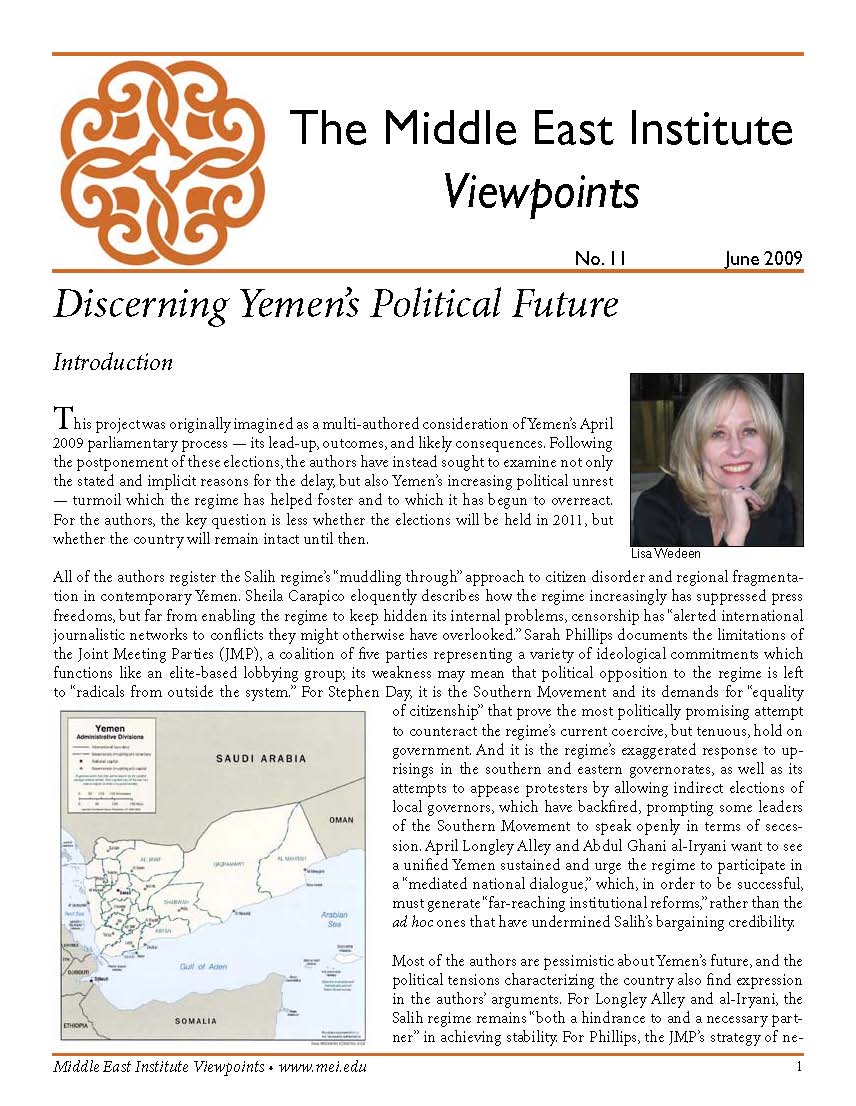
This project was originally imagined as a multi-authored consideration of Yemen’s April 2009 parliamentary process — its lead-up, outcomes, and likely consequences. Following the postponement of these elections, the authors have instead sought to examine not only the stated and implicit reasons for the delay, but also Yemen’s increasing political unrest — turmoil which the regime has helped foster and to which it has begun to overreact. For the authors, the key question is less whether the elections will be held in 2011, but whether the country will remain intact until then.
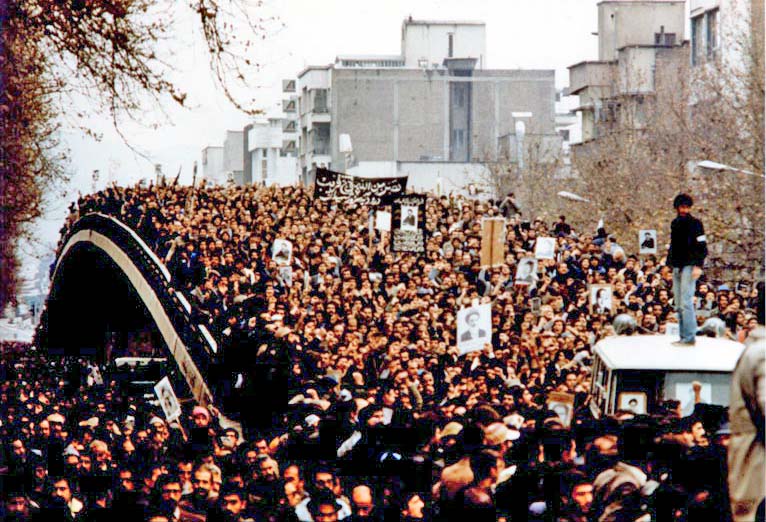
Iran’s political system has not yet developed stable party structures. Most parties are still loose coalitions of individuals and interest groups that combine their own interpretation of Ayatollah Ruhollah Khomeini’s legacy with their personal interests. As party affiliation remains relatively weak, members of one party often have run as candidates for another party or are on several electoral lists. Similarly, unregistered parties or electoral platforms also field candidates for both presidential and parliamentary elections on an ad hoc basis.
Ten years ago, in the summer of 1998, I arrived in Tehran after an absence of more than two decades. Three vignettes describe some of what I experienced and why I decided to stay.
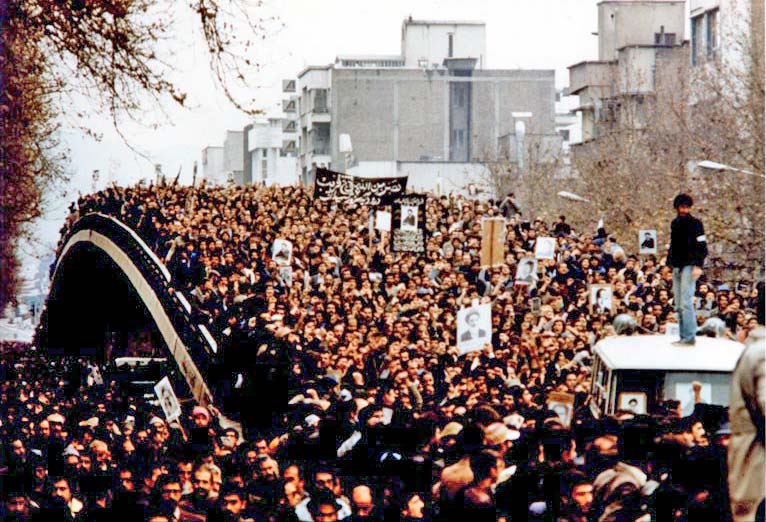
In assessing the progress of the revolution in Iran, it might be useful to recall how other revolutions of the 20th century fared at the 30-year interval. Using their commencement rather than the actual seizure of power as the baseline, the 30th anniversaries of major 20th century revolutions were 1940 for Mexico, 1947 for the Soviet Union, 1964 for China (using the “Long March” as the year), 1975 for Vietnam, 1983 for Cuba (dating its beginning with the attack on the Moncada Barracks), 1984 for Algeria, and 2008 for Nicaragua.
Back to the Future: Bazaar Strikes, Three Decades after the Iranian Revolution
This essay series examines the roles that community-based organizations (CBOs) have played as active participants in the process of “governing” megacities—whether in service delivery, risk mitigation, or the creation of