Migrant Workers in Kuwait: The Role of State Institutions
The treatment of migrant domestic workers is one of the defining stories told about the Arab Gulf states. Every year hundreds of news media and human rights reports detailing migrant domestic workers’ experiences of exploitation and abuse circulate globally. The narratives of these accounts are remarkably consistent. They often begin with the story of an impoverished woman from the global South, who, in order to improve the situation of her family, migrates to the oil-rich Gulf states in search of work and a more prosperous future.
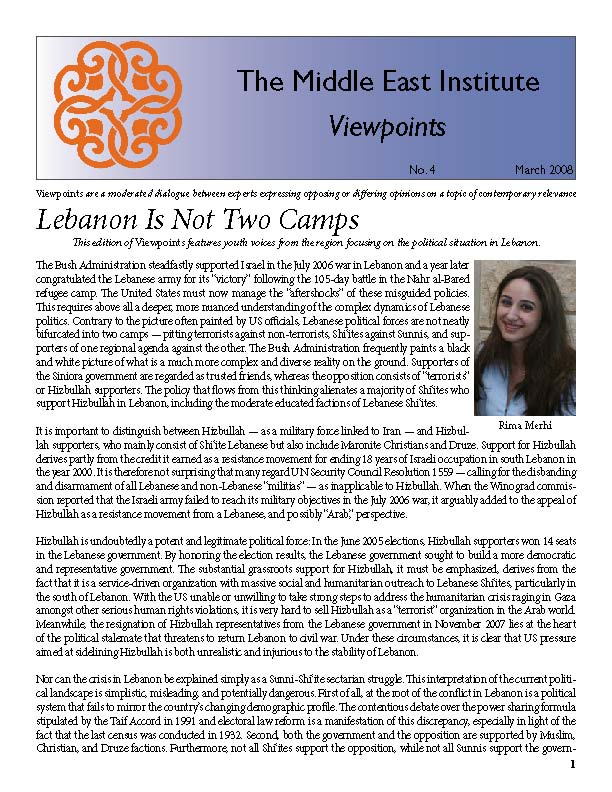
Secretary Clinton’s visit to Pakistan has been a serious attempt to use public diplomacy to help the troubled US Pakistan relations. Her reaching out to people with a mix of soft power and hard talk was refreshing. It is time to ‘clear the air’ she said. But a lot more work needs to be done in the realm of policy to bring about a meaningful change in the relationship. The problems between Pakistan and the United States, referred to as the “trust deficit” for want of a better word, are many and mask much complexity at the heart of policy and systemic issues on both sides.
Kuwait Looks towards the East: Relations with China
Originally posted September 2009
There is a growing tendency among the Gulf Cooperation Council (GCC) states to benefit from the favorable conditions in the rapidly growing economies of the East. As was amply demonstrated at a symposium organized by the Centre for Gulf and Arabian Peninsula Studies at Kuwait University in May 2009 on the “Reality of GCC-Asian Relationship — opportunities and challenges,” Kuwait exemplifies this trend.
The Arab world, especially the Gulf countries, face many environmental threats and problems such as desertification, biodiversity loss, marine and coastal areas pollution, air pollution, and water scarcity and quality. Beside these traditional environmental threats, various other environmental problems have begun to emerge in the last few years, related to military conflicts, construction and demolition debris, and climate change.
Climate Change Threats, Opportunities, and the GCC Countries
Originally posted April 2008
Oil and gas revenues for GCC countries have enabled exceptional and accelerated development in all aspects of life. These countries have become a hub of intense activity in many spheres—geopolitical, military, economic, industrial, construction, and tourism, to name a few. However, the scale of oil and gas production and use has also led to severe environmental problems.
“In the past week Iran’s president, Mahmud Ahmadinejad, has damned it as a ‘worthless piece of paper’ and China’s premier, Wen Jiabao, has moaned that it is causing his country ‘big pressure’. The dollar’s relentless decline—it hit a new low of $1.49 against the euro on November 21st—is prompting jibes from America’s critics, jangling investors’ nerves and giving policymakers headaches.”[1]