Skip to Content

Research & Commentary Results

Filter by
601 Results
Games without Frontiers: Renegotiating the Boundaries of Power in Iraqi Kurdistan
  • Analysis
  • Games without Frontiers: Renegotiating the Boundaries of Power in Iraqi Kurdistan

    Over the past year, intensifying political and economic conflicts between the Kurdistan Region’s two hegemonic parties, the Kurdistan Democratic Party and the Patriotic Union of Kurdistan, have challenged the legal and institutional order in which the Kurdistan Regional Government operates. A new generation of leadership within the parties, a fraught relationship with the federal government, and a prolonged economic crisis have strained the relationship between the two parties to its breaking point.

    June 23, 2021

    With the Hope Line, Iran aims to boost seawater transfer to fight growing drought
    Photo by Presidency of Iran / Handout/Anadolu Agency via Getty Images
  • Analysis
  • With the Hope Line, Iran aims to boost seawater transfer to fight growing drought

    Blessed with milder temperatures than its Gulf neighbors as well as abundant rain and snow fall, Iran is one of the last countries in the region to introduce a seawater transfer plan to fight unprecedented levels of drought. The plan, once fully implemented, could help build water corridors linking the shores of Iran’s southern Gulf to those of its northern Caspian Sea. Named the Hope Transfer Line, the plan promises prosperity for farmers and industrialists, and potable water for communities in some 10,000 villages and urban areas located in so-called Red Zones, a category that applies to regions coping with severe water scarcity. 

    June 9, 2021

    Lessons Learned for Baghdad & Erbil From the GCC
  • Commentary
  • Lessons Learned for Baghdad & Erbil From the GCC

    In this policy paper, Dr. Karen E. Youngsets out to delineate and compare economic diversification efforts underway in the GCC that might prove useful in the Iraqi context, for the state as a whole, and measures that might be adopted in the context of the Kurdistan region.

    Iranian sanctions evasion and the Gulf’s complex oil trade
    Photo by Ali Mohammadi/Bloomberg via Getty Images
  • Analysis
  • Iranian sanctions evasion and the Gulf’s complex oil trade

    Sanctions have had a devastating impact on Iran’s oil production and exports, preventing much-needed investment in the country’s ageing fields and barring it from legally exporting crude oil to global customers. Using a range of evasion tactics, however, Iran has succeeded in circumventing sanctions and maintaining a steady — albeit much lower — level of crude exports. The Gulf’s complex regional oil market has facilitated these tactics, providing the perfect environment for trade in oil that U.S. sanctions designate as illicit.

    May 11, 2021

    The Houthis and the limits of diplomacy in Yemen
    Photo by Stringer/Getty Images
  • Analysis
  • The Houthis and the limits of diplomacy in Yemen

    President Joe Biden’s commitment to “stepping up” diplomacy to end the war in Yemen generated hope among peace practitioners and policy shapers. In February, the president appointed Tim Lenderking, a seasoned diplomat with solid experience in the region, as the U.S. special envoy to Yemen.

    كيف ساهمت سياسات الإدارة الذاتية في عودة نشاط "داعش"؟
  • Analysis
  • كيف ساهمت سياسات الإدارة الذاتية في عودة نشاط "داعش"؟

    الرغم من مرور أكثر من عامين على تحرير مخيم الباغوز في محافظة ديرالزور، والذي كان آخر معاقل تنظيم “داعش” في سورية، ومحاولات التحالف الدولي وحليفته الإدارة الذاتية ارساء الاستقرار في مناطق شرق الفرات ومنع عودة التنظيم إلى واجهة الأحداث، إلا أن التنظيم لازال يمارس نشاطه وعملياته الأمنية في المنطقة، والتي تشهد تزايداً ملحوظاً مع مرور الزمن خاصة في العامين الأخيرين.

    EU-Iran relations: Toward a diplomatic confrontation?
    Photo by Olivier HOSLET / POOL / AFP) (Photo by OLIVIER HOSLET/POOL/AFP via Getty Images
  • Analysis
  • EU-Iran relations: Toward a diplomatic confrontation?

    When the EU’s high representative for foreign affairs and security policy, Josep Borrell Fontelles, took office in December 2019, he emphasized the need to preserve the 2015 Joint Comprehensive Plan of Action (JCPOA) and cooperate with Iran. At the same time, he criticized then-U.S. President Donald Trump for maintaining extended sanctions — which in practice prevented leading European firms from concluding large contracts with partners in Iran — and for the U.S.’s withdrawal from the provisions of the treaty.

    May 4, 2021

    Expert Views: The Biden administration and the Middle East: Reflecting on the first 100 days
    Photo by Chip Somodevilla/Getty Images
  • Analysis
  • Expert Views: The Biden administration and the Middle East: Reflecting on the first 100 days

    At the end of Joe Biden’s first 100 days as president of the United States, where do things stand when it comes to U.S. policy toward the Middle East and North Africa? We asked experts and scholars from across MEI to weigh in with their thoughts on the changes we’ve seen so far, the new challenges that have emerged, and what we know about the administration’s key priorities for the region. 

    Key environmental challenges facing the Middle East
    Photo by KHALED DESOUKI / Stringer
  • Analysis
  • Key environmental challenges facing the Middle East

    The Middle East and North Africa faces a host of major environmental challenges, from water scarcity and food insecurity to climate change adaptation. In recognition of Earth Day on April 22 and in conjunction with MEI’s Climate Week 2021 events, we asked experts and scholars to weigh in with their thoughts on the most pressing environmental issues facing the region.

    April 22, 2021

    Terrorism Laws in Malaysia: The Continuing Case for SOSMA and POTA
    Middle East Institute
  • Analysis
  • Terrorism Laws in Malaysia: The Continuing Case for SOSMA and POTA

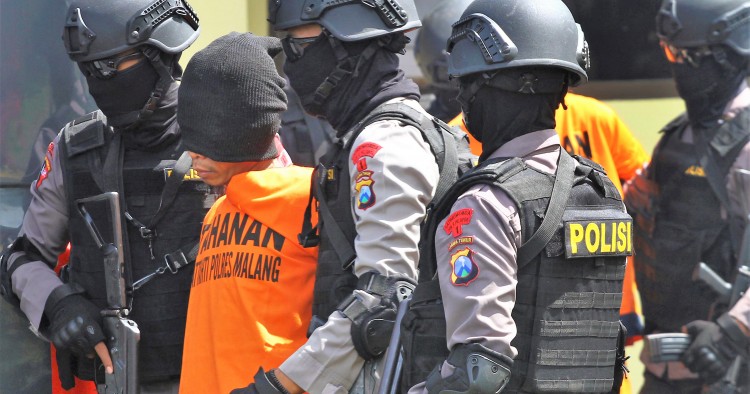
    Calls for the abolishment of terrorism laws have resurfaced in Malaysia recently. The Malaysian Bar and human rights advocates have referred to current terrorism laws as “unjust,” “regressive,” violations of basic human rights and laws that need to be abolished immediately. Yet, despite the physical loss of the Islamic State (IS) caliphate, the terrorism threat still looms in the region owing to IS’ ideology. This article discusses Malaysia’s two terrorism-related laws — correcting misconceptions about them, arguing for their retention, and suggesting ways that valid concerns about them might be addressed.

    April 20, 2021

    Iran’s game plan for Iraq’s militias
    Photo credit should read AHMAD AL-RUBAYE/AFP via Getty Images
  • Analysis
  • Iran’s game plan for Iraq’s militias

    Historically, Iran has used Iraqi militias to implement both its short-term plans and long-term strategies. At this stage Iran seems to have included its Iraqi proxies in plans to lift U.S. sanctions. Going forward, the Islamic Republic may use escalation against the United States in Iraq to exercise leverage in its dealings with Washington on the JCPOA.

    April 19, 2021

    Egypt should go green by putting a price on carbon
    Photo by MOHAMED EL-SHAHED/AFP via Getty Images
  • Analysis
  • Egypt should go green by putting a price on carbon

    It is time for Egypt to put a price on carbon. While Cairo has taken small steps toward developing a sustainability plan, it needs a bold idea to stop rising carbon emissions. Establishing a carbon exchange — or putting a price on carbon — would be good for the country and help make Egypt an environmental leader in the region.

    March 30, 2021

    Counter-terrorism under the Biden administration
    Middle East Institute
  • Podcast
  • Counter-terrorism under the Biden administration

    Matthew Levitt and Douglas London join host Alistair Taylor to discuss the new and evolving threats of terrorism at home and abroad and what the US needs to do to adapt and innovate to address them.

    March 30, 2021