Skip to Content

Research & Commentary Results

Filter by
8738 Results
Monday Briefing: Pakistani PM Khan heads to the White House
  • Analysis
  • Monday Briefing: Pakistani PM Khan heads to the White House

    This week’s briefing on recent news and upcoming events in the region including Imran Khan’s visit to the White House, tensions between President Trump and Congress over Turkey’s new S-400 system, escalation in the Straits of Gibraltar and Hormuz, military restructuring in Iraq, increased collaboration on the region’s power supply, and changes to Egypt’s social safety net, featuring Arif Rafiq, Gonul Tol, Ruba Husari, Robert S. Ford, Dr. Ibrahim Saif, and Mirette F. Mabrouk.

    Avoiding an Economic Crisis in Lebanon
    Middle East Institute
  • Podcast
  • Avoiding an Economic Crisis in Lebanon

    As it combats continuing stagnant growth, Lebanon’s economy is facing a looming debt crisis. Omar Slim, senior investment manager and committee member with Lebanese International Finance Executives (LIFE), joins host Alistair Taylor to discuss the current threats to Lebanon’s economy and the need for financial consolidation.

    July 18, 2019

    The Lion and The Eagle: The Syrian Arab Army’s Destruction and Rebirth
    SYRIA-CONFLICT-MANBIJ (Photo credit: GEORGE OURFALIAN/AFP/Getty Images)
  • Analysis
  • The Lion and The Eagle: The Syrian Arab Army’s Destruction and Rebirth

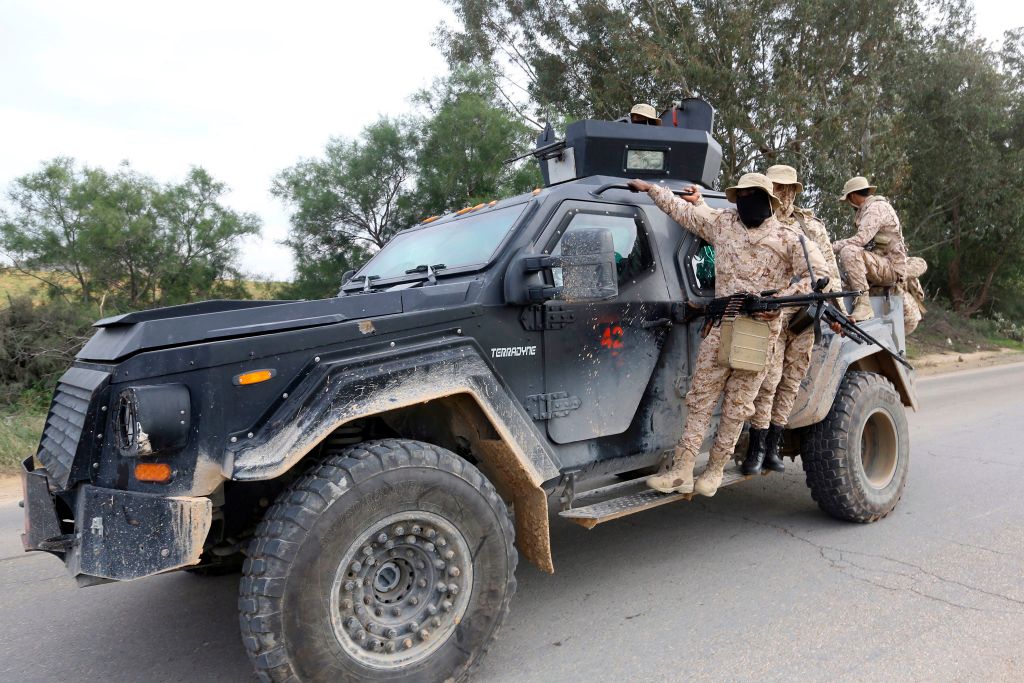
    The Syrian Arab Army (SAA) has been decimated by eight years of civil war. Defections, deaths, and a lack of funding have gutted its ranks while heavy losses of armored vehicles have significantly reduced the mechanized capabilities of what was once the sixth-largest armor fleet in the world. The inability of Damascus to fully deploy its official army led to the rise of paramilitary militias and an influx of pro-regime foreign fighters. This report explores the causes of the collapse of the SAA and its attempted rebirth, and ends with a detailed examination of its current order of battle.

    July 18, 2019

    Iran, Russia, and the impact of US sanctions
    Iranian pipelines on Khark Island
  • Analysis
  • Iran, Russia, and the impact of US sanctions

    When it was signed four years ago, the Iran nuclear deal was widely perceived as a diplomatic triumph, a move that would help reintegrate Iran into the global economy and restore its relations with the West. Things haven’t quite turned out that way, however.

    July 17, 2019

    The Israeli-Palestinian battle for Latin America
    Abbas leaves Palestino football club in Santiago, Chile
  • Analysis
  • The Israeli-Palestinian battle for Latin America

    With the increased influence of right-wing populism and evangelicalism, Mahmoud Abbas has seen the region’s historic commitment to the Palestinian cause wane. These internal changes, along with a pivot toward Washington, have, in turn, aided Israeli Prime Minister Benjamin Netanyahu in making further inroads on the South American continent.

    July 16, 2019

    The Abu Dhabi Policing Laboratory: Building Security, Forging Community
  • Analysis
  • The Abu Dhabi Policing Laboratory: Building Security, Forging Community

    Over the past decade, police reform in the Gulf Cooperation Council (GCC) region has been mainly implemented through community policing programs, gender inclusion, and youth and expatriates outreach, with the overarching purpose of promoting a positive image of the police. This article discusses the case of Abu Dhabi, the re-branding of whose police forces aims to boost a carefully tailored nation-building process in the United Arab Emirates (UAE) while supporting the federal messages of tolerance and happiness.

    July 16, 2019

    Monday Briefing: US and Turkey face S-400 confrontation
  • Analysis
  • Monday Briefing: US and Turkey face S-400 confrontation

    This week’s briefing on recent news and upcoming events in the region including Turkey’s confrontation with the U.S. over its S-400 defense system, the latest round of Afghan peace talks, the UAE’s drawdown in Yemen, Turkey’s media signaling on Syria, and the 21st consecutive week of protests in Algeria, featuring W. Robert Pearson, Marvin G. Weinbaum, Ibrahim Jalal, Guney Yildiz, and Robert S. Ford.

    Shale oil and the illusion of US energy independence
    GREELEY, CO - SEPTEMBER 03: Northern Colorado is on the front lines of the effort to cut reliance on foreign oil, as oil and gas companies explore the Niobrara shale formation in Weld County. (Photo by RJ Sangosti/The Denver Post via Getty Images)
  • Analysis
  • Shale oil and the illusion of US energy independence

    U.S. crude oil and energy product exports surged to an all-time high in the third week of June, making the country a net exporter of oil and products for the third time since November 2018. This change lends credence to American officials’ presumption that amid growing U.S.-Iran tensions in the Persian Gulf, Washington is less compelled to police oil transit routes in the region, especially the Strait of Hormuz, than it was during the 1980s. However, while the U.S. is less reliant on oil imports than in the past, it still remains dependent on Gulf producers, albeit in different ways.

    July 15, 2019

    Idlib’s Uncertain Future
    Middle East Institute
  • Podcast
  • Idlib’s Uncertain Future

    Although Syria’s civil war has largely wound down, fighting in Idlib in the country’s northwest has heated up in the last two months. Charles Lister, MEI senior fellow and Director of the Countering Terrorism and Extremism Program, and Sasha Ghosh-Siminoff, executive director and co-founder of People Demand Change, join host Alistair Taylor to discuss the ongoing conflict and what impact it might have on Syria’s future.

    July 11, 2019

    The untapped potential of a Levant Union
    A picture taken on February 7, 2018 shows a view of container cranes and port machinery at the Tripoli Free Zone in the port of the same name in northern Lebanon. (Photo by IBRAHIM CHALHOUB / AFP) (Photo credit should read IBRAHIM CHALHOUB/AFP/Getty Images)
  • Analysis
  • The untapped potential of a Levant Union

    The idea of establishing a Levant Union — one not unlike the European Union (EU), but composed of the Levantine states of Lebanon, Syria, Iraq, Palestine, Jordan, and by extension, Egypt and Cyprus — is one that ought to be explored. Such an arrangement would offer untapped potential for trade, supported by the growing trend toward greater regionalization, fueled by the rise in protectionism, increasing multipolarity, and corporate regionalization.

    July 11, 2019

    The UAE drawdown in Yemen is a welcome step, but it needs to be reciprocated
    August 2018: An Emirati soldier watching from a military plane a ship crossing through the strategic strait of Bab al-Mandab
  • Analysis
  • The UAE drawdown in Yemen is a welcome step, but it needs to be reciprocated

    Reports that the UAE, a key member of the Saudi-led coalition fighting in Yemen, has decided to draw down and reposition its troops should be welcomed and taken seriously. It is not a small or symbolic move, but rather a serious, strategic, and thoughtful military and political decision. If reciprocated by the Iranian-backed Houthi militia, it could serve as the long-awaited breakthrough in the five-year-old Yemen war.

    July 11, 2019

    Turkey, Russia, and the Looming S-400 Crisis
    Russian S-400 missile system
  • Analysis
  • Turkey, Russia, and the Looming S-400 Crisis

    With delivery of the Russian S-400 air defense system to Turkey looming, a new crisis in U.S.-Turkey relations is slowly emerging. While it is obvious that Turkey needs a new air and missile defense system given the security risks in its region, it remains unclear why Turkish President Recep Tayyip Erdogan seeks to acquire the capability from a historical rival and potential adversary instead of through NATO. This decision will likely have major consequences for Turkey and its future geopolitical orientation.

    July 10, 2019

    Freshwater Resources in the MENA Region: Risks and Opportunities
    A young Palestinian draws water from a tank
  • Analysis
  • Freshwater Resources in the MENA Region: Risks and Opportunities

    A reliable supply of freshwater is a prerequisite for sustainable socioeconomic development, as well as for sociopolitical stability and human prosperity, especially in semi-arid and arid regions of the world. The Middle East and North Africa’s freshwater resources are under immense pressures and are facing significant risks to their sustainability due to overexploitation, climate change, and interstate competition over their use that extends beyond the region’s boundaries.

    July 10, 2019

    Interconnected: Trade, food security, and stability in the GCC and MENA
    An Emirati man reads the front of a package of Indian Basmati rice in a supermarket in Dubai on July 19, 2008. Faced with the scarcity of fertile land and water, and the surging world prices of food, the wealthy Gulf states are seeking to secure food supplies through agricultural investments abroad.
  • Analysis
  • Interconnected: Trade, food security, and stability in the GCC and MENA

    It is easy to overlook the fact that food security could be an issue of concern in the Gulf Cooperation Council. After all, its member states have some of the world’s highest per capita income levels. Food supplies in the Gulf are normally abundant and stable. Were they to be disrupted, however, it could lead to food security challenges and a chain of adverse consequences for human security throughout the region.

    July 9, 2019

    China and Syria: In War and Reconstruction
    Syrian FM W. Mouallem & Chinese FM Wang Yi | June 18, 2019
  • Analysis
  • China and Syria: In War and Reconstruction

    Traditionally, Syria has not been a strategic priority for China. Nor is it today. However, this does not mean that Beijing has been indifferent to the wide-ranging adverse effects of Syria’s disastrous civil war or to the opportunities that its postwar rebuilding might present. China’s Syria policy derives from its broader security and economic interests in the region. Accordingly, China’s two primary policy aims are 1) maintaining a constructive relationship with a government in Damascus that is stable, friendly, and capable of preventing the spread of transnational jihadist activity from its territory; and 2) developing an economic partnership that is compatible with and in furtherance of the Belt and Road Initiative (BRI). This article examines how China has pursued these aims during the eight-year Syrian conflict.