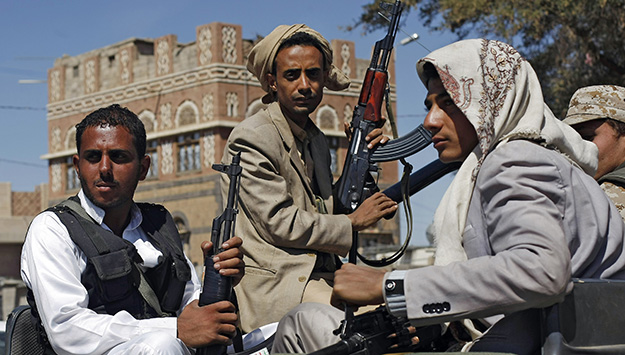
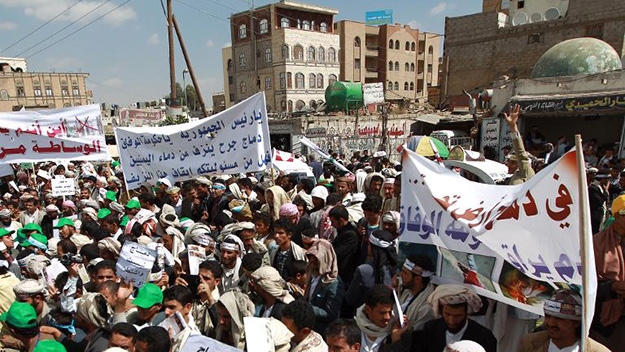
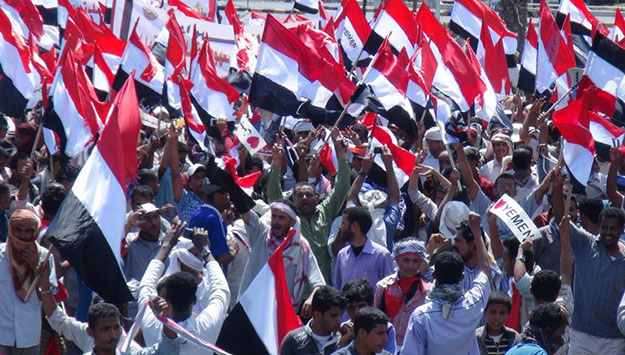
A month after the Houthi conquest of Sana, Yemen’s new political landscape remains uncharted. In Sana, the Houthi leadership is trying to coax Yemen’s political elite into a coalition government, while south of Sana, Houthi forces are pressing to consolidate their military power on the ground. Both efforts are encountering considerable resistance, but the Houthis may prevail still.
Contemporary Indonesian Pilgrimage to Hadramawt, Yemen
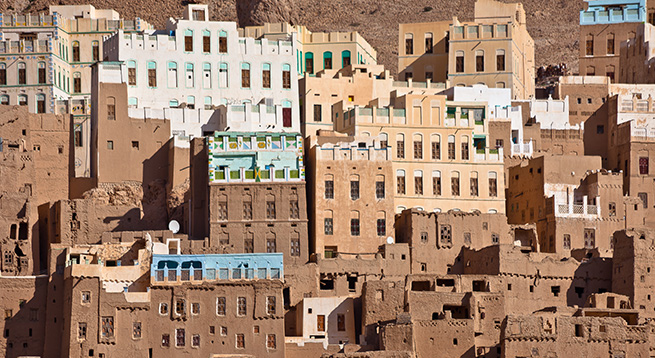
The past decade has witnessed a steady increase in the numbers of Indonesians embarking on pilgrimage (ziyara) to the Hadramawt valley of the former South Yemen. Despite the considerable presence of the Hadrami diaspora in Indonesia, the idea of a pilgrimage to Hadramawt did not really exist among Indonesian Muslims of non-Hadrami descent until rather recently.
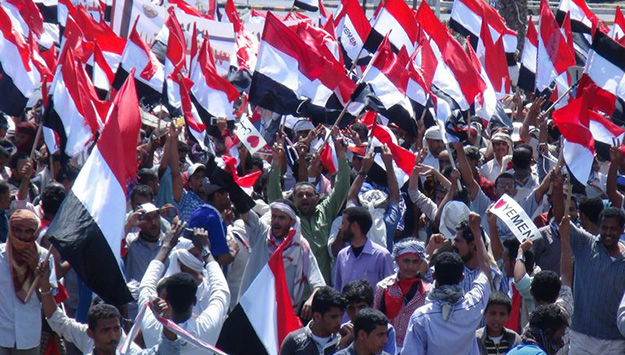
After capturing Amran in mid-summer, the emboldened Huthi movement (Ansar Allah) began a fall campaign against the national capital, surrounding Sana‘a with armed camps, organizing large demonstrations around government buildings inside the city, and demanding that the government repeal its recent decision to lift fuel subsidies before resigning. Tensions turned bloody on September 9 when gunfire broke out as Huthi demonstrators tried to force their way into the Prime Minister’s office in downtown Sana‘a.[1]
The Fall of Amran and the Future of the Islah Party in Yemen
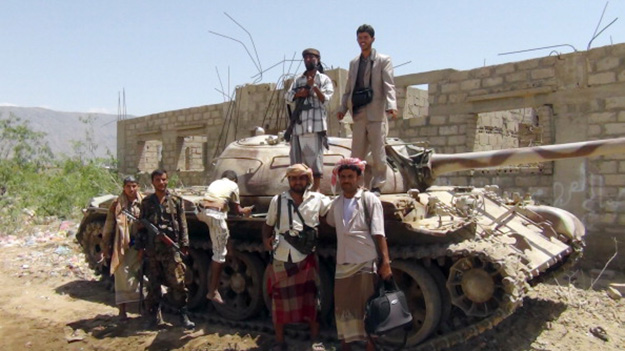
As the world’s attention was riveted on the lightening conquests of the Islamic State in Iraq, Yemen’s al-Huthi movement made an equally stunning but largely unnoticed military advance on Amran Governorate and captured the provincial capital, Amran, in July. The fall of Amran has extraordinary political significance: The al-Huthi advance dislodged the al-Ahmar family’s grip on the leadership of the Hashid tribal confederation, a central political pillar of the Yemeni Republic since 1962, and threatens the survival of the Islah Party itself.
The Popular Committees of Abyan, Yemen: A Necessary Evil or an Opportunity for Security Reform?
In early 2011, Yemeni youths took to the street to demand the downfall of the regime and much-needed democratic reforms. This eventually led to the removal of former president Ali Abdullah Saleh from power later the same year. The political turmoil associated with the uprising has resulted in an alarming deterioration of the security situation throughout the country, most notably the seizure of two major cities in the southern governorate of Abyan by Ansar al-Shariah (AAS), an offshoot of al-Qa`ida. Backed by the Yemeni government, the Popular Committees (PCs), local armed resistance groups, pushed AAS out of major cities in Abyan.
Yemen’s Contentious Transitional Justice and Fragile Peace
Yemen was not immune to the wave of popular uprisings that swept some countries of the Middle East and North Africa region. However, because of the Yemeni state’s fragility, concurrent zones of conflict, and a power struggle that divided the core military and tribal elites, the international community was afraid that the youth uprising that started in January 2011 might lead to a collapse of the state. Given the consequences of such a collapse on the security of the Gulf states, oil production, and the international war on terror, the Gulf Cooperation Council brokered a deal in November 2011—the Gulf initiative—which laid the foundation for a transitional government. The main aim of the initiative was to secure a peace deal that halted Yemen’s slide into chaos. Peace was sought through the brokering of an inclusive National Dialogue Conference (NDC), but peace did not entail changing the regime or its pattern of politics. While transitional justice has been a part of this process of peaceful reconciliation, it raises questions about the sustainability of this peace and provides a showcase of the precarious state of Yemeni affairs.
The removal of Yemeni President Ali Abdullah Saleh in 2011 has created an existential crisis for Yemen’s Houthis. Like many other armed political groups in Yemen and elsewhere, the Houthis’ survival depends on the continued existence of an enemy. With Saleh gone, their raison d’être has become difficult to define and their armed opposition hard to defend.
The members of the Friends of Yemen, comprising over 30 governments and several international institutions, including the United Nations, World Bank, Arab League, and European Union, gathered for their sixth meeting September 25 in New York on the margins of the UN General Assembly. Chaired by the governments of Yemen, Saudi Arabia, and the United Kingdom, participants praised Yemen’s efforts to implement a political transition through inclusive and comprehensive dialogue and negotiation—a stark contrast to the course of events in better-known Syria and Egypt.
Last week, MEI scholars Allen Keiswetter, a retired Foreign Service officer, David Newton, former ambassador to Yemen, and Roby Barrett, author of Yemen: A Different Political Paradigm in Context(2011), gathered for an informal discussion about Yemen’s National Dialogue Conference (NDC), which began in March.
Since the 1970s oil boom, the Gulf region has been one of the principal destinations for workers from South Asia, with the result that today Indians constitute a large percentage of the non-nationals living in the region. Indeed, at five million out of an estimated 15 million people, the Indian community forms the largest expatriate group in each of the Gulf countries. Most Indian immigrants are from the south Indian state of Kerala, while many of the rest originate from Tamil Nadu, Punjab, Uttar Pradesh, and Bihar.
When the young Shaykh Tamim bin Hamad al-Thani became ruler of Qatar last month after his father stepped aside in a seamless transition, one of his first official acts was to seal the generational shift by appointing a new prime minister.
In a speech on 23 May 2013, President Obama declared the war on terror over. “We must define our effort not as a boundless ‘global war on terror,’” he said, “but rather as a series of persistent, targeted efforts to dismantle specific networks of violent extremists that threaten America.”[1] He argued that al-Qa`ida is on the run in Afghanistan and Pakistan and no longer threatens the U.S. homeland.