Skip to Content

Research & Commentary Results

Filter by
1230 Results
The role of women in shaping Syria’s future
Middle East Institute
  • Podcast
  • The role of women in shaping Syria’s future

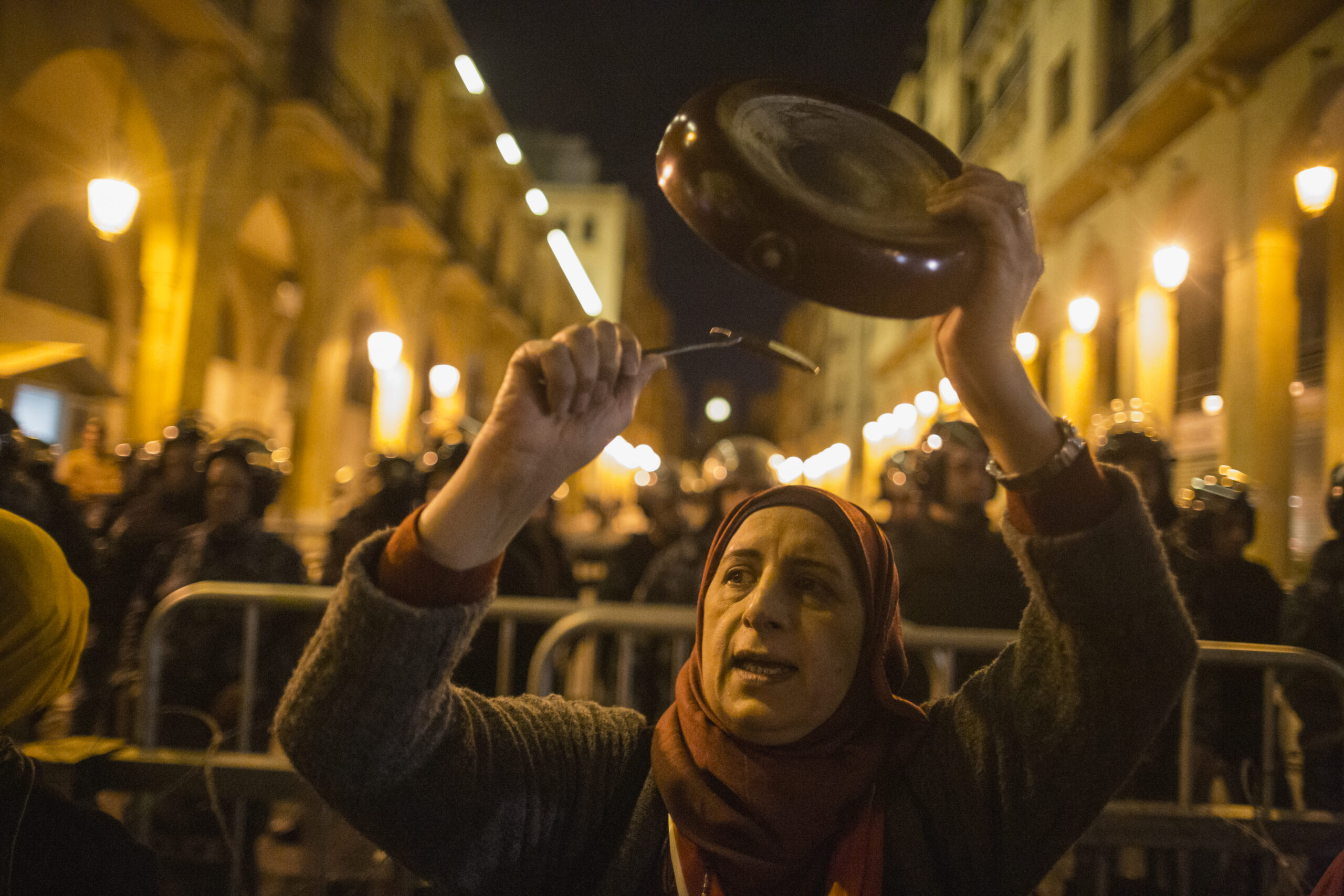
    Syrian activists Sarah Hunaidi, Rafif Jouejati, and Jomana Qaddour join host Alistair Taylor to discuss the involvement and role of women in civil society and efforts to shape the country’s political future.
    November 26, 2019

    The constitutional committee must be part of a holistic Syrian peace process
    Syrian Constitutional Committe, made up of opposition, civil society and regime members gather in Geneva, Switzerland on October 30, 2019 with the UN's facilitation.
  • Analysis
  • The constitutional committee must be part of a holistic Syrian peace process

    This week marks the second round of constitutional committee negotiations in Geneva, Switzerland convened by UN Special Envoy to Syria Geir Pedersen. The committee is convened under the auspices of UNSCR 2254, which requires the drafting of a new constitution among many other important obligations. The fact that only one of those requirements is being pursued seriously by the international community is — understandably — beyond frustrating for Syrians. Attempting to solve the Syrian conflict by addressing only one of so many outstanding issues is not only a mistake, but will also do little to bring any lasting peace to this war-torn country.

    November 26, 2019

    Russia’s military police face their toughest challenge yet in north Syria
    TOPSHOT - Russian military police members stand outside an armoured personnel carrier (APC) along a road in the countryside near the northeastern Syrian town of Amuda in Hasakeh province on October 24, 2019, as part of a joint patrol between Russian forces and Syrian Kurdish Asayish internal security forces near the border with Turkey. - Russian forces have started patrols along the flashpoint frontier, filling the vacuum left by a US troop withdrawal that effectively returned a third of the country to the
  • Analysis
  • Russia’s military police face their toughest challenge yet in north Syria

    Russia’s ability to control the pace and scope of developments in Syria has been a moving target ever since its intervention four years ago. At varying times, Moscow has found itself both firmly in the driver’s seat and a helpless bystander — the latter most vividly illustrated by events such as the regular Israeli airstrikes on Russia’s Iranian and Syrian regime allies.

    November 21, 2019

    Return to the northeast: Syrian Army deployments against Turkish forces
    Syrian government soldiers climb up a wooden pole with a Syrian government national flag while deploying for the first time in the eastern countryside of the city of Qamishli in the northeastern Hasakah province on November 5, 2019.
  • Analysis
  • Return to the northeast: Syrian Army deployments against Turkish forces

    In mid-October, five years after it was expelled from most of eastern Syria as ISIS swept in, the Syrian Arab Army (SAA) returned to much of the northeast as part of a deal between the Syrian Democratic Forces and Damascus struck just days after Turkey launched an offensive against the region. By examining the distribution and make-up of units sent to the northeast we can better understand the strength of the SAA in the region and the current state of its broader deployments across the country.

    November 20, 2019

    Despair and Decay: East Ghouta After 18 Months of Renewed Regime Rule
    Syrian children ride their bike past destroyed buildings in the former rebel-held town of Zamalka, in Eastern Ghouta on April 5, 2018. / AFP PHOTO / STRINGER (Photo credit should read STRINGER/AFP via Getty Images)
  • Analysis
  • Despair and Decay: East Ghouta After 18 Months of Renewed Regime Rule

    East Ghouta is perhaps the darkest example of renewed Assad regime rule over former opposition territory. 18 months after the regime recaptured the area, its security forces and intelligence apparatus continue to terrorize Syrians there. Night-time raids on homes, mass arrests, and forced disappearances are common occurrences across the region. Intelligence forces assert themselves in every aspect of daily life, especially at the ubiquitous checkpoints where personnel extort residents for bribes when they pass, subjecting them to security checks that can lead to civilians either being arrested on the spot or conscripted into military service. In addition, residents of East Ghouta are facing a humanitarian crisis amid a total lack of basic services, from sewage to schools and hospitals, and the basic pillars of the local economy remain in total disrepair.

    November 14, 2019

    Syria tops the agenda as Erdogan heads to Washington
    US President Donald Trump shakes hands with Turkish President Recep Tayyip Erdogan as he arrives for meetings at the White House in Washington, DC, May 16, 2017.
  • Commentary
  • Syria tops the agenda as Erdogan heads to Washington

    Turkish President Recep Tayyip Erdogan is set to meet with his U.S. counterpart, Donald Trump, in Washington on Wednesday. While there are doubtless other items for discussion on the agenda, at the top of the list is, at least on Turkey’s side, Syria — or more specifically, what U.S. policy is and should be in Syria.

    November 11, 2019

    Syria: The most important issues are not yet on the table in Geneva
     Syrian Constitutional Committe, made up of opposition, civil society and regime members gather in Geneva, Switzerland on October 30, 2019 with the UN's facilitation.
  • Commentary
  • Syria: The most important issues are not yet on the table in Geneva

    If the Syrian Constitutional Committee does not address the oppressive security and military apparatus, which are the primary root causes of the Syrian crisis, then its work will not actually effect change in Syria — and so far, reforms of those two sectors are not yet on the table.

    November 4, 2019

    The US has a partner in eastern Syria — provided it has the will
    A US military convoy drives on a highway from Kobane to Ain Issa on September 29, 2017. After a months-long campaign, the Syrian Democratic Forces -- a US-backed alliance of Arab and Kurdish fighters -- have cornered diehard jihadists in a pocket of territory in the battered northern city of Raqa. / AFP PHOTO / BULENT KILIC (Photo credit should read BULENT KILIC/AFP/Getty Images)
  • Analysis
  • The US has a partner in eastern Syria — provided it has the will

    The Trump administration inherited a number of complex problems in the Syrian file from its predecessors in the White House. In dealing with the Syrian crisis, the Obama administration had three main priorities: not disturbing Iran in Syria during the process of nuclear negotiations, working with Russia toward a ceasefire in various parts of Syria (without trusting that Russia could deliver or should have the upper hand), and, most importantly, carrying out a limited military intervention in the northeast to defeat ISIS — an issue it considered separately from the Syrian crisis.

    October 29, 2019

    There may not be any celebrations, but the Israeli-Jordanian peace agreement has endured for 25 years
    The Israel-Jordan peace treaty being signed in 1994. US President Bill Clinton watches Jordan's King Hussein and Israeli Prime Minister Yitzhak Rabin sign the treaty on the White house lawn
  • Analysis
  • There may not be any celebrations, but the Israeli-Jordanian peace agreement has endured for 25 years

    Oct. 26, 2019 marked the 25th anniversary of the signing of the peace treaty between the Hashemite Kingdom of Jordan and the State of Israel. A quarter-century on, relations between the two countries remain mired in disputes and difficulties, and no special celebrations were planned despite the significance of the event. While the challenges facing the two states are complex, both sides benefit from the agreement. The fact that the peace treaty has endured for two and a half decades amid the chaos and unrest afflicting the region is certainly a cause for celebration and gives grounds for optimism.

    October 28, 2019

    Russian-Turkish border deal on Syria holds, but the Western response is muddled
    Turkish soldiers patrol the northern Syrian Kurdish town of Tal Abyad, on the border between Syria and Turkey, on October 23, 2019
  • Commentary
  • Russian-Turkish border deal on Syria holds, but the Western response is muddled

    Russia is clear in its policy toward northeastern Syria: The future of the region will be determined through talks between the representatives of the Kurds, who traditionally live in the area, and Damascus.

    October 28, 2019

    Borders Beyond Borders: The Many (Many) Kurdish Political Parties of Syria
     A demonstrator makes the
  • Analysis
  • Borders Beyond Borders: The Many (Many) Kurdish Political Parties of Syria

    The launch of Turkey’s military incursion into northern Syria on Oct. 9 represents an existential threat for the Autonomous Administration in Northeast Syria (AANES) and Kurdish parties in Syria as a whole, prompting Kurdish political factions, both within Syria and abroad, to reevaluate their survival strategies and alliances. This report explores the various political factions within the Kurdish coalitions in Syria as they functioned under the AANES and the major rifts between them. Even under these dire circumstances Kurdish political factions in Syria have responded to the Turkish invasion independently.

    October 25, 2019

    Iran may not like it, but it can live with a Turkey-Russia deal on Syria
    A convoy of Russian military vehicles drives toward the northeastern Syrian city of Kobane on October 23, 2019.
  • Commentary
  • Iran may not like it, but it can live with a Turkey-Russia deal on Syria

    While the Iranians would have preferred it if the Turks had not invaded Syria, it does not change their most immediate policy objective, which is the survival of the Assad regime. As long as the Russians keep the Turks away from Assad’s forces, Tehran will, at least in the short term, be able to manage the consequences of Ankara’s actions.

    Divide and Conquer: The Growing Hezbollah Threat to the Druze
    Cover photo: Druze men in the Israeli-annexed Golan Heights look out across the southwestern Syrian province of Quneitra, visible across the border on July 7, 2018. (Photo by JALAA MAREY/AFP/Getty Images)
  • Analysis
  • Divide and Conquer: The Growing Hezbollah Threat to the Druze

    Deep political, familial, and religious ties have allowed Druze communities across the Levant to remain largely unified against external threats, but eight years of violence in Syria and a coordinated campaign by the regime and its allies now threaten to destabilize regional Druze politics and erode the sect’s political and military power. An Iranian-backed campaign by Hezbollah to incite inter-Druze violence in Lebanon has curtailed this unity, laying the groundwork for Hezbollah to expand into Syria’s Suwayda province with impunity.

    October 21, 2019