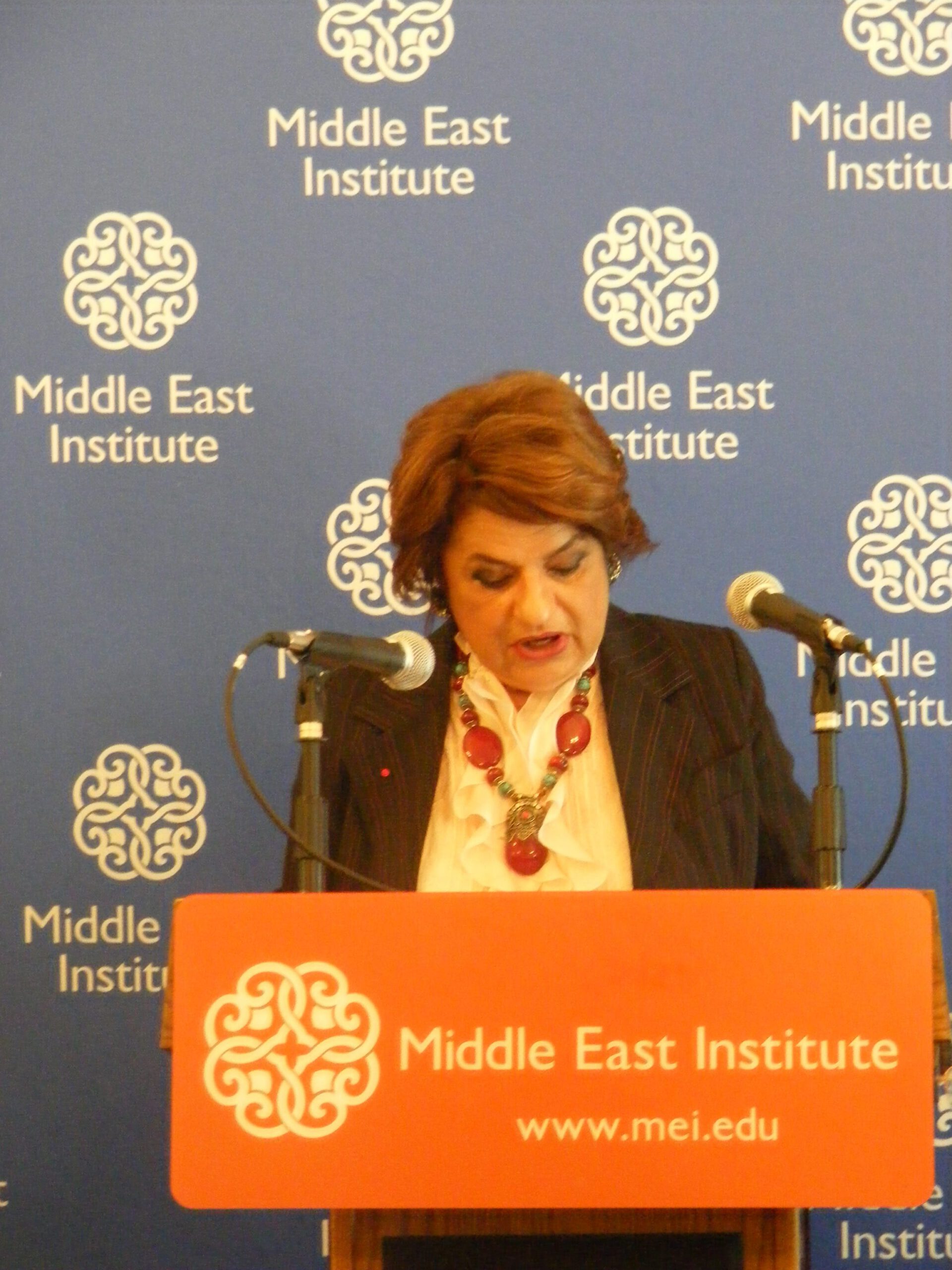
Dr. Makram-Ebeid, along with ten other liberal and leftists members, recently resigned from Egypt's Constituent Assembly in protest over its Islamist majority, leaving only five women and five Christians remaining in the assembly. With the transition process in turmoil, a diverse coalition of Egyptian generals, liberals, bureaucrats, and judges are turning to the courts to attempt to diversify the composition of the Constituent Assembly, which is currently almost entirely dominated by Islamists – both Salafists and members of the Muslim Brotherhood.
Arab Economic Challenges and Opportunities in the Wake of the Upsrisings
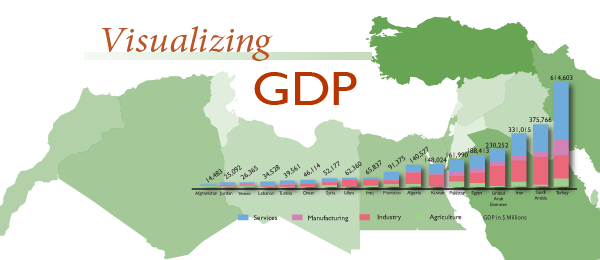
What are some of the fundamental socio-economic features they all share and what steps must they take if their economies are to enjoy sustained growth in the medium to long term? Dr. Toufic Gaspard, the economic adviser to Lebanon's minister of finance, will focus on Arab economies in Egypt and the Levant to examine how to solve the dominant regional problems of unemployment and poor productivity with the goal of establishing social and political stability.
Egypt and the Dynamics of Transition and Revolution
Today, more than a year after the Tahrir Square protests toppled the Mubarak regime, tension remains between the old guard and the new. As the Muslim Brotherhood works to assert political authority, the military elite, as represented by the Supreme Council of the Armed Forces, seeks to retain some vestige of power in government. Dr. Ghabra posits that the ongoing attempts on the part of the SCAF to retain control over Egypt's political future will not succeed, given the new political awareness and involvement of Egyptian citizens.
Dr. George Gavrilis of the Hollings Center for International Dialogue will serve as the discussant. The talk will focus on Younis's recent publication in the Turkish Policy Quarterly on the role of Turkey in a changing MENA region and the potential influence it can have on the process of democratization in Egypt. Younis will also share some insights from Gallup's polling in other Arab Spring countries on the public's perceptions of the challenges facing their nations following the uprisings of 2011.
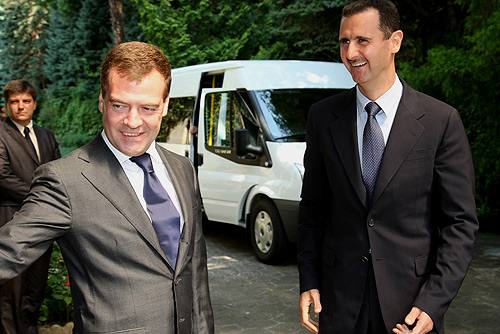
The Russian government, like its counterparts in the West, the Middle East, and elsewhere, was caught off guard by the outburst of Arab uprisings beginning in January 2011 that swept away long-ruling authoritarian regimes in Tunisia, Egypt, Libya, and (it appears) Yemen, and have threatened to topple those in Bahrain and Syria. The response of the Russian government to these events has, like that of Western governments, often been confused and inconsistent. Just as Western governments have done, Moscow has sought to protect its interests in the region.
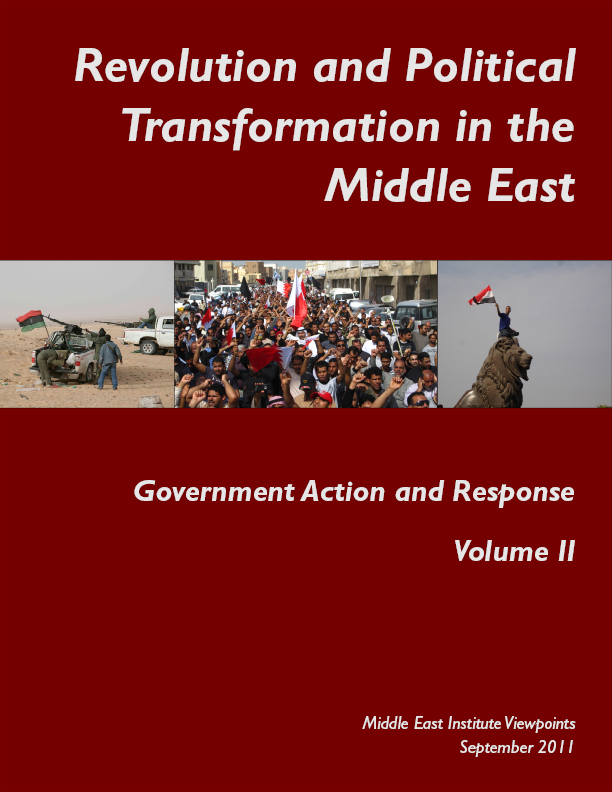
Introduction to Revolution and Political Transformation in the Middle East: Government Action and Response
Originally posted September 2011
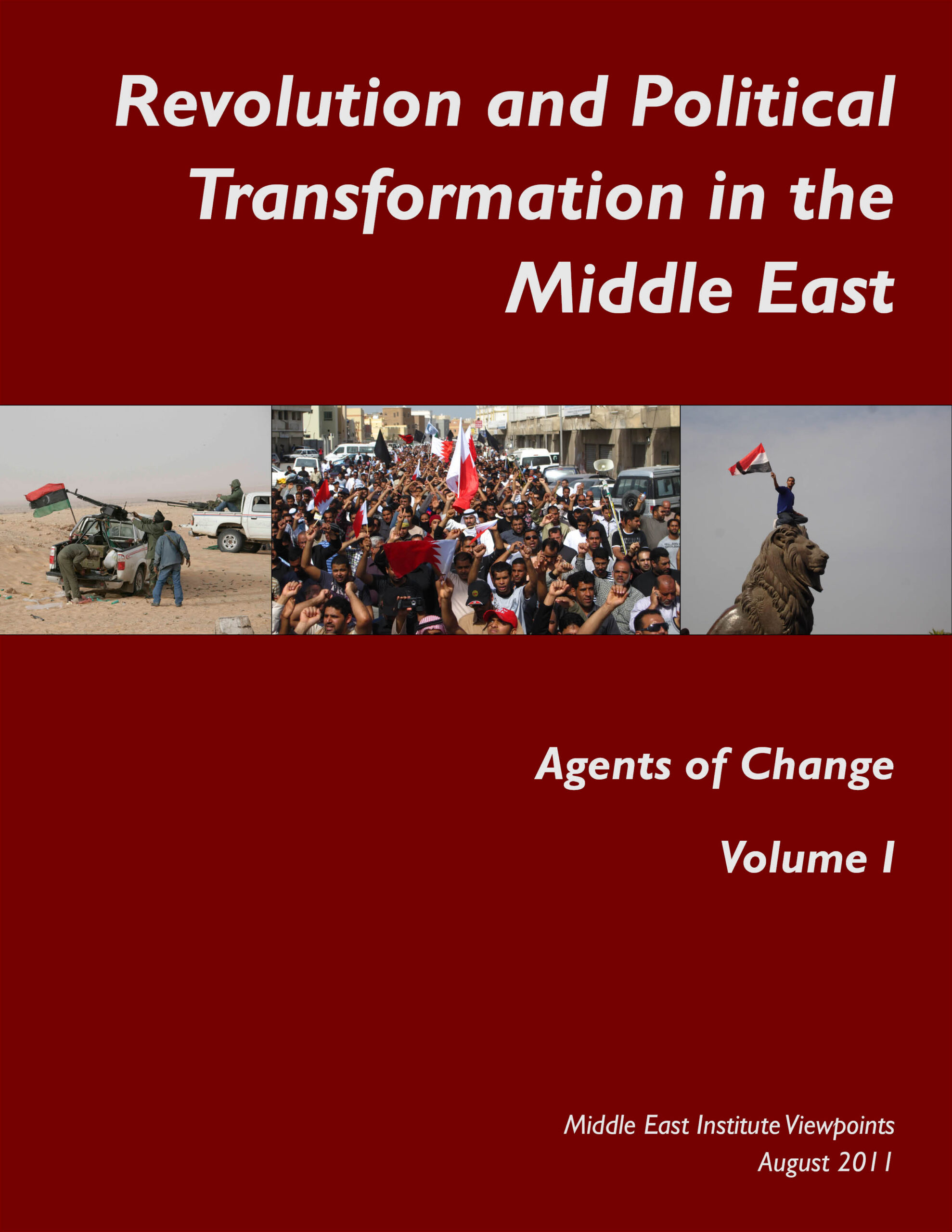
On August 21, 2011, rebel forces in Libya rolled into the capital Tripoli, seemingly finishing off months of armed combat and foreign intervention and bringing down yet another Arab head of state. At the same time, sporadic but violent repression of protests in Syria continues, while other states remain calm or have seen their protest movements fizzle. We open this second volume of our series, Revolution and Political Transformation¸ at a time of uncertainty and transition for the region.
Definitive election results are not yet available, but Stacher and Elmenshawy will analyze early polling data regarding the performance of Egypt's Islamist, liberal and youth parties, as well as examine election turnout and the role of the military. The November 28 poll is the first of three, and marks the first time since a popular uprising ended former President Hosni Mubarak's 30-year rule that millions of Egyptians voted to establish a parliament.
In his article for NPR.com, Middle East Institute scholar Greg Myre examines the new dynamics of war reporting. As the nature of warfare shifts from traditional army-to-army combat to more assymetrical government vs. non-state opposition warfare, journalists are having to embed – alone – with rebels groups in order to get the story. In the wake of multiple journalist deaths in Syria, Myre looks at the increasing risk faced by war correspondents in covering the front lines of conflict.
Reflections on the Role of American Universities in the Middle East
American higher education has been present in the region since 1866, when the American University of Beirut set the precedent for successful localization by planting roots and adapting to local society. Today, Arab governments themselves often direct and fund the cross-cultural educational export process, with far-reaching economic and social goals. For example, Qatar's U.S. branch campuses are an integral part of its broad education reform strategy designed to transform the country into a knowledge producing society. The UAE, in contrast, has adopted a business-model view of U.S.