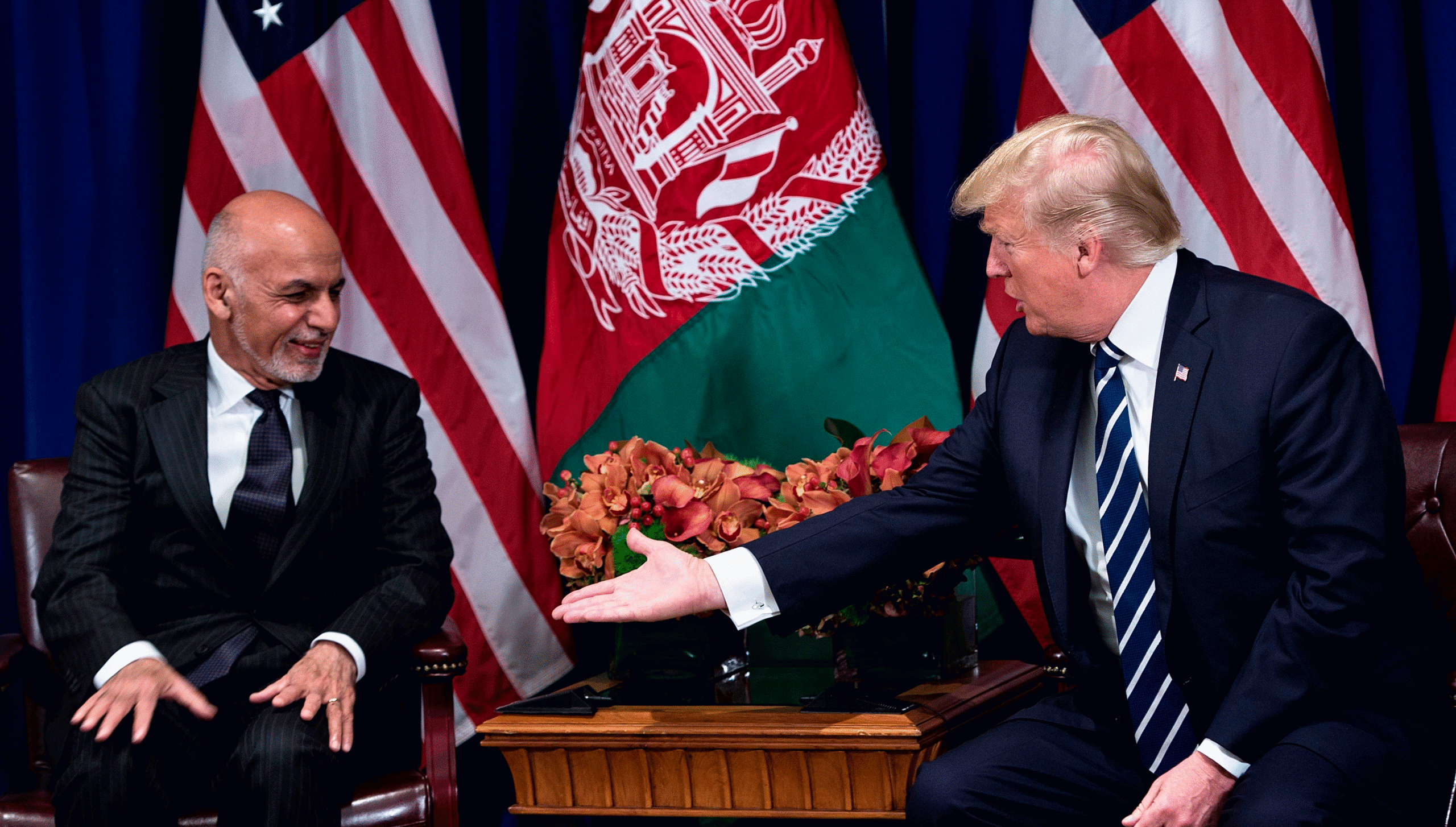
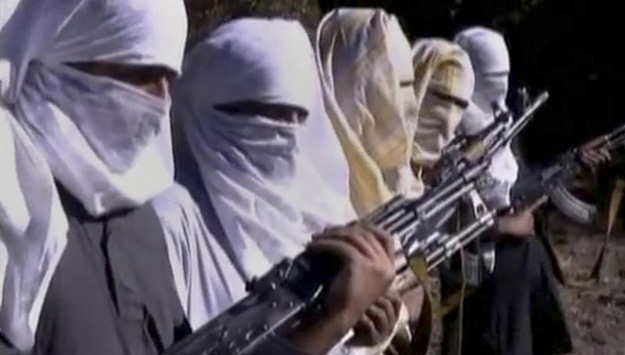
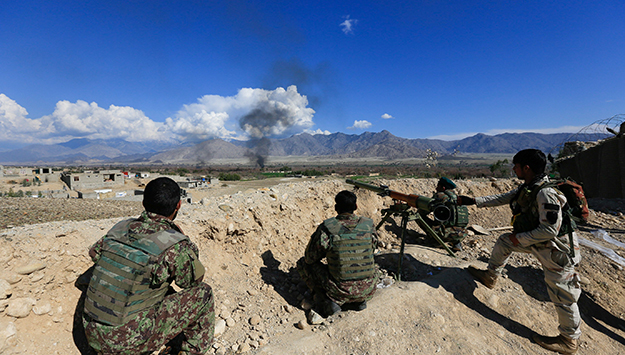
A series of devastating terror attacks orchestrated by the Afghan Taliban and the Haqqani network in the past two weeks have unnerved both the United States and Afghanistan. Visibly upset over the lack of success of his recently announced strategy on Afghanistan, President Donald Trump has declared that “We don’t want to talk to the Taliban.
The war in Afghanistan has dragged on for 16 years, appearing to many Americans to have no end in sight or positive outcome. However, as Defense Secretary James Mattis recently testified, “Violence and progress in Afghanistan continue to coexist.” What is that progress, and what does it mean for Afghans themselves? Saad Mohseni, chairman and CEO of Moby Media Group, and Ahmad Majidyar, director of MEI’s IranObserved project, join host Paul Salem to discuss the positive changes taking place in the country.
Think West to Go West: Origins and Implications of India’s West Asia Policy Under Modi (Part II)
The first part of this article outlined how the newly-elected Narendra Modi government had no sense of where West Asia, including the Persian Gulf, fit into its larger foreign policy. However, this view changed radically following overtures from the Abu Dhabi royal family and the August 2015 state visit by Prime Minister Modi to the United Arab Emirates (U.A.E.). This second part details how, since that visit, India’s relations with West Asia, and particularly with the Gulf monarchies and Iran, have evolved.
On September 25 Iraq’s Kurdish region pressed ahead with a controversial independence referendum. It had a high voter turnout of 73%, 93% of whom voted in favor of independence. The referendum is technically non-binding but it has sparked a political crisis with threats of action against the Kurdish region from its neighbors, Turkey and Iran, as well as Iraq’s central government. The United States also opposed the vote. MEI experts Randa Slim, Gonul Tol, and Ahmad Majidyar join host Paul Salem to discuss the implications of the vote and what happens next.
Think West to Go West: Origins and Implications of India’s West Asia Policy Under Modi (Part I)
Prime Minister Modi’s 2015 visit to the U.A.E. and subsequent events have seen India’s view of the region undergo a fundamental shift. This essay, the first of two parts, shows how New Delhi has come to regard the Gulf more as a source of investment and less as a source of energy and visas; and has begun to take a more strategic and military view of the region.
MEI experts Paul Salem, Will Wechsler, Marvin Weinbaum, and Ahmad Majidyar discuss current issues in Afghanistan and Pakistan, and U.S. policy and strategic interests in the region.
Al-Qaeda appears set to make a comeback in Pakistan, with battle-hardened militants returning from Syria and Iraq and eyeing for the resurrection of al-Qaeda in Pakistan.[i] A new terror group, Jamaat ul Ansar al-Shariah Pakistan, surfaced in June 2017, and is comprised of fighters who have returned from the Middle East.
The Durand Line: A British Legacy Plaguing Afghan-Pakistani Relations
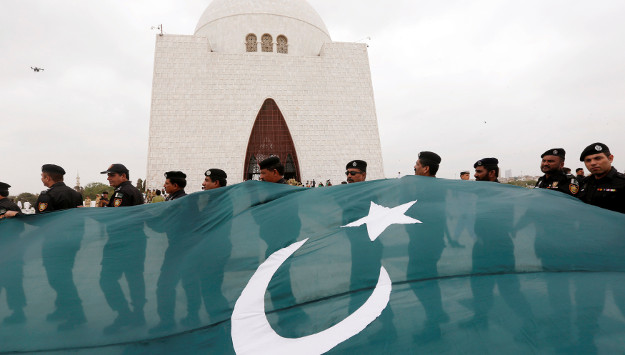
The Durand Line issue has continued to complicate the unpredictable nature of the Afghan-Pakistani relationship since the birth of Pakistan. Constant tension haunts their neighborly relations, as apprehensions and suspicions co-exist with some affable gestures. No Afghan government, including the present one headed by President Ashraf Ghani, has ever recognized the legitimacy of the Durand Line, which runs through mountainous terrain and remains largely unpoliced.
Accusations are mounting that Iran is ramping up its engagement with the Taliban in Afghanistan. Like a lot of Iran’s murky foreign policy, it is difficult to separate the wheat from the chaff. The three questions that need to be answered to clear up the murky relationship between Iran and the Taliban are: why the change in Iran’s policy; when did this policy change occur; and what is the level of support afforded to the Taliban?
The India-U.A.E. Strategic Partnership in Regional Context: A Zero-Sum Game?
Since the government of Narendra Modi took office in 2014, India and the U.A.E. have moved relatively quickly to consolidate their existing ties and to explore new areas of cooperation. During this time, they have elevated the relationship to a comprehensive strategic partnership, with the expressed intention of extending their cooperation to the security and defense spheres. This essay discusses these recent developments, with particular attention to the role of Pakistan as a constraining factor in India-U.A.E. relations going forward.
‘Linking West’ in ‘Unsettled Times’: India-G.C.C. Trade Relations
Economic and trade relations have been the most dynamic and significant component of the fundamental changes that have taken place in India’s relations with the Gulf Cooperation Council (G.C.C.) countries since the early 1990s. As a consequence, the Gulf has become of vital strategic importance for India in terms of energy security, trade, investment, and remittances. This essay discusses the contours of India’s trade relations with the G.C.C. countries, including the contributions they have made to India’s economic ascent and the scope for their further development.
India has become Israel’s largest arms export market in the world over the last decade (replacing China); and Israel has become one of India’s largest arms supplier. Why did India develop a strong military partnership with a country it had ignored for 42 years? What can explain the development of defense ties in spite of limited political leadership involvement over the past decade? Finally, what are the prospects for defense relations as India grows to become one of the world’s largest defense importer? This essay answers these questions by providing an account of the evolution of Indo-Israeli defense cooperation over the past 25 years.
Locating Syria in India’s Diplomacy toward West Asia
India has sought to continue its five-decade long cordial relationship with Syria despite the conflict raging there, and has been providing muted support for Bashar al-Assad’s government. However, as the Syrian conflict has dragged on, it has become increasingly clear that the conflict in Syria is the epicenter of the tremors that are shaking the region, placing India’s own national interests at risk. This essay examines the arc of India’s policy toward the Syrian crisis, within the context of the broader thrust of Indian foreign policy towards West Asia under Prime Minister Narendra Modi.
Enhancing India-Oman Economic Engagement: Four Promising Initiatives
India’s interests and capabilities extend well beyond the sub-continent. This essay is part of a series that explores the geopolitical dimensions, economic ties, transnational networks, and other aspects of India’s links with the Middle East (West Asia) — a region that plays a vital role in India’s economy and its future. More ...