Skip to Content

Research & Commentary Results

Filter by
1673 Results
The Abraham Accords one year on
Photo by Alex Wong/Getty Images
  • Analysis
  • The Abraham Accords one year on

    On Sept. 15, 2020, Emirati Foreign Minister Abdullah bin Zayed al-Nahyan, Bahraini Foreign Minister Abdullatif bin Rashid al-Zayani, then-Israeli Prime Minister Benjamin Netanyahu, and then-U.S. President Donald Trump met on the South Lawn of the White House to sign the Abraham Accords, normalizing relations between the two Gulf Arab states and Israel. Morocco followed suit several months later, signing a similar agreement with Israel on Dec. 22, and a week and a half after that, on Jan. 6, 2021, Sudan and Israel also agreed to normalize relations. A year on, these accords have had a significant, if not yet fully realized, impact on the Middle East, affecting everything from geopolitics and economics to tourism and people-to-people (P2P) ties, and they also reflect the changing dynamics in the region and beyond, particularly with the U.S. and China.

    August 19, 2021

    The race to reset the Middle East's maritime map
    Photo by Xinhua/Wu Lu via Getty Images
  • Analysis
  • The race to reset the Middle East's maritime map

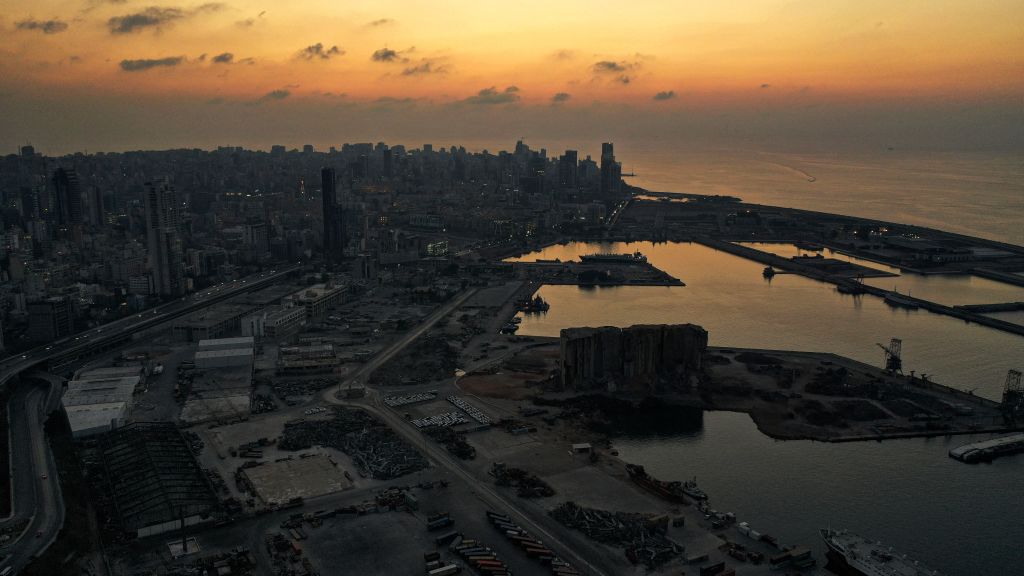
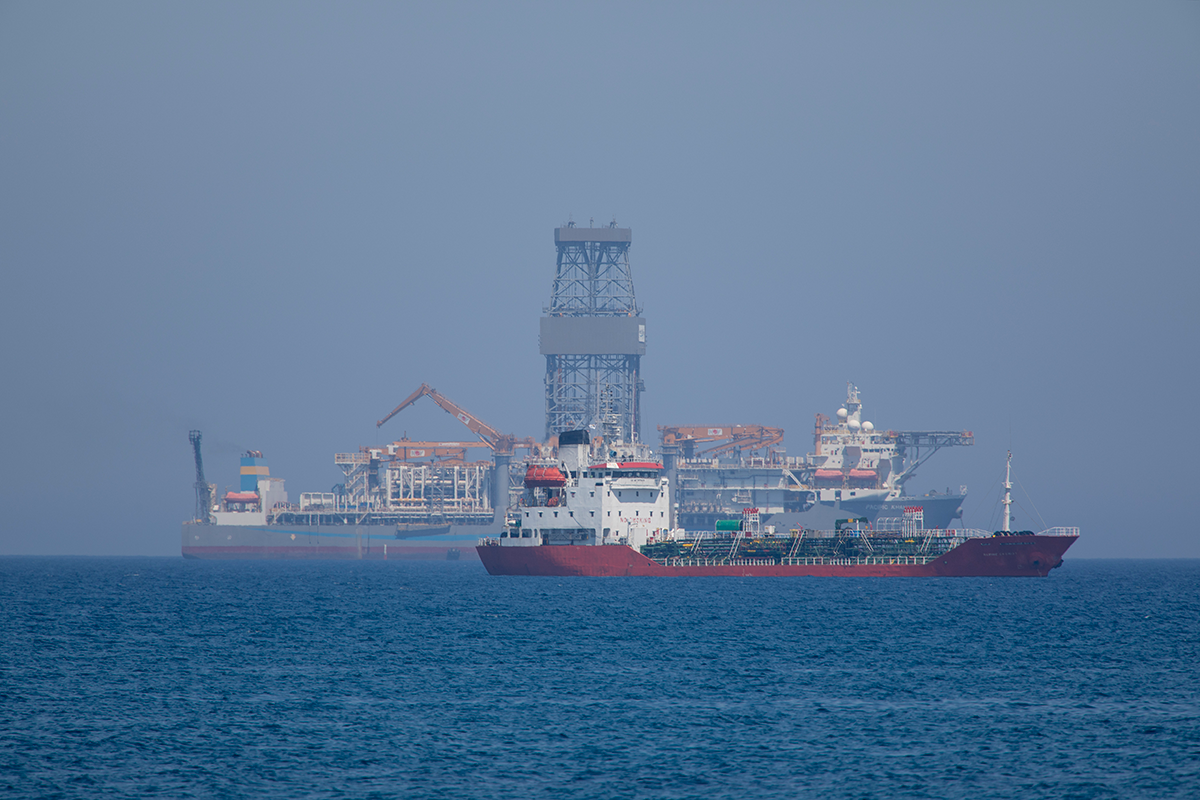
    One of the most consequential changes in the Middle East’s geopolitical map is happening at the water’s edge. Along the entire eastern rim of the Mediterranean basin, global and regional actors are engaging in a spate of port capacity expansions, new private port construction, and the sell-off of major state-owned ports that will determine who sits atop the region’s global trade flows for decades to come. The international competition to rebuild Beirut’s port is one key puzzle piece in this larger process that is reconfiguring the Levant’s maritime commercial architecture and, as a consequence, the geopolitical contours of the Middle East.

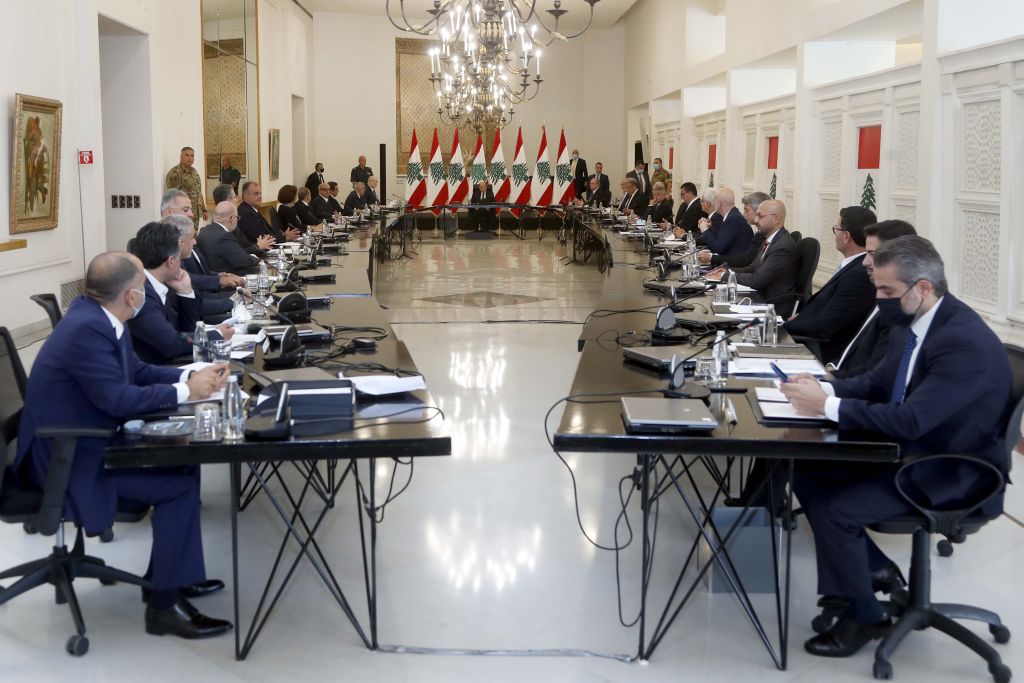
    The possibility that the Lebanese government could opt for China to reconstruct Beirut’s port has raised alarm in Washington and European capitals given China’s already outsized commercial port presence in Egypt, Israel, and Greece. Increased Chinese involvement in Lebanon’s port operations could consolidate Beijing’s hold over the commercial connectivity architecture of the Levant. Re-orienting global commercial flows between Europe, the Middle East, and Asia according to Beijing’s priorities would make China’s Belt and Road Initiative a dominant organizing principle in the international relations of the Middle East. The most effective way to offset China’s ambition may be to facilitate Mediterranean rivals France and Turkey to jointly rebuild Beirut’s port.

    First Anniversary of the Abraham Accords
    Middle East Institute
  • Podcast
  • First Anniversary of the Abraham Accords

    Amb. Dennis Ross and Karen Young join guest host Gerald Feierstein to discuss the progress of relations between Israel and the Arab world one year after the signing of the Abraham Accords, as well as the agreement’s economic impacts and what role the United States will play moving forward.

    August 17, 2021

    Israel and Egypt top growth expectations in MENA: A tale of two divergent strategies
    Photographer: Kobi Wolf/Bloomberg via Getty Images
  • Analysis
  • Israel and Egypt top growth expectations in MENA: A tale of two divergent strategies

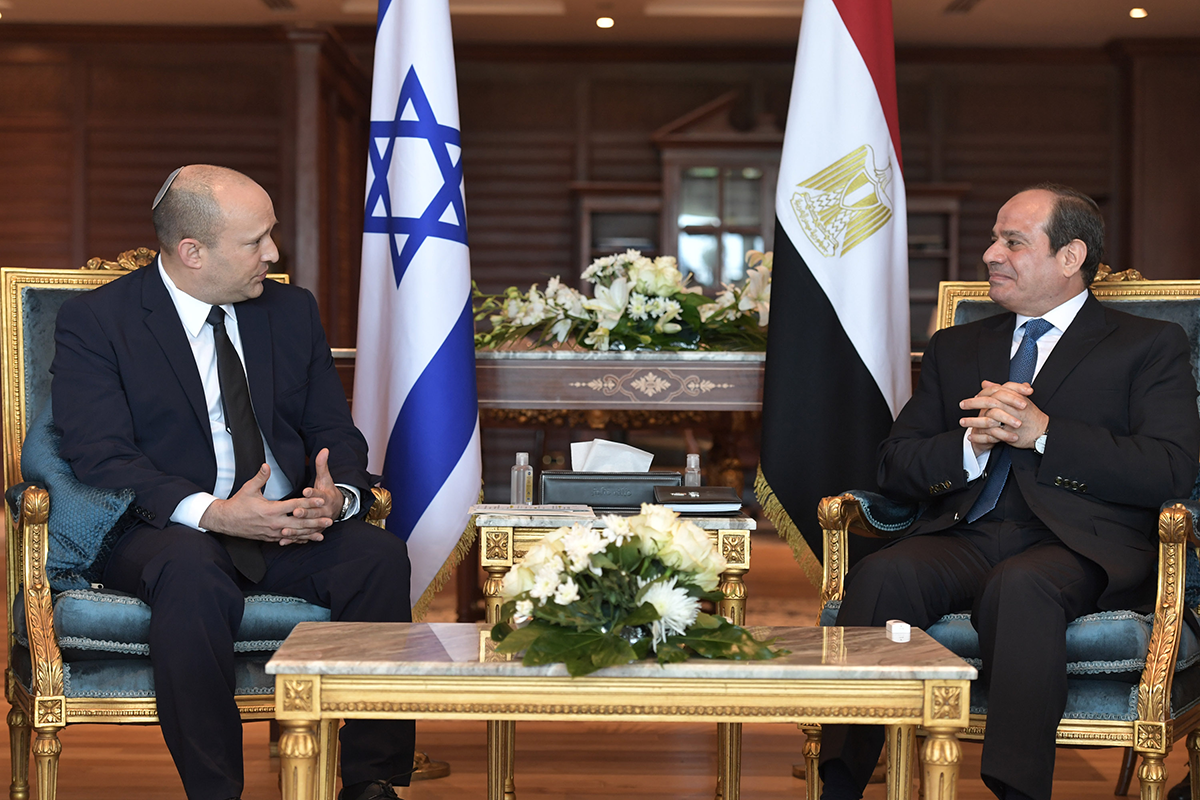
    The two countries in the Middle East with the highest growth expectations for 2022 are Israel and Egypt. Fitch Solutions estimates that MENA-wide GDP will grow by 3.6% in 2021, after a contraction of 4% in 2020. Egypt and Israel are the only countries within the region expected to grow their economies beyond the size of their pre-COVID-19 levels for 2021.

    Russia and the GERD: An uneasy balancing act
    Photo by Russian Foreign MinistryTASS via Getty Images
  • Analysis
  • Russia and the GERD: An uneasy balancing act

    Since late June, Russia has expanded its diplomatic involvement in the Grand Ethiopian Renaissance Dam (GERD) dispute between Egypt, Sudan, and Ethiopia. While Russia has offered technical assistance to the GERD’s conflicting parties, it has refrained from inserting itself into the Nile dam dispute as a mediator and instead balanced the views of Egypt, Sudan, and Ethiopia in multilateral fora. Russia’s balancing strategy has been positively received in Sudan and Ethiopia but has created latent frictions with Egypt. Russia has persisted with this non-interference policy, as it has largely prevented a spillover of tensions over the GERD to other areas of cooperation with Egypt and believes that its position will help consolidate its partnership with Ethiopia.

    August 16, 2021

    The two pillars of the Abraham Accords
    Photo by JACK GUEZ/AFP via Getty Images
  • Analysis
  • The two pillars of the Abraham Accords

    It has been a year since the August 2020 announcement of the Abraham Accords, which normalized diplomatic relations between the UAE and Israel. The accords were later signed at a White House ceremony attended by President Donald Trump that September. In less than a year the UAE and Israel swiftly exchanged ambassadors. This was the highlight of the first year of normalizing relations between Tel Aviv and Abu Dhabi. During their first year the accords also successfully passed the unexpected, brutal test of the 11-day military escalation between Israel and Hamas that began in late May 2021.

    August 12, 2021

    After 18 years, Palestinian families can finally live together: The end of Israel’s 2003 citizenship law
    Photo by MENAHEM KAHANA/AFP via Getty Images
  • Analysis
  • After 18 years, Palestinian families can finally live together: The end of Israel’s 2003 citizenship law

    The expiration of Israel’s 2003 citizenship law early last month has finally ended the suffering of roughly 30,000 Palestinian families and paved the way for their reunification. Despite the efforts of the Zionist political parties to renew the law, the abstention from voting of the two Arab Palestinian Knesset members from the United Arab List — which, for the first time, is represented in Israel’s new coalition government — blocked the majority needed to extend the long-standing “temporary” law, which subsequently expired on July 6. While this is welcome news for many Palestinian families, the defeat of this notorious law is by no means a panacea. Until there is real change in Israel, Palestinians, both those who are citizens of Israel as well as those in the occupied territories, will continue to face legal obstacles when it comes to obtaining their basic rights.

    August 10, 2021

    An Indo-Abrahamic alliance on the rise: How India, Israel, and the UAE are creating a new transregional order
    Photo by JACK GUEZ/AFP via Getty Images
  • Analysis
  • An Indo-Abrahamic alliance on the rise: How India, Israel, and the UAE are creating a new transregional order

    There is a new and little noticed geostrategic alliance on the rise. India, Israel, and the UAE have had surface-level, transactional relations for a long time. However, last year’s normalization agreements between Israel and several Arab states — chief among them, the UAE — along with Turkey’s bid to return as the leader of a Muslim order and the growing distance between the UAE and Pakistan have created an unlikely and unprecedented “Indo-Abrahamic“ transregional order. This emerging multilateral pact may fill the gap the United States is leaving in the Middle East and has the potential to transform the region’s geopolitics and geoeconomics.

    GERD and Egypt's African outreach
    Middle East Institute
  • Podcast
  • GERD and Egypt's African outreach

    Guled Ahmed, Mirette Mabrouk, and Mohammed Soliman join host Alistair Taylor to discuss the latest developments for the Grand Ethiopian Renaissance Dam (GERD), Egypt’s African diplomatic outreach, and the creative solutions required to meet the region’s growing energy needs.

    July 16, 2021

    النزاع على سد النهضة يذهب إلى الأمم المتحدة، لكن الحل لا يزال بعيد المنال
  • Commentary
  • النزاع على سد النهضة يذهب إلى الأمم المتحدة، لكن الحل لا يزال بعيد المنال

    “في النهاية، كانت النتيجة متوقعة: دعّم أعضاء مجلس الأمن جهود وساطة الاتحاد الإفريقي وأوصوا باستئناف المفاوضات بأسرع ما يمكن”.

    Going back to school on Palestinian textbooks
    Photo by HAZEM BADER/AFP via Getty Images
  • Analysis
  • Going back to school on Palestinian textbooks

    It would be an understatement to say that the Georg Eckert Institute for International Textbook Research in Germany has written the book on how to analyze textbooks. The Institute has actually published many books — ones that are meticulous, detailed, and dispassionate. Now the Institute has published one more, this time on Palestinian textbooks.

    July 12, 2021