Mosul Turning Ugly, Raqqa Front Slows | Monday Briefing
In this week’s Monday Briefing, MEI experts Charles Lister, Marvin G. Weinbaum, Yousef Munayyer, and Alex Vatanka provide analysis on recent events including the battle for Mosul, corruption in Pakistan, Mahmoud Abbas’s trip to China, and Rouhani’s difficult second presidential term.
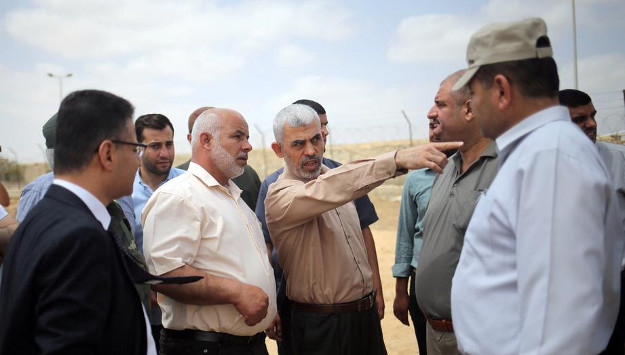
Jordan’s conspicuous silence over the unexpected trilateral rapprochement involving Hamas, Egypt, and former Fatah strongman Mohammad Dahlan does not mean that Amman is not keeping a close eye on recent developments. It is an unusual partnership that brings together once bitter foes, especially in the case of Dahlan and Hamas.
Monday Briefing: ISIS losing territory, President Erdogan visits Sudan
In this week’s Monday Briefing, MEI experts Charles Lister, W. Robert Pearson, and Yousef Munayyer provide analysis on ISIS’ continued threat to security despite losing territory, President Erdogan’s upcoming visit to Sudan as a political calculation, and Mohammed Dahlan’s effort to return to Palestinian politics.
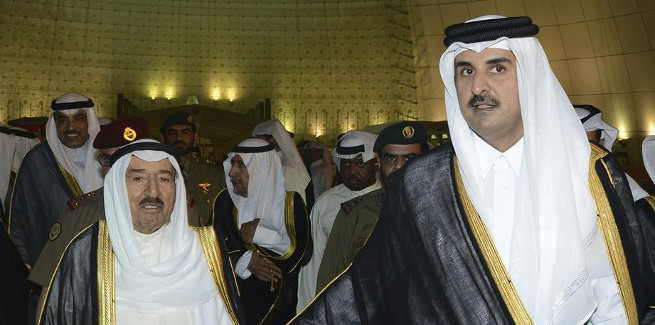
The ongoing Qatar crisis poses a major dilemma for Kuwait and Oman. Consistent with their “neutral” foreign policies, these two Arab Gulf states have maintained ties with Doha and seek to resolve the gravest internal Gulf Cooperation Council (G.C.C.) row since the organization’s establishment in 1981. Officials in Kuwait City and Muscat fear that failure to settle the Qatar crisis will break up the council, which would directly undermine vital Kuwaiti and Omani national interests given the potential for such a scenario to dramatically exacerbate regional geopolitical instability.
It is said that a picture is worth a thousand words, presumably for what it depicts, but what is the value of what a picture doesn’t show? To some, it is nothing; for others, it is everything.
Israel to Announce Settlement Expansion | Monday Briefing
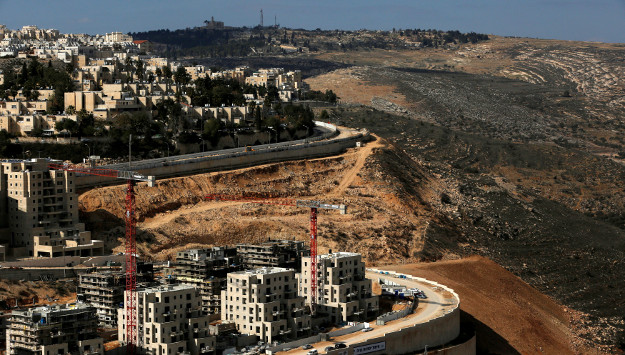
In this week’s Monday Briefing, MEI experts Yousef Munayyer, Randa Slim, and Paul Salem provide analysis on recent and upcoming events including Israel’s expected announcement of new settlement expansion, the escalating risk of a clash between U.S.-backed and pro-Iranian forces in southeastern Syria, and Lebanon’s efforts to pass a reformed election law.
The election of Emmanuel Macron is certainly bad news for terrorist organizations in the Middle East. At the same time, it is unlikely that France will modify its attitude in regards to larger regional challenges, for instance, the ongoing Syrian civil war, the Israeli-Palestinian conflict, or the cold war between Iran and Saudi Arabia.
Monday Briefing: Chances for MidEast Peace Remote under Trump
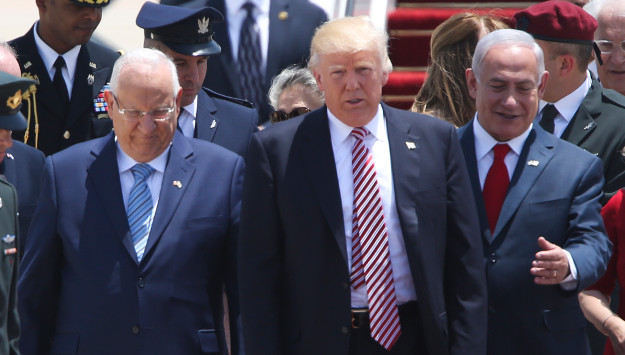
In this week’s Monday Briefing, MEI experts Yousef Munayyer, Alex Vatanka, Jonathan M. Winer, and Marvin G. Weinbaum provide analysis on recent and upcoming events including President Trump’s trip to Israel and the prospects for a peace process, the reelection of Iranian President Hassan Rouhani, Russia’s planned naval drill off the coast of Libya this week, and the Afghan Taliban’s decision to reject peace talks.
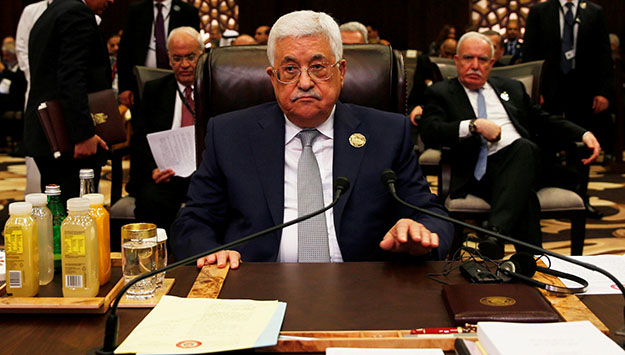
For the first time in three years, Mahmoud Abbas will meet with an American president in the White House. The meeting, expected in early-May, will also be the first between Abbas and President Donald Trump, and will serve to shape the relationship both men, and those they represent, have in the years ahead.
While Abbas might be inclined to be more pliant as an early show of goodwill, he will still seek demonstrations of seriousness from the Israelis, brokered by Washington, before agreeing to re-engage in peace talks.
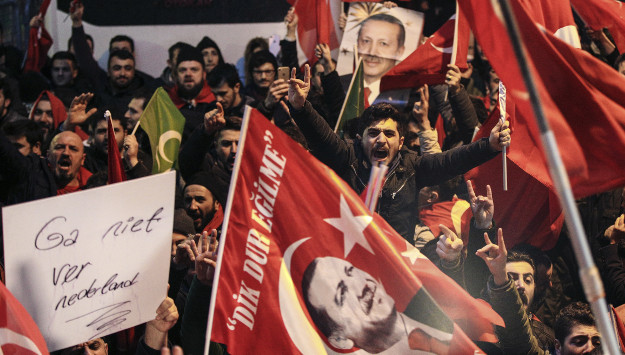
Diplomatic Feud Between Turkey and E.U. Grows | Monday Briefing
In this week’s Monday Briefing, MEI experts W. Robert Pearson, Gerald Feierstein, Yousef Munayyer, and Alex Vatanka provide analysis on recent and upcoming events including the simmering diplomatic feud between Turkey and the Netherlands, the Chinese offer to act as a mediator between Iran and Saudi Arabia, the congressional debate whether to supply aid to the Palestinian Authority, and the growing French business footprint in Iran.
One-State Solution an Existential Threat to Jordan
President Donald Trump’s refusal to endorse the two-state solution to resolve the Israeli-Palestinian conflict has irked one close ally—Jordan. During King Abdullah’s visit to Washington in early February, Trump and other officials restated continued U.S. military and economic support for the kingdom. The king had outlined the dangers of moving the U.S. embassy to Jerusalem and underlined the need for peace between Israel and the Palestinians.