Monday Briefing: India FM to Visit Iraq and Syria; Iran-Turkey Relations After the Failed Coup; Afghanistan's Fractured Government
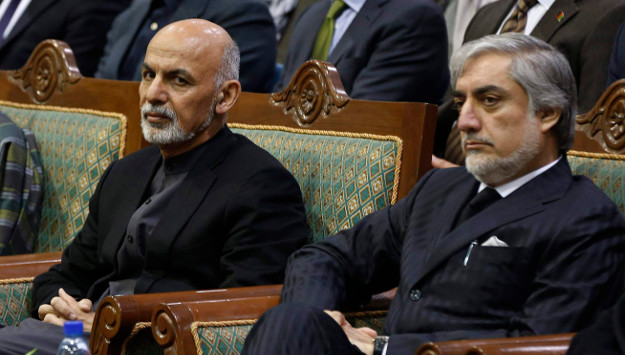
In this week’s Monday Briefing, MEI experts Zubair Iqbal, Alex Vatanka, and Marvin G. Weinbaum provide analysis on issues including India’s Middle East policy as its foreign minister is set to visit Iraq and Syria, the opening of relations between Iran and Turkey following the latter’s recent failed coup, and the latest signs of tension within Afghanistan’s shaky unity government.
The G.C.C. and China’s One Belt, One Road: Risk or Opportunity?
China’s One Belt, One Road (OBOR) initiative does not provide an equal opportunity for all states, and, in the case of the Gulf, it is Iran that will likely benefit over all others. The states of the G.C.C. also factor into Beijing’s plan, just not to the same degree―and that is the problem. Yet, as this essay shows, using OBOR and existing comparative advantages will allow the states of the G.C.C. to balance Iran’s potential windfall.
The Battle for Aleppo: Political and Security Repercussions
August 8, 2016 – A conversation with MEI Senior Fellow Charles Lister on the siege of Aleppo and the dynamics within Syrian opposition groups. Hosted by Paul Salem, vice president for policy and research at The Middle East Institute.
Remembering Mohamed Khan—the Leader of Egypt’s Neo-Realist Cinema
Of the numerous artists claimed by the grim reaper this year, the sudden death of veteran Egyptian filmmaker Mohamed Khan at 73 was among the most impactful. Widely considered as one of Egypt’s greatest directors, the vivacious, imposing Khan had a voracious appetite for life that concealed his real age. He was a man who always seemed to be bigger than death.
This essay discusses China’s responses to the jihadi threat. It shows that Chinese strategies have been influenced by whether the terrorist threat is perceived to be domestic or foreign. Internally, the Chinese approach has focused on protection and policing, resulting in confrontation with the Uighur minority in the far western province of Xinjiang. Externally, it has been less confrontational, with a preference for political and peace-building approaches.
Monday Briefing: Erdogan Reaching Out to Russia; Update on Battle for Aleppo
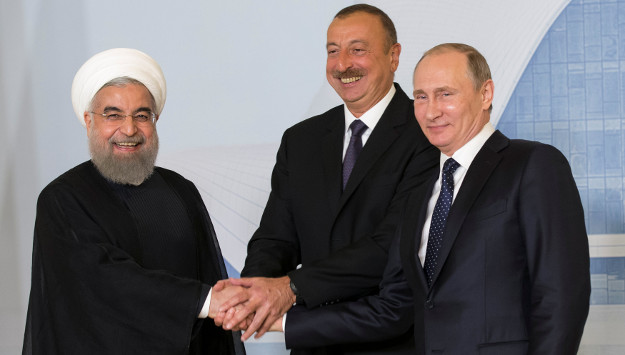
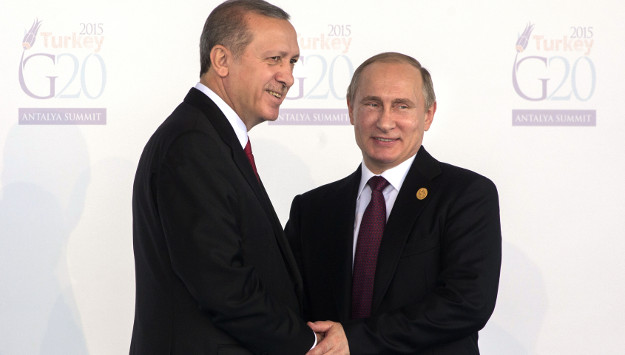
In this week’s Monday Briefing MEI experts provide analysis on recent and upcoming events including Turkish President Erdogan’s trip to Russia tomorrow, Iranian President Rouhani’s upcoming meeting with President Putin in Baku, the ongoing battle for Aleppo, strains in U.S.-Pakistan relations over the Haqqani Network, and what’s next for Tunisia’s political transition following the vote of no confidence in the current government.
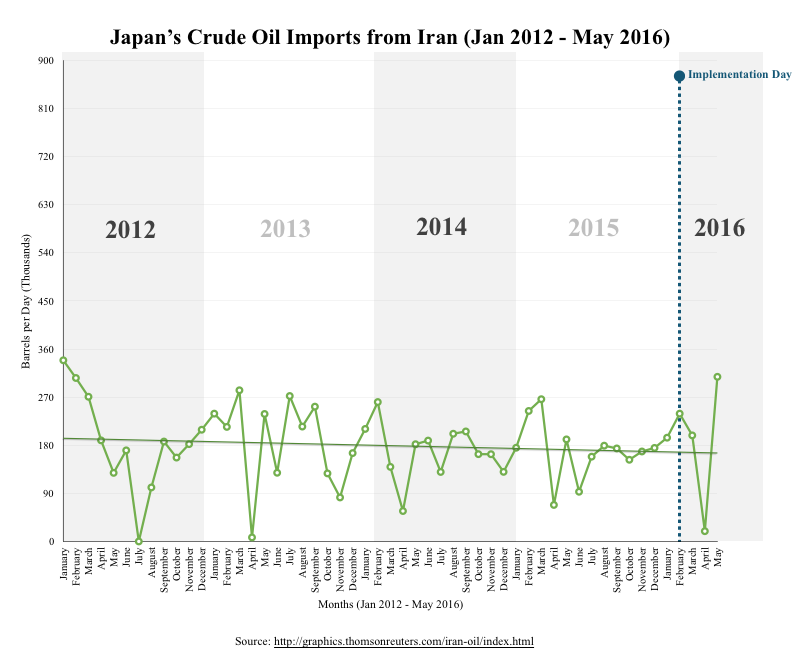
U.S.-European nuclear-related sanctions on Iran in 2011 resulted in a major reduction of Japanese crude oil imports from Iran, which were largely offset by increased purchases from other Middle Eastern producers. This pattern remained more or less intact through the end of 2015.[1]
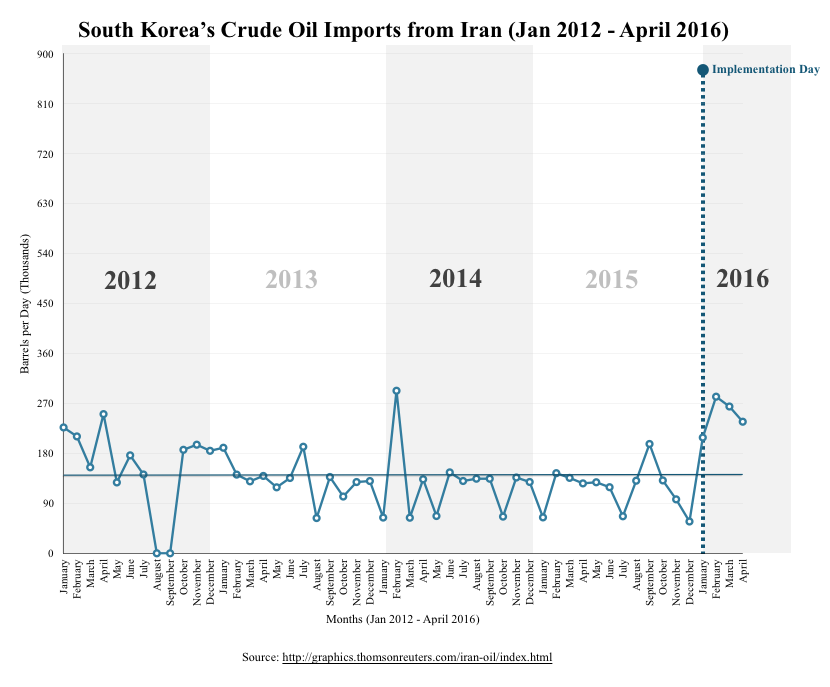
South Korea is the world’s fifth-largest crude oil importer and sixth-largest oil refining country. In June 2012, South Korea suspended all oil imports from Iran in response to a European Union insurance ban on tankers carrying Iranian crude oil.[1] South Korea subsequently obtained a waiver and resumed importing Iranian crude oil. However, the average annual volume of crude oil purchased by South Korea from Iran during the period 2012-2015 was 40% lower than in 2011.
Organizations working on disaster management need to find sustainable and scalable ways to mitigate the increased risks and to minimize the loss of lives and livelihoods when a disaster hits. This essay focuses on the role data plays in disaster management and on how innovations in this area can benefit humanitarian actors and can help them to transform the way in which they operate.
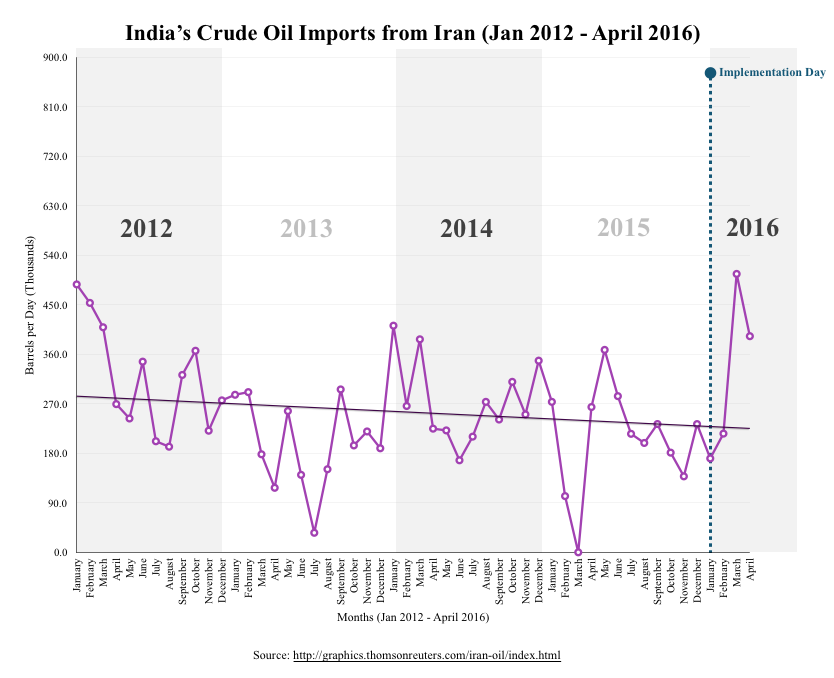
When U.S. and European nuclear-related sanctions against Iran took effect in 2011, India was compelled to reduce its crude oil imports from Iran and to diversify its sources of supply.[1] As a result, the country’s crude oil imports from Iran dropped by 1.33% and 37.81% in 2012 and 2013, respectively.