U.S. Absent as Israel-Palestine Violence Escalates | Monday Briefing
In this week’s Monday Briefing, MEI experts Eran Etzion, W. Robert Pearson, Charles Lister, Alex Vatanka, and Randa Slim weigh in on the implications of Israel-Palestinian violence for U.S. foreign policy, Turkish involvement in the Gulf crisis, al-Qaeda’s response to the U.S. decision to terminate support for a program arming anti-Assad Syrian rebels, confrontational U.S. policy towards the Iran nuclear deal, and a former Iraqi Prime Minister’s power play.
Mosul Turning Ugly, Raqqa Front Slows | Monday Briefing
In this week’s Monday Briefing, MEI experts Charles Lister, Marvin G. Weinbaum, Yousef Munayyer, and Alex Vatanka provide analysis on recent events including the battle for Mosul, corruption in Pakistan, Mahmoud Abbas’s trip to China, and Rouhani’s difficult second presidential term.
Jordan’s conspicuous silence over the unexpected trilateral rapprochement involving Hamas, Egypt, and former Fatah strongman Mohammad Dahlan does not mean that Amman is not keeping a close eye on recent developments. It is an unusual partnership that brings together once bitter foes, especially in the case of Dahlan and Hamas.
The Influence of North African Militaries in Foreign Policy-Making
This essay looks at five North African states, arguing that the armed forces — for a variety of often case-specific reasons — are actually not as politically powerful and thus influential in foreign policy-making as one might expect. It first discusses the political strength of the military establishments of five North African states — Morocco, Algeria, Tunisia, Libya, and Egypt — and then investigates the difference, if any, that the recent Arab upheavals have made in their involvement in foreign policy-making.
Monday Briefing: ISIS losing territory, President Erdogan visits Sudan
In this week’s Monday Briefing, MEI experts Charles Lister, W. Robert Pearson, and Yousef Munayyer provide analysis on ISIS’ continued threat to security despite losing territory, President Erdogan’s upcoming visit to Sudan as a political calculation, and Mohammed Dahlan’s effort to return to Palestinian politics.
It is said that a picture is worth a thousand words, presumably for what it depicts, but what is the value of what a picture doesn’t show? To some, it is nothing; for others, it is everything.
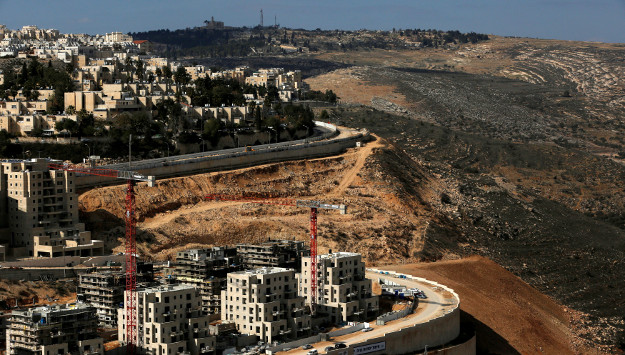
Israel to Announce Settlement Expansion | Monday Briefing
In this week’s Monday Briefing, MEI experts Yousef Munayyer, Randa Slim, and Paul Salem provide analysis on recent and upcoming events including Israel’s expected announcement of new settlement expansion, the escalating risk of a clash between U.S.-backed and pro-Iranian forces in southeastern Syria, and Lebanon’s efforts to pass a reformed election law.
The election of Emmanuel Macron is certainly bad news for terrorist organizations in the Middle East. At the same time, it is unlikely that France will modify its attitude in regards to larger regional challenges, for instance, the ongoing Syrian civil war, the Israeli-Palestinian conflict, or the cold war between Iran and Saudi Arabia.
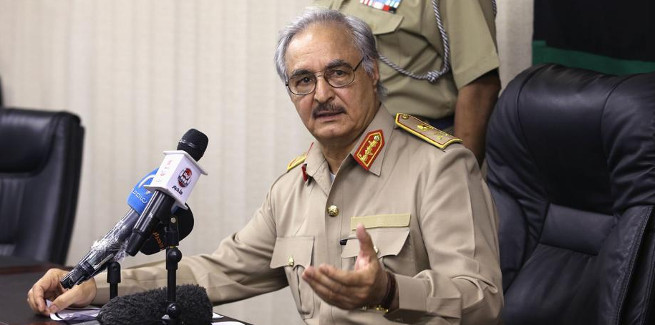
Foreign Powers Should Push for Compromise in Libya
Whenever power is contested in a country—any country—the political fight over who will ascend to the helm provides opportunities for foreign powers to intervene, and in some cases, influence the outcome of the political process.
Such behavior can carry short-term rewards when a new leader, put into power with the help of the foreign government, tilts favorably toward the sponsor; but it also can be counterproductive.
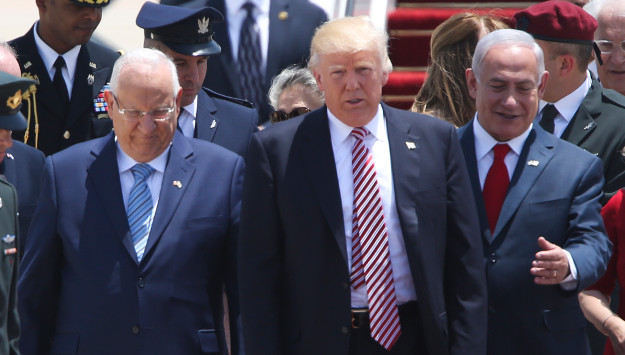
Monday Briefing: Chances for MidEast Peace Remote under Trump
In this week’s Monday Briefing, MEI experts Yousef Munayyer, Alex Vatanka, Jonathan M. Winer, and Marvin G. Weinbaum provide analysis on recent and upcoming events including President Trump’s trip to Israel and the prospects for a peace process, the reelection of Iranian President Hassan Rouhani, Russia’s planned naval drill off the coast of Libya this week, and the Afghan Taliban’s decision to reject peace talks.
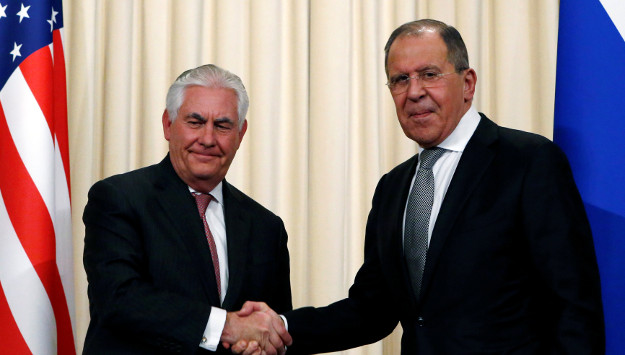
Russia Seeks U.S. Support for Syria Plan | Monday Briefing
In this week’s Monday Briefing, MEI experts Charles Lister, Alex Vatanka, and Jonathan M. Winer provide analysis on recent and upcoming events including the meeting between Russian Foreign Minister Lavrov and Secretary of State Tillerson, Iranian President Rouhani’s battle for re-election, and the efforts to strike a deal for the future of the Libyan state.
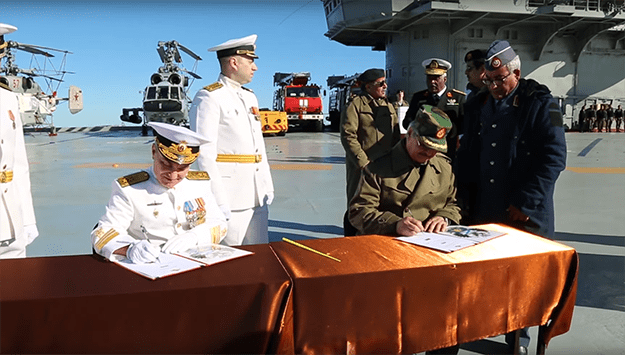
The image of the Russian aircraft carrier Admiral Kuznetsov steaming across the Mediterranean on its way to the Syrian shore became one of the symbols of Moscow’s military support for Syrian President Bashar al-Assad. When the aircraft carrier completed its mission in Syria in January this year and made a surprise port call in eastern Libya, analysts immediately suggested that Libya may become another country where Moscow will project its military power.
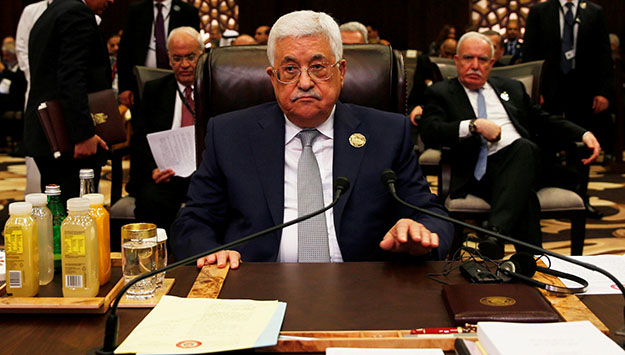
For the first time in three years, Mahmoud Abbas will meet with an American president in the White House. The meeting, expected in early-May, will also be the first between Abbas and President Donald Trump, and will serve to shape the relationship both men, and those they represent, have in the years ahead.
While Abbas might be inclined to be more pliant as an early show of goodwill, he will still seek demonstrations of seriousness from the Israelis, brokered by Washington, before agreeing to re-engage in peace talks.
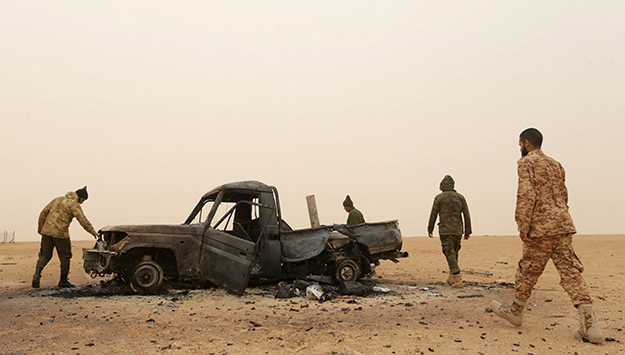
A common theme among many postcolonial countries in the Middle East is the difficulty of placing various religious and ethnic groups under the same state’s flag. Libya is different, as its people are overwhelmingly Sunni Arab. Nevertheless, tribal politics have instilled serious divisions in the country. The friction coalesces around two of the three primary regions of Libya, Cyrenaica in the east and Tripolitania in the west (the third historic province of Libya, Fezzan, is to the south of Tripolitania and tends to align its views with its northern neighbor).