The Middle East Institute (MEI) is saddened by the passing of Zaha Hadid, the renowned Iraqi-born architect whose iconic structures ignited imaginations and experimented with new spatial concepts. Hadid was the first female and first Arab recipient of the Pritzker Architecture Prize, the field’s highest honor. In 2013 she received MEI’s Issam M. Fares Award for Excellence in recognition of her visionary contribution to architecture and urban design.
Where History and Humanitarianism Collide: The Bay of Bengal “Migrant” Crisis
This essay examines the 2015 Bay of Bengal migrant crisis in Asia from three broad perspectives: 1) the historically entrenched views towards the Rohingyas in Myanmar, which are now conflated with religion and which have exacerbated the refugee situation; 2) the lack of humanitarian response by governments for the plight of the displaced; and 3) the challenges of using regional mechanisms to tackle the issue.
A casual, short visit to Stockholm may not yield any eye-opening revelations. The mood is as tranquil as ever—the trendy restaurants and bars occupy every neighborhood in the center, and the grandeur of its dazzling, opulent architecture blinds the eye from noticing the Roma beggars scattered across the city.
When Pakistani Taliban gunmen stormed a school in December 2014, killing more than 130 schoolboys, it united many Pakistanis in support of a major offensive against the radical group that had been growing more menacing for years.
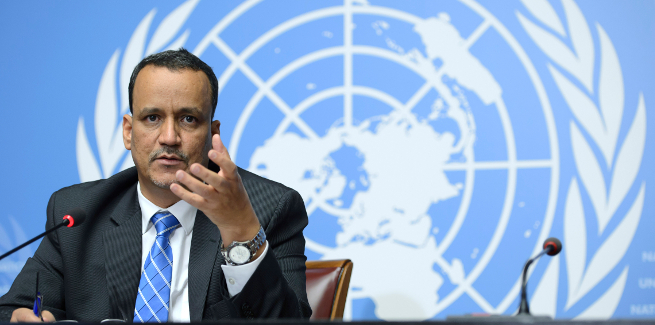
Just days before the first anniversary of the Saudi air campaign in Yemen on March 26, the U.N. special rapporteur to Yemen, Ould Cheikh, announced a cease-fire to begin April 10 followed by a third round of talks between the warring Yemeni factions on April 18. These talks have a better chance of success than previous attempts. The Houthi-Saleh alliance has long insisted that a complete and final cease-fire proceed any talks, and in previous attempts at negotiation, announced cease-fires never took hold and talks went nowhere.
Free Movement, Border Control and Asylum in Europe: Geopolitics of Italy in the European Migration Policy Framework
The creation of the Schengen area has modified the political geography of migration with important implications on for countries around the world. On one hand, the Schengen area established the first supranational border in the history of Europe; on the other hand, it obliged a small group of countries to guard the new border and to manage the refugee flows. In this context, Italy has a key role to play, but the policies that have been implemented in Italy and other E.U nations since the ’80s have revealed a lack of long-term vision. This is occurring in a context characterized by the absence of an E.U. migration policy and the selfish attitude shown by some non-Mediterranean European countries.
Monday Briefing: Palmyra, Mosul, and the ISIS Threat Abroad
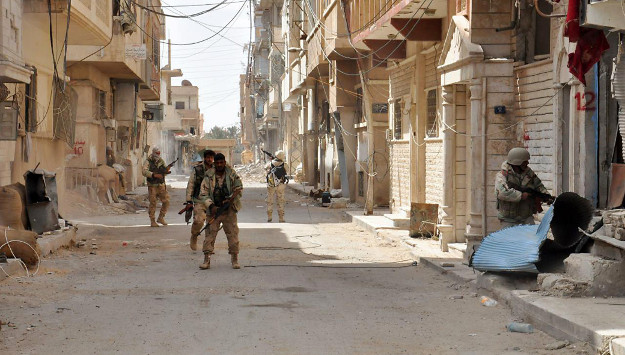
In this week’s Monday Briefing, MEI experts Charles Lister, Paul Salem, and Daniel Serwer provide analysis on recent events including the capture of Palmyra by Syrian government forces, preparations for the campaign to retake Mosul, the risk of further terrorist attacks in Europe like last week’s in Brussels. Allen Keiswetter also responds to recent comments by Republican presidential candidate Donald Trump on U.S. policy toward Saudi Arabia.
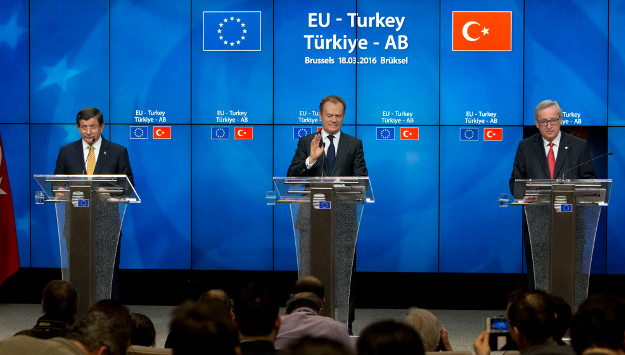
Turkey and the European Union have reached what they have labelled an “historic” agreement. The Europeans believe they have papered over an expanding and divisive refugee problem, while the Turks think they have a wider door for E.U. membership. The Europeans, however, have no intention of bringing Turkey into its fold anytime soon as it would dramatically accelerate the growth of its rightwing parties. Neither do the Turks have a genuine interest in solving Europe’s refugee crisis, since the crisis itself is Turkey’s leverage to gain concessions from Europe.
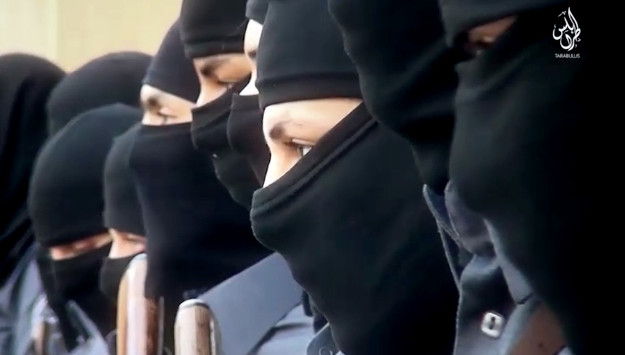
The Islamic State has been steadily losing territory in its self-declared caliphate in Syria and Iraq, where a U.S. bombing campaign and a host of rival forces chip away at its holdings.
Support for civil society and civil society organizations (CSOs) has been an integral part of endeavors by most major policy makers to advance democratization across the globe, with particular emphasis on the Middle East North Africa (MENA) region since the late 1980s. The role envisaged for CSOs within this context is to increase government accountability, filter the interests of ordinary citizens into policy processes, and advance democratization generally, this process is often connected with human rights and social progress. This essay investigates how this vision of civil society is constituted in the case of Turkey, using empirical evidence gathered through 38 in-depth qualitative interviews with women’s organizations from across the political, religious, and geographical spectrum.
A Look at Oman and South Korea’s Strategic Partnership
Since Oman and South Korea established official diplomatic ties in 1974, trade has largely defined the Muscat-Seoul relationship. Oman’s oil and liquefied natural gas (L.N.G.) and South Korea’s automobiles, electronics, and large vessels have dominated bilateral trade. Yet as Seoul stakes out increasingly vital national interests in the volatile Middle East, a host of geopolitical and security trends will more meaningfully influence the future of Omani-Korean relations.
Between Security and Protection: The E.U'.s Refugee and Migration Policy Crisis
Most scholars and NGOs argue that the measures adopted by the European Union to tackle illegal migration and smuggling, characterized by the strengthening of border security, are the principal causes of the ongoing refugee and migrant crisis. This essay will examine the E.U.’s refugee and migration policy crisis by providing an overview of the most recent policy responses proposed by the European institutions and by highlighting the implications of Member States’ tendency to maintain sovereignty on migration policies.
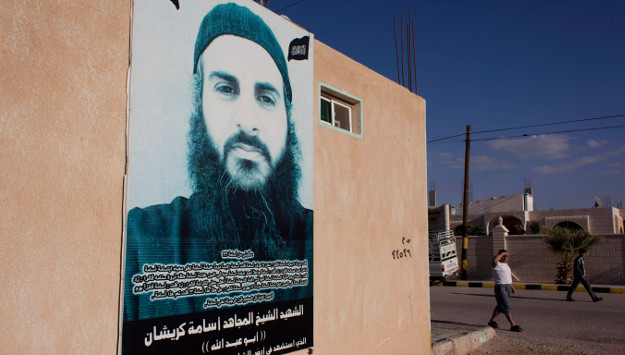
The pre-emptive security operation against a suspected ISIS-linked cell in the northern Jordanian city of Irbid earlier this month was a rude awakening. That all members of the cell were Jordanians added to public anxiety. While praise of the security forces and Jordan’s General Intelligence Department (GID) came from all sides, starting with King Abdullah himself, a sense of unease permeates throughout the kingdom. This was the first armed confrontation with ISIS, called Daesh locally, within the kingdom’s borders.