Save the Date: MEI's 69th Annual Banquet and Conference
Save the Date! The Middle East Institute’s 69th Annual Banquet and Conference November 12-13, 2015 Capital Hilton Hotel 1001 16th St. NW Washington, DC
Watch this space for more information, or call 202-785-1141 ext.213 for details.
Civil Society and Harm Reduction in Thailand – Lessons Not Learned
The Thai government was acclaimed in the 1990s for the bold approaches it supported to reduce HIV transmission among sex workers. Later, the Thai government’s leadership was internationally praised for providing generic antiretroviral treatment (ART) to people living with HIV. Today, global leaders applaud the Thai government’s decision to provide ART to everyone in an effort to prevent transmission, as well as for its decision to take full financial responsibility for HIV programming as of 2017, essentially weaning itself off external donor support. Indeed, there is much to celebrate, and the Thai government’s contributions to leadership and innovation in the area of HIV prevention, treatment, care, and support must be acknowledged—but not blindly.
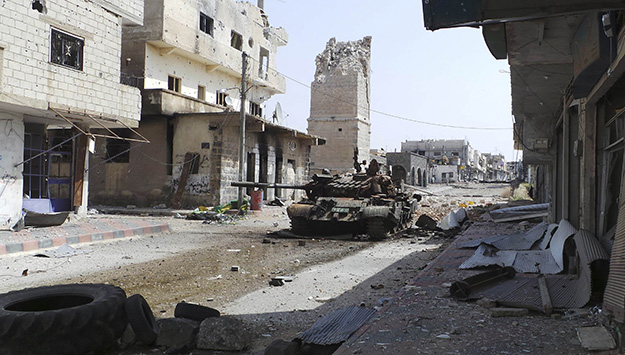
Analysis of Syrian civil war dynamics tends to draw a sharp contrast between the southern front, referring to the southernmost provinces of Deraa, Quneitra, and Suwayda, and the north. Most observers point to the south, in contrast to the north, as lacking a significant Islamic State (ISIS) presence. How true does this general assessment hold? Are radical or extremist groups much less influential in the south?
The Current State of Harm Reduction Policy in the Middle East
In the late 1980s, Western governments began to adopt drug policies based on the strategy of “harm reduction” (HR), which concentrates on alleviating the negative effects of drug use rather than on reducing its prevalence. This policy shift, largely motivated by the recognition that injection drug use contributes to the spread of HIV/AIDS, soon paid off. Within a decade the countries that had adopted HR as their primary policy had managed to control the injection-related spread of HIV and other blood-borne infections such as hepatitis. The spread of HIV among substance users came almost to a halt in Australia and the Netherlands, which had implemented the strategy vigorously. HR was a victory for not only health systems, which had successfully controlled a viral infection with no known “infectious disease model” solution (that is, a vaccine or effective antiviral treatment), but also for society in that HR forestalled the adoption of ineffective strategies such as segregation, which instead marginalizes drug users and abandons them to their high-risk behaviors.
Looking at Armenian-Iranian Relations Through a Russian Lens
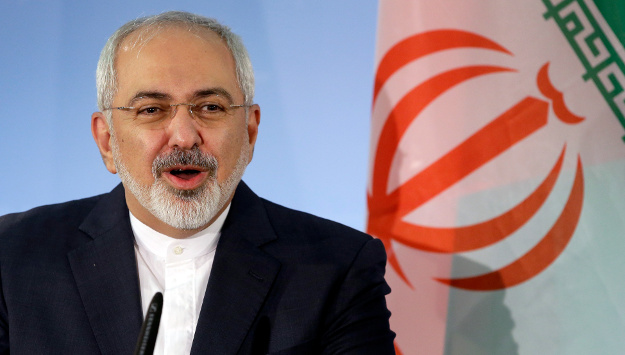
The late January visit to Armenia by Iranian Foreign Minister Javad Zarif got little media attention, but it could have significant ramifications for geopolitics in Eurasia. Specifically, the trip could help Russia gain a trade outlet that softens the blow of Western sanctions.
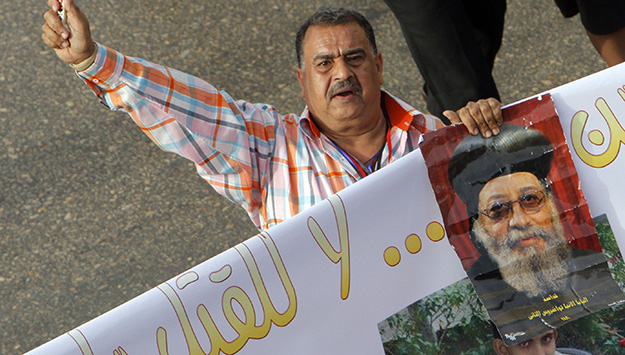
During and immediately following the 2011 Egyptian uprising, Coptic activism reached new heights. Copts organized and came together to call for protection for their communities and rights more generally. However, particularly since the fall of the Muslim Brotherhood and the election of President Abdul-Fattah el-Sisi, such activism has declined. Today, the number of active, effective Coptic movements can be counted on one hand. This leaves the church carrying the mantle of Coptic identity, allowing the pope to decide whether or not to engage in politics.
Comparing Harm Reduction Advocacy Approaches in the Middle East, Central Asia, and Southeast Asia
For more than three decades, harm reduction initiatives for people who inject drugs (PWID) have focused on preventing the spread of HIV. The objectives of harm reduction activities have gradually expanded to include reducing the number of PWID through education programs, stopping the spread of hepatitis C and other infections, and preventing overdoses. However, the single greatest rationale for introducing or scaling up harm reduction remains HIV prevention and (to a lesser extent) treatment, care, and support for PWID living with HIV.
Over the course of the past ten years, NATO[1] has consistently invited Saudi Arabia and Oman to join the Istanbul Cooperation Initiative (ICI), which launched in 2004 as a cooperation framework between NATO and the GCC countries. So far, the ICI contains just four Gulf partners (Bahrain, Qatar, Kuwait, and the United Arab Emirates), and neither Riyadh nor Muscat has accepted the invitation.
The Syrian Opposition Meeting in Cairo: One Small Step
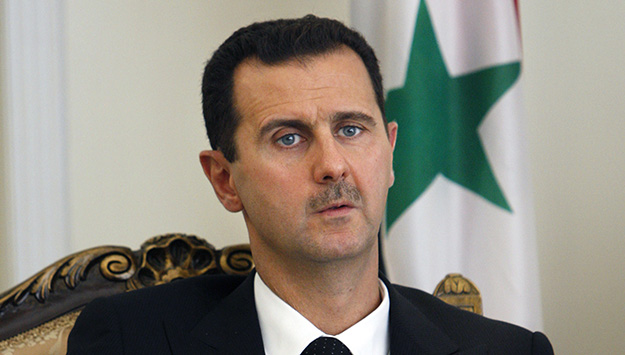
Around 100 Syrian opposition figures recently concluded a conference in Cairo. The meeting was noteworthy for two reasons. It signaled Cairo’s cautious but unmistakable entry into the Syrian minefield, and it marks the still-fragmented opposition’s first careful steps in the direction of a compromise with the Assad regime.
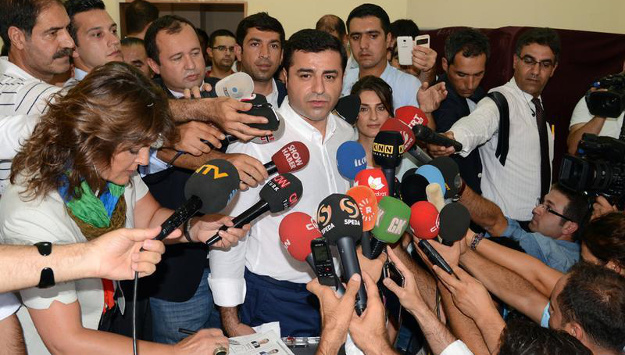
Turkey’s Kurds are playing a risky game. If they succeed, they can boost the country’s troubled democracy. If they fail, a further drift toward authoritarianism will follow.
ISIS and the Institution of Online Terrorist Recruitment
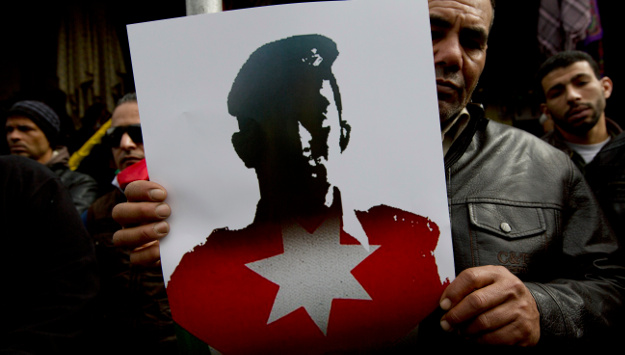
The rise of ISIS and associated jihadi violence taking place in Syria and Iraq has reverberated widely. The effects can be felt not just in the horrific attacks that took place in Paris in January 2015, but across the Asia-Pacific region as well, including Australia. Public officials and analysts are struggling to understand and devise countermeasures to the recruitment mechanisms employed by ISIS and other violent extremist groups. This essay explores the role that social media has played in ISIS’s efforts to attract adherents.
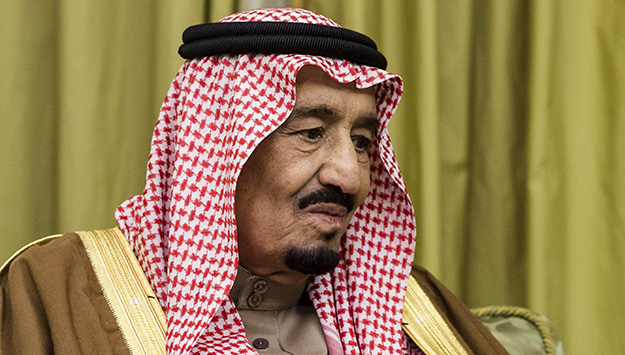
It appears that the senior princes who run Saudi Arabia don’t read Western news reports about their country or the numerous analyses of Saudi affairs put forth by American and European think tanks. If they did, they would have known that the death of King Abdullah was going to set off a “succession crisis” that would divide the ruling family and possibly destabilize the kingdom. They clearly did not get the memo.
This article was first published byPolitico Magazine. It is co-authored by Amb. Daniel Benjamin, director of the John Sloan Dickey Center for International Understanding at Dartmouth College and fmr. coordinator for counterterrorism at the State Department.