Zarif Visits Pakistan for Security Talks after Gunmen Killed 10 Iranian Border Guards
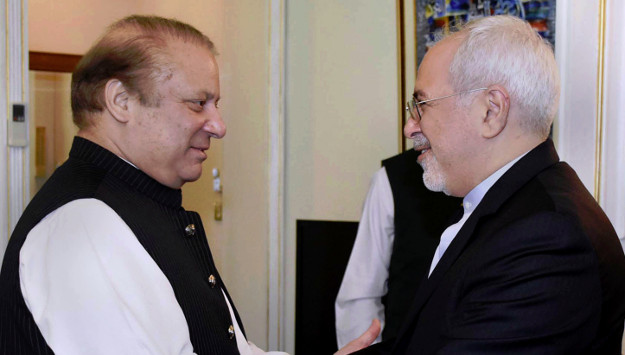
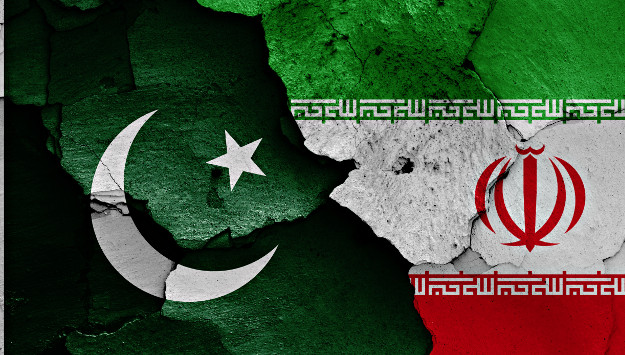
Iran and Pakistan agreed Wednesday to work together to boost security along their shared border after Pakistan-based militants killed 10 Iranian border guards in the Iranian province of Sistan and Baluchestan last week. A militant group called Jaish al-Adl claimed responsibility for the attack.
Rouhani Calls on Islamabad to Prosecute Border Guards’ Killers to Save Ties with Tehran
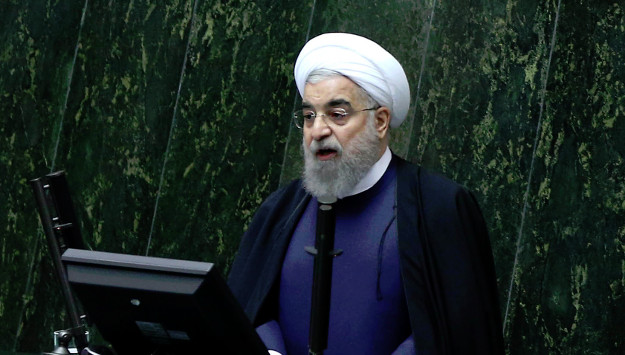
Iran’s President Hassan Rouhani has sent a letter to Pakistani Prime Minister Nawaz Sharif, calling on Islamabad to prosecute perpetrators of an attack that killed 10 Iranian troops along the Iranian-Pakistani border on Wednesday. A militant group called Jaish al-Adl claimed responsibility for the attack. According to Iran’s Tasnim News Agency, Rouhani blamed the Pakistani government’s “inaction” and “lack of necessary measures” for repeated attacks originating from Pakistan against Iranian border guards.
Pope’s Egypt Visit to Reassure MidEast Christians | Monday Briefing
In this week’s Monday Briefing, MEI experts Paul Salem, Alex Vatanka, Eran Etzion, and Gerald Feierstein provide analysis on recent and upcoming events including the Pope’s upcoming visit to Egypt, Ahmadinejad’s public feud with Ayatollah Khamenei, Israeli efforts to draw Russian support away from Iran, and the appointment of Prince Khalid bin Salman as Saudi Ambassador to the U.S.
Turkey's Erdogan Gets His Presidential Wish | Monday Briefing
In this week’s Monday Briefing, MEI experts Gonul Tol, Gerald Feierstein, Alex Vatanka, and Marvin G. Weinbaum provide analysis on recent and upcoming events including the victory of Turkish President Erdogan’s “Yes” constitutional referendum campaign to increase his powers, Secretary of Defense Mattis’ trip to the Middle East, the entry of 1,600 candidates for the upcoming Iranian presidential elections, and the alarming violence in Pakistan against accused “blasphemers”.
Islamist Terrorism in Pakistan: New Alignments, New Tactics
Much has been written on the evolution of Islamist terrorism in Pakistan, the role of military dictatorships in nurturing Islamist terrorist groups, and Islamist parties and proselytizing groups working hand in glove with terrorists. Al-Qaeda and the Afghan Taliban were born in Pakistan, in addition to the country’s own long list of local terrorist groups such as the multi-faceted Tehreek-e-Taliban Pakistan (T.T.P.). Pakistan is now going through a new phase of Islamist militancy, with new alignments and the adoption of new tactics by jihadists.
While the U.S. and Pakistani counterterrorism efforts have degraded al-Qaeda and the Pakistani Taliban in the Federally Administered Tribal Areas (FATA), sectarian violence across the country continues unabated and threatens to further destabilize Pakistan and the broader region.
Pakistani General's Role in Saudi-Led Coalition Troubles Iran
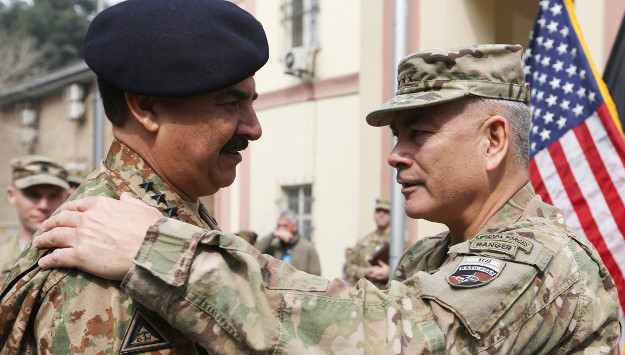
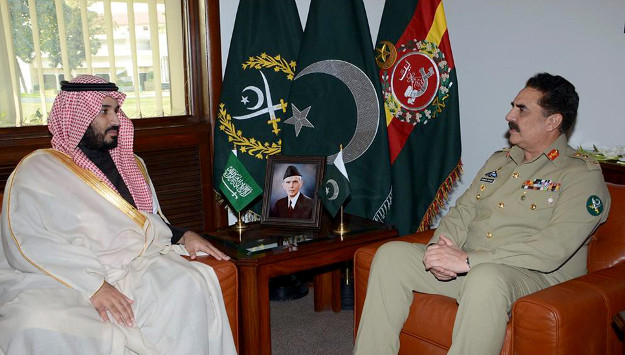
The Iranian government has said it has “reservations” about the appointment of Pakistan’s former army chief, retired Gen. Raheel Sharif, as the head of the Saudi-led coalition.
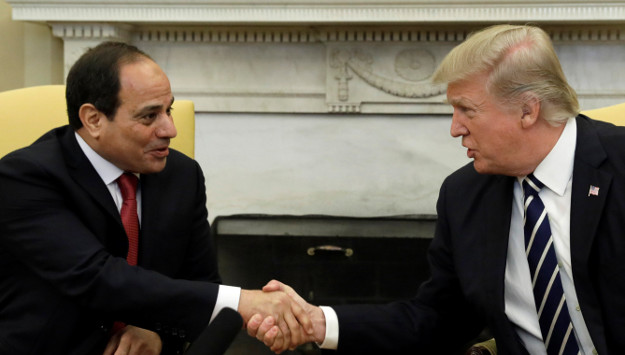
In this week’s Monday Briefing, MEI experts Paul Salem, Yousef Munayyer, and Randa Slim provide analysis on recent and upcoming events including the meeting between Egyptian President Sisi and President Trump, the upcoming meeting between President Trump and Jordan’s King Abdullah, and the Trump administration’s adoption of Obama-era policies in Syria.
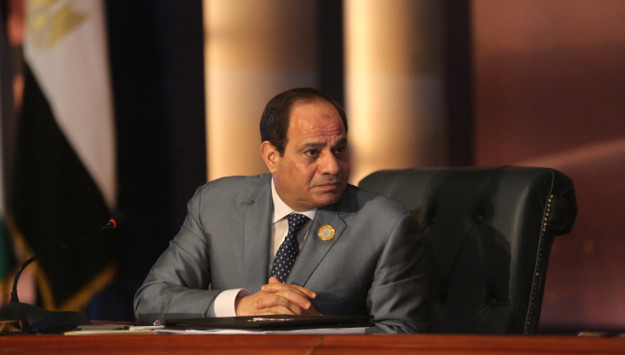
Egyptian president Abdel Fattah el-Sisi’s visit to President Trump signals the restoration of the close U.S.-Egyptian relations that have been a key pillar of U.S. policy toward the Middle East for four and half decades. The United States has an abiding interest in a stable, prosperous and well-governed Egypt, and Egyptians have an interest in close relations with the United States’ government, economy and society.
Shiite Mobilization and the Transformation of Sectarian Militancy in Pakistan
Historically in Pakistan, Shiite militancy has remained reactive and selective. But with thousands of Pakistani Shiites being recruited and trained by Tehran, the landscape of sectarian militancy is likely to undergo a momentous transformation with a possibility of a head-on confrontation between militant fronts of the two opposing sects. This essay assesses the future impact of Shiite mobilization in Pakistan on the country and how it could transform the local sectarian conflict by fueling radicalization and increasing prospects for ISIS to penetrate and exploit local militant groups to its favor.
India and Egypt: Economic Reconstruction and Stabilization
Six years after the fossilized authoritarian regime of Hosni Mubarak was swept from power by a tide of popular discontent, Egypt continues to face a multitude of economic and other challenges. This essay discusses the role that India has played, and could play in helping set Egypt’s economy on a more stable footing while broadening and deepening the bilateral relationship.
Egypt, Hamas Continue Flirtation, but to What End?
Egypt and Hamas continue to explore potential cooperation against a common threat in the Islamic State in the Sinai, as well as on the domestic Palestinian scene. Egypt’s Public Intelligence Chief, Khaled Fawzy, hosted the Vice President of Hamas’s political bureau, Ismail Haniya, and his associates Rawhi Mushtaha and Moussa Abu Marzouk for several days of consultations in late January.
Pakistani Shiite Militias Fighting in Syria Say Quds Force Keep Their Passports
Iran’s Qom News reported on Friday that Sayed Abbas Mousavi, a commander of the Zainabyoun Brigade, was kidnapped in the Iranian holy city of Qom (the site has now deleted the report).
Senior Iranian Politician Glorifies Afghan Shiite Militiamen Fighting in Syria
Ezzatollah Zarghami, the former head of the Islamic Republic of Iran Broadcasting, has emphasized the significance of Afghan Shiite militias for the Iranian military intervention in Syria.