Brian sits down with Behnam Taleblu, Senior Fellow at the Foundation for Defense of Democracies, to unpack the ongoing protests in Iran and what this moment reveals about the long struggle between the state and the street. They discuss the regime’s brutal crackdown, the prospect of US intervention, and what both could mean for the future of the Islamic Republic. The episode centers on agency, imagination, and the possibilities facing Iranians at a critical juncture in the country’s history.
Venezuela’s Shadow Over MENA: Perceptions and Precedents
MEI Vice President for Policy Ken Pollack joins hosts Alistair Taylor and Matthew Czekaj to explore what the precedent set by the Trump administration’s military capture of Venezuelan President Nicolás Maduro could mean for US policy in the Middle East — particularly in light of ongoing anti-regime protests in Iran. The conversation unpacks the reverberations of Operation Absolute Resolve, Washington’s options for and potential consequences of responding to the Iranian regime’s brutal crackdown, regional perceptions of recent US actions and stated objectives, and broader questions around the direction of the Trump administration’s evolving grand strategy.
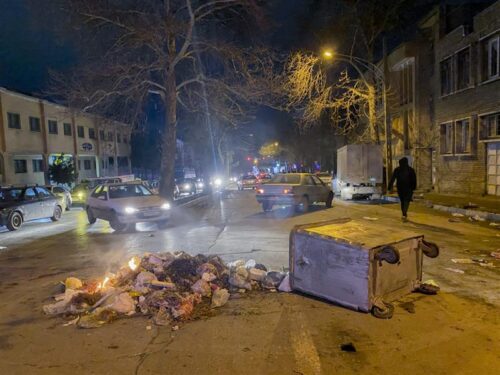
Iran is facing the largest demonstrations since 2022, when the death of Mahsa Amini in police custody ignited a nationwide uprising. This time, the unrest comes as the Islamic Republic is unusually exposed—still reeling from a bruising 12-day war with Israel last summer. What does this moment mean for the regime’s survival? How is this wave of protests different from those that came before? And is there anything the outside world can do to support Iran’s pro-democracy movement without backfiring?
This bonus episode of Middle East Focus features a conversation from MEI’s Virtual Briefing Series. Director of Communications Zeina Al-Shaib is joined by Distinguished Diplomatic Fellow Alan Eyre and Senior Fellow Alex Vatanka to discuss the ongoing protests in Iran. The street demonstrations, sparked by the country’s economic nosedive and at times turning violent, are the largest in three years. As regime arrests and killings of protesters have intensified, US President Donald Trump has threatened to intervene, his remarks potentially taking on a more vivid significance in light of the American military extraction over the weekend of Venezuela’s President Nicolás Maduro, an ally of Tehran. Eyre and Vatanka discuss what these latest developments mean for an Iranian regime already under intense internal and international pressure; the political impact of President Trump’s threats; the limits of Iranian President Masoud Pezeshkian’s power to de-escalate the situation at home; and how the instability inside Iran may affect the wider region.
Iran’s political deadlock — and a way out the regime is unlikely to take
On Sunday, December 28, Iran’s latest wave of unrest began not on a university campus or in a symbolic political square, but in the very heart of the country’s economic sphere: the Grand Bazaar commercial center in downtown Tehran. What distinguishes the current moment is not simply the persistence of unrest but its emotional register. Iranian commentary increasingly describes not just hardship but a collapse of expectations of a better future.
A year after Assad’s fall, Syria faces a pivotal moment. Washington must lead.
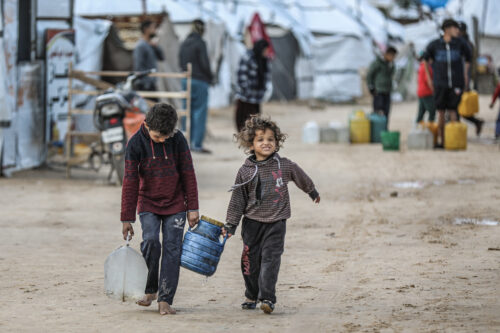
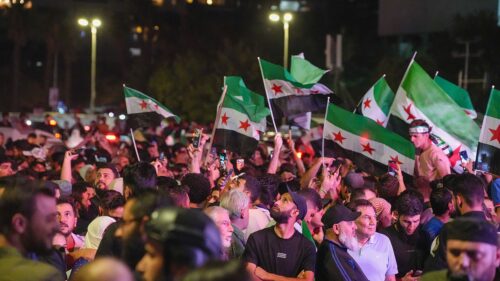
One year after the fall of the Assad regime, Syria is still in very fragile phase of its transition to a new political order. The country faces monumental reconstruction challenges, estimated in the hundreds of billions of dollars, well beyond the capabilities of the new Syrian government. Without sustained American leadership and investment, Syria’s transition will be slow, fragile, and dangerously reversible.
What does Trump’s new National Security Strategy mean for the Middle East?
In this episode, MEI Distinguished Diplomatic Fellow Ambassador David Hale joins host Alistair Taylor to unpack the Trump administration’s new National Security Strategy (NSS). Released on December 4, the document outlines the administration’s foreign policy vision, priorities, and approach to global challenges. Ambassador Hale analyzes the new NSS and how it compares to previous US strategy documents. The conversation focuses on what the NSS means for the future of US policy in the Middle East, and how it is likely to be received by regional actors.
Soft Power in Hard Times: Pope Leo XIV’s Visit to Lebanon
MEI Senior Fellow Fadi Nicholas Nassar joins host Matthew Czekaj to share expert insights and personal reflections on Pope Leo XIV’s trip to Lebanon from November 30 to December 2. Nassar unpacks the significance of the visit, part of the pontiff’s first overseas tour since assuming office, and its potential impact on Lebanon’s untenable status quo. The conversation explores key questions, including the ability of spiritual and moral authority to compensate for the shortcomings of political leadership as well as whether Lebanon’s government will be able to capitalize on the momentum generated by this visit as the possible return of conflict looms on the horizon.
How Palestinian Roots Shaped an American Ambassador
Brian welcomes Ambassador (ret.) Theodore “Ted” Kattouf, who previously served as US Ambassador to Syria and the United Arab Emirates, as well as President and CEO of the leading nonprofit organization Amideast. Kattouf reflects on how his Palestinian-American background shaped his diplomatic career and worldview. The two also take time to honor the life and legacy of Paul Kattouf, Ted’s son and Brian’s high school classmate, who was murdered in 2024.
From Ballots to Bargains: The Struggle for Iraqi Democracy
Iraqis have just gone to the polls in a pivotal parliamentary election that could redefine the country’s political trajectory. What do the results tell us about the state of Iraqi democracy? What happens next? And is there still space for meaningful democratic reform?
After the Rapid Support Forces’ seizure of al-Fashir, the capital of the North Darfur State and the last remaining stronghold of the Sudanese army, the conflict in Sudan has once again drawn international attention. This development is the latest in a devastating civil war that has lasted over two years. MEI’s Jehanne Henry unpacks the origins of the conflict, the humanitarian situation on the ground, and what needs to happen in the future.
The United States plans to submit a resolution on Gaza to the United Nations Security Council (UNSC) by the end of November. Reportedly, thelatest draftendorses President Donald Trump’s 20-point plan, recognizes the Board of Peace (BoP) as a “transitional governance administration,” and authorizes the BoP to establish an International Stabilization Force (ISF). The UN resolution is a first stepto achieving buy-in from potential ISF contributors. In turn, a viable ISF will be one key to moving beyond the cease-fire to securing the 20-point plan’s envisioned Hamas disarmament, further Israeli military withdrawal, and a path to Palestinian governance. The US faces several dilemmas as it seeks to transition from cease-fire to stabilization and beyond.
Help Syria move forward — Repeal the Caesar Act sanctions
By repealing the 2019 Caesar Act sanctions, the United States today can take a meaningful, achievable step to reverse the Assads’ damaging legacy, supporting the emergence of a unified and integrated Syria that engenders peace and prosperity both at home and in the wider region.
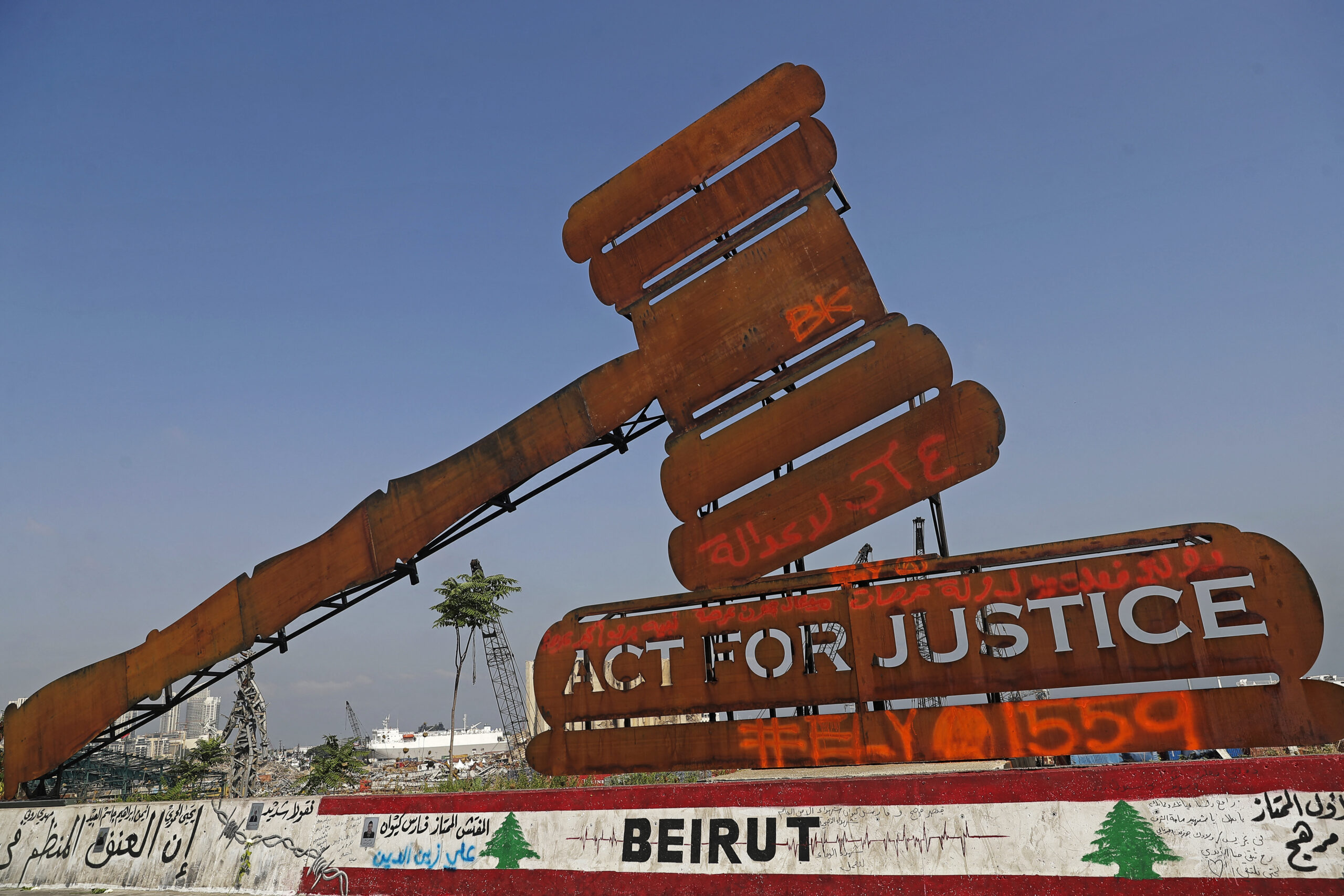
Lebanon’s judicial independence and the end of impunity
Judicial independence is at the core of any successful democracy, and for decades, this issue has been a matter of public concern in Lebanon. At a time when a credible window of opportunity for change has opened in Lebanon, restoring judicial independence is both a necessity and a prerequisite to enable the judiciary to carry out its duties and end the impunity under which it has historically operated.
Priority policies for an economic recovery in Lebanon
The current government in Lebanon is keen to encourage financial recovery and find a new path to economic growth. A thorough understanding of the causes behind the country’s recession and the factors constraining a recovery are necessary to shape policy priorities. These are also important as an input into the discussions of the 2026 budget and to the ongoing negotiations with the International Monetary Fund (IMF). Using the wrong framework for these decisions could yield low economic growth, which would be harmful for a quick and decisive economic recovery. Conversely, improved economic outcomes and broad buy-in, following public consultations, will ease the implementation of politically difficult reforms. Thus, policymakers must take great care to develop a narrative about how to achieve progress in the short and medium terms that is adjusted to local circumstances.