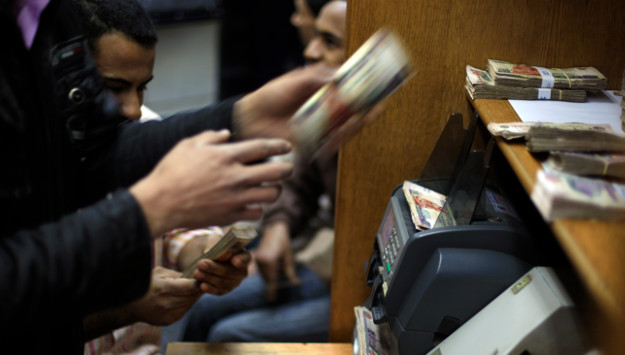
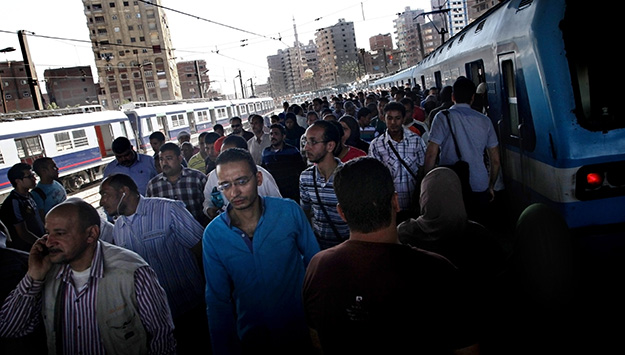
Since the 1990s, the need for streamlined procedures to facilitate business, trade and investment has grown to crisis proportions in Egypt. But the political will to deliver administrative reform was always lacking, not least because it would involve lay-offs and wage reductions; in other words, direct threats to the livelihoods of some seven million state employees and consequently the regime’s popularity. But with the government wage bill estimated to reach USD30 billion next year, Egypt has finally taken action.
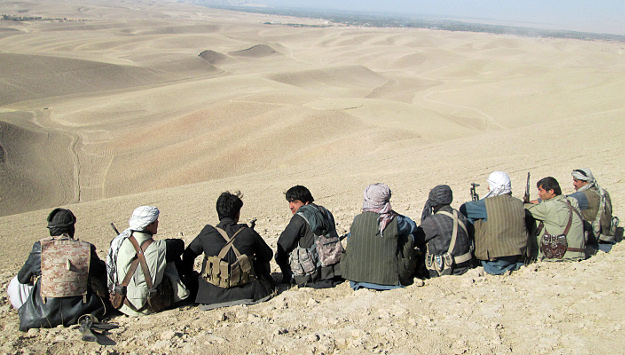
U.S. troops in Afghanistan lowered the flag and boxed up their gear at the end of last year as President Obama declared the formal end to 13 years of U.S. combat operations.
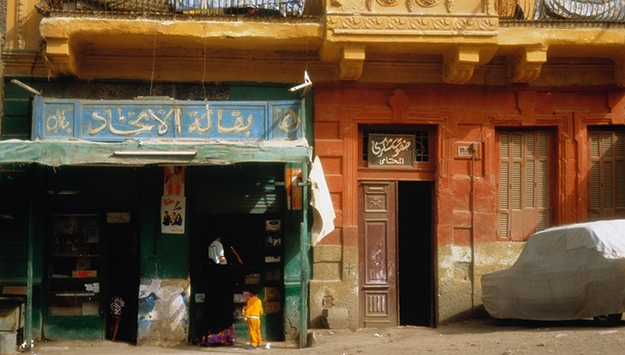
In mid-June, just before Ramadan, the pre-dawn calm of downtown Cairo was shattered by the sound of heavy machinery. The municipality had decided to repair the battered sidewalks, a fairly regular occurrence since shoddy concrete tiles are typically used for the job. Truckloads of sand were deposited at intervals along the main boulevards to be spread as a bed for the new tiles, while much of the rubble from the old ones was left piled by the curbs. To avoid the rough new terrain pedestrians took to the streets with the cars.
Italian energy company Eni announced on August 30 that it had discovered a deep-water gas field 93 miles north of Egypt’s Mediterranean coast.[1] The field, named Zohr, holds an estimated 30 trillion cubic feet (cft)[2] of natural gas (NG) reserves, potentially making it the twentieth largest in the world and the largest in the Mediterranean.
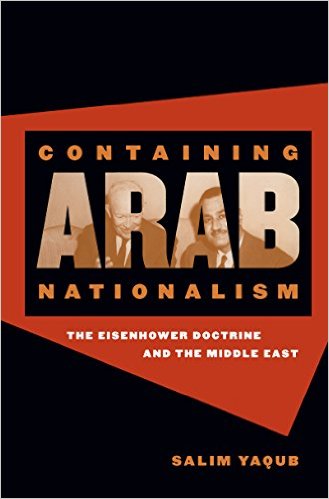
Collection Spotlight: Containing Arab nationalism: the Eisenhower doctrine and the Middle East
Under the threat of an increasingly influential Communist Soviet Union, in the mid-twentieth century the United States became more and more involved in Middle Eastern affairs. Struggling to reconcile its goals of containment, access to oil, and Israeli security, the U.S. government implemented a historic doctrine that pledged increased economic and military aid to the region in exchange for political allegiance.
The Multinational Force of Observers and the Sinai Storm
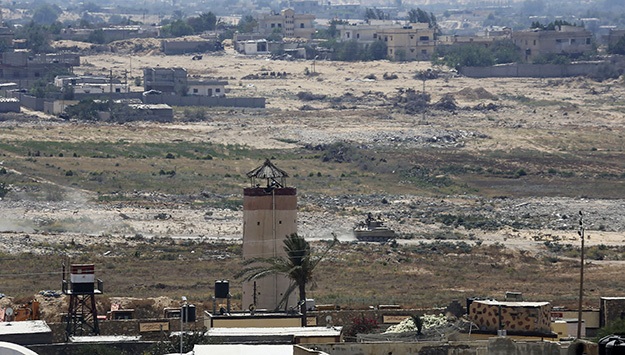
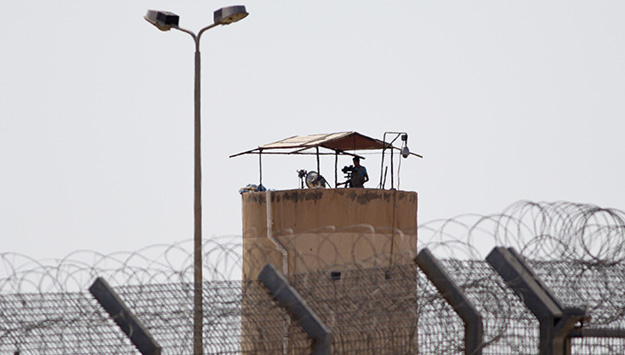
The 1,667-strong contingent of U.S. and international forces that make up the Multinational Force of Observers (MFO) in Egypt’s Sinai Peninsula is in a tough spot. The ongoing failure of the Egyptian government’s war against the ISIS-led rebellion there has shredded the MFO’s mandate to monitor Egyptian and Israeli adherence to their peace treaty. Sinai’s descent into anarchy also puts outnumbered and outgunned U.S. troops in the only location other than Iraq that confronts ISIS in an active theater of war.
Improved Egypt-Israel Relations through Sinai Crisis: Will They Last?
Egyptian diplomats rarely have a good word to say about U.S. policies these days. In contrast, they are enthusiastic in their praise of the close relations between Cairo and Jerusalem—centered on counterterror security and intelligence cooperation in Sinai—and effusive in their acknowledgement of Israel’s response to the bloody insurgency there, led by Egypt’s ISIS affiliate in the “Sinai Province,” Ansar Beit al-Maqdis.
“Relations with Israel are great,” observed an Egyptian official recently.[1]
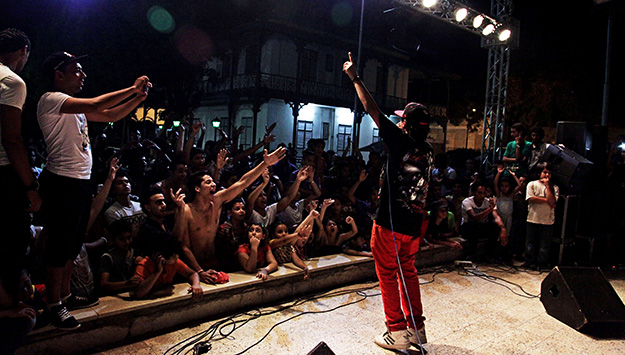
For Egypt’s low-income majority, weddings are the prime source of group entertainment, celebrated like block parties in cramped streets decorated with arabesque tapestries and drenched in colored lights and sound. You won’t hear romantic crooning at these gatherings; in Cairo’s densely-inhabited popular quarters, wedding parties are more akin to raves. The music is raw synthetic beat embroidered with syncopated tabla (Egyptian drum) samples and queasy electronic loops.
This article surveys and critically evaluates sectarian conflicts and trends in Balochistan during the War on Terror, concentrating primarily on the predominantly Shi‘i Hazara community based in Quetta.
Can Kabul and Islamabad Cooperate Effectively on Counterterrorism?
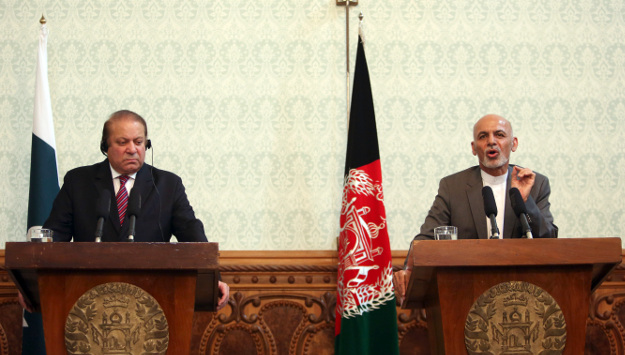
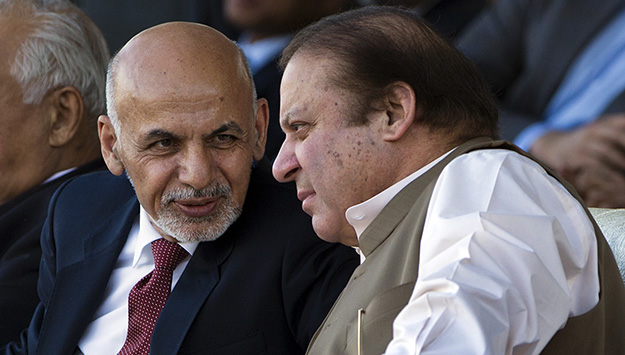
Soon after Ashraf Ghani and Abdullah Abdullah formed a unity government in Afghanistan in September 2014, there were signs of rapprochement between Kabul and Islamabad. When President Ghani visited Pakistan in November, he went to the army’s headquarters in Rawalpindi and laid a wreath at the monument to the country’s fallen soldiers—an indication that the Kabul government had come to an understanding with the Pakistani army, which controls the country’s Afghan policy.
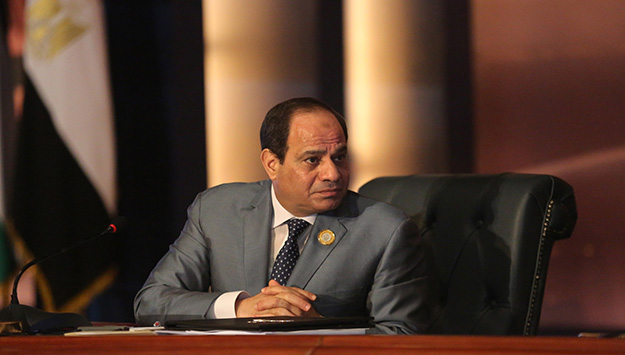
In the year since being elected to the presidency, Abdel Fattah el-Sisi has consolidated a ruling coalition, restored economic growth, and brought back considerable stability to the country after four years of turmoil. But this has come with a harsh crackdown on dissent, a decline in freedoms and human rights, and abuses by the police and judiciary. In the short term, the combination of nationalism, modest economic growth, and highlighting the war on terror is politically sustainable among a broad cross section of the population frustrated by years of uncertainty and economic decline.
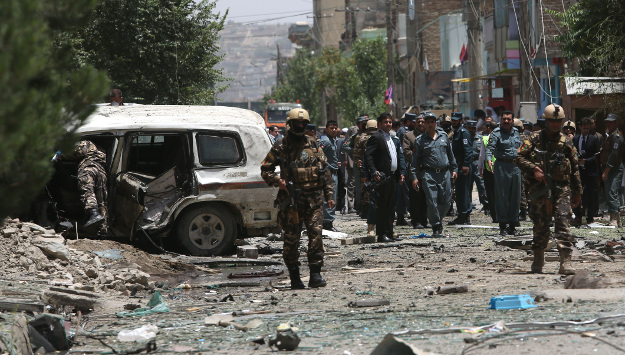
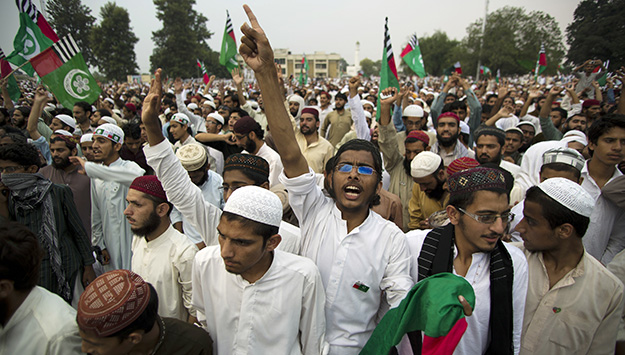
On May 13, more than 40 people were killed and at least 13 injured in a gun attack on a bus carrying members of the minority Ismaili Shi‘i sect in Karachi, Pakistan. This was not the deadliest attack of the year, as that dubious honor goes to a suicide bombing in a district in Sindh, which left 61 Shi‘a dead in January. Yet the brazen nature of the attack―carried out in daylight in the bustling megacity of Karachi by gunmen who reportedly boarded the bus and shot at passengers indiscriminately―was striking even in a country where over 2,000 people have been killed and 3,500 injured in sectarian attacks in the past five years.
Cairo's Rough, Crowded, and Vital Underground Artery
Inaugurated in 1987, Cairo’s Metro was Africa’s first inner-city underground and the embodiment of Hosni Mubarak’s promise to modernize Egypt’s infrastructure. It is hard to think of a Mubarak-era project that was better planned, more efficiently executed, or has had such a functional impact on so many people’s lives. Serving four million passengers daily, the Metro is the fastest, cheapest means of navigating the traffic-congested urban behemoth.