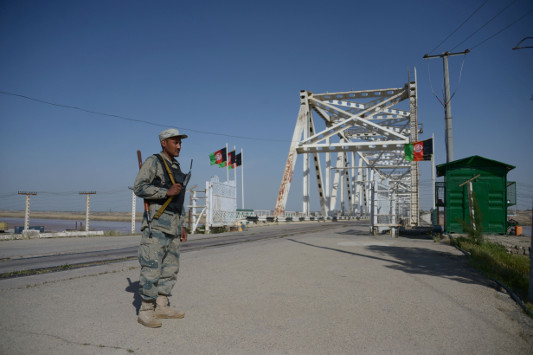
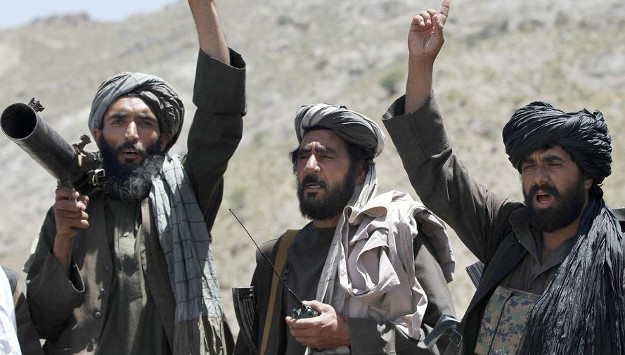
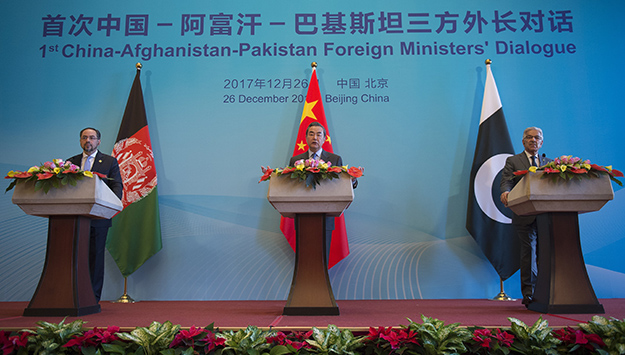
The Afghan conflict is so intractable that it continues to resist any kind of resolution. But Afghanistan’s northern neighbor, Uzbekistan, wants to try its hand. An international ministerial conference titled “Afghanistan–path to a peaceful future” is scheduled in Tashkent for late March 2018.
Harakat al-Nujaba claims US troops targeted its militiamen in Iraq
The secretary general of Harakat al-Nujaba, an Iranian-sponsored Iraqi militia group fighting in Syria and Iraq, alleges that the US military has targeted the organization’s forces in Iraq, Lebanon’s al-Mayadeen and Iran’s
Lebanon issues arrest warrant for Iran-backed Iraqi militia commander
Lebanese judicial authorities have issued an arrest warrant for Qais al-Khazali, the leader of Iran-backed Iraqi militia group called Asa’ib Ahl al-Haq, Iran’s Fars News Agency reports. Quoting Lebanese sources, Fars added that the Lebanese Army and General Security Directorate have also ordered all relevant authorities to arrest the Iraqi militia commander if he reenters Lebanon. They allege that Khazali last year had entered Lebanon illegally.
Iran-backed groups seeking to consolidate gains in post-ISIS Iraq
The deputy head of Iraq’s Popular Mobilization Forces has said that, with the military defeat of ISIS, the paramilitary forces will now play a key role in the security sector, Fars News Agency, an outlet affiliated with the Islamic Revolution Guards Corps (IRGC) reported.
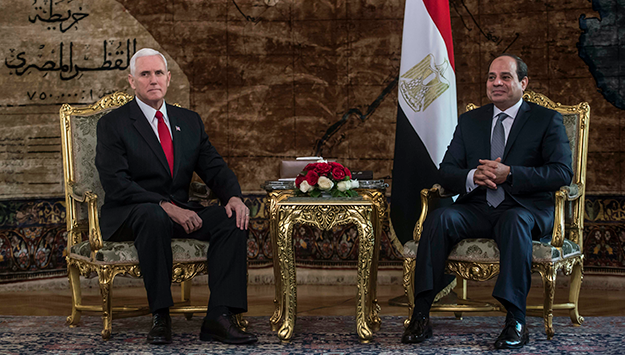
Pence’s pointless peregrination in the Mideast | Monday Briefing
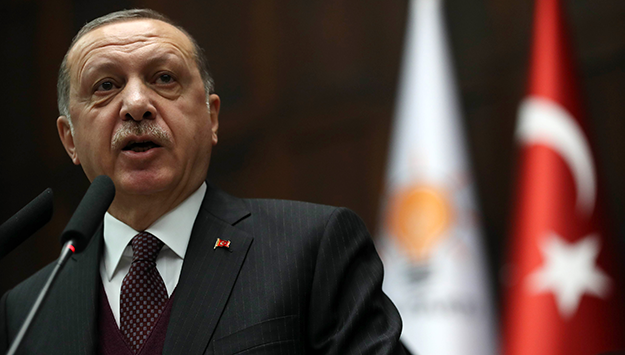
In this week’s Monday Briefing, MEI experts Paul Salem, Robert S. Ford, Randa Slim, and Jonathan M. Winer provide analysis on recent and upcoming events including Vice President Mike Pence’s trip to the Middle East, Turkey’s assault on Afrin, Iraq’s upcoming elections, and the U.N. humanitarian aid plan for Libya.
Iran’s soft power: Islamic Azad University opening branches in major Syrian and Iraqi cities
While Iran’s military involvement in regional conflicts and support for militant groups often make headlines, Tehran’s sophisticated soft power strategies aimed at promoting the Islamic Republic’s ideological and political goals in the region are largely overlooked. The establishment of Islamic Azad Universities in major Syrian and Iraqi cities and the expansion of its main branch in Lebanon is one example of how Tehran uses soft power tools to expand its sphere of influence across the region.
Afghan politician cautions Tehran against aiding Taliban
A prominent Afghan politician has cautioned that it is not in the interest of Iran to have close relations with the Taliban, Afghan media reported. “As an Afghan, I explicitly state that cultivating close relations – I hope it is a mistake – with an enemy, which has no difference with ISIS in its essence and substance, is harmful not only to the Iranian people but also to the people Afghanistan,” Amrullah Saleh, the head of the Afghan Green Trend and former intelligence chief, said at the Tehran Security Conference.
January 10, 2018 – Mobile technologies for consuming and spreading information are empowering individuals and nonstate actors in politics and in conflicts. Social media activists scrutinize authoritarian and democratic powers alike. Violent extremists such as ISIS have used the web to advance their ideologies, project invincibility, undermine governments, and sow fear and hatred. The information battlefield surrounds all internet users.
Fittingly for someone who divides her time between two river cities, DC-born, Baghdad-bred, and now London-based filmmaker Maysoon Pachachi says she is a woman who “lives on a bridge.”
“I’ve been a stranger everywhere I’ve lived,” says Pachachi, now 70, whose documentaries have captured life in Gazan refugee camps, downtown Beirut and medieval Cairo. “I’ve moved around my whole life, but I can adapt and fit in wherever I am.”
Afghanistan remains a key military and diplomatic challenge for the United States, with far-reaching strategic and economic implications. While achieving stability in war-torn Afghanistan is a prerequisite for regional peace, fixing matters there has become hostage to innumerable domestic contradictions as well as deep-rooted strategic mistrust among key regional stakeholders.
Iran-Backed Militia Groups Threaten US Forces in Iraq
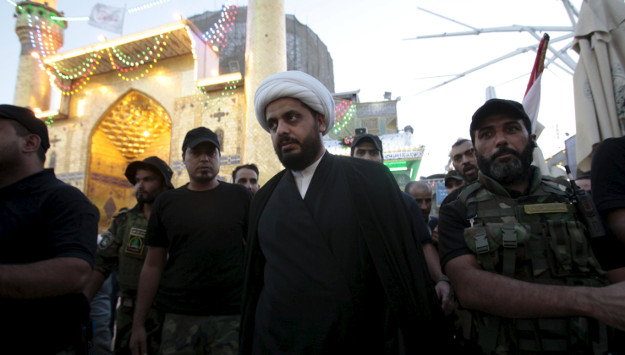
The head of a prominent Iranian-backed Iraqi militia group has called for the exit of American troops from Iraq, Iran’s Fars News Agency reported today. “We have repeatedly heard American government officials saying that Washington wants to remain in Iraq after ISIS for the long haul. This is not something that we want to allow to happen and is totally acceptable to us,” Qais al-Khazali, the secretary-general of Asa’ib Ahl al-Haq, said during a speech in the Iraqi city of Najaf.
Iran Worried about Shiite Allies in Iraq Losing Power in Next Elections
Major General Yahya Rahim Safavi, senior advisor to Supreme Leader Ali Khamenei on military affairs, has expressed the concern that Iran’s interests in Iraq could be imperiled if the upcoming Iraqi parliamentary elections change the balance of power in
Iran-Backed Iraqi Paramilitaries Gearing up for Next Year’s Elections
The leader of a prominent Iranian-backed unit within Iraq’s Popular Mobilization Forces (P.M.F.) said today that his group will hand over its heavy and medium weapons to the Iraqi security forces, Iran’s Fars News Agency reported. Qais al-Khazali, the head of the Asa’ib Ahl al-Haq, called on the Iraqi government to value P.M.F. forces as an asset and treat them fairly. The A.A.H.