Skip to Content

Research & Commentary Results

Filter by
930 Results
Big questions for Libya in 2020
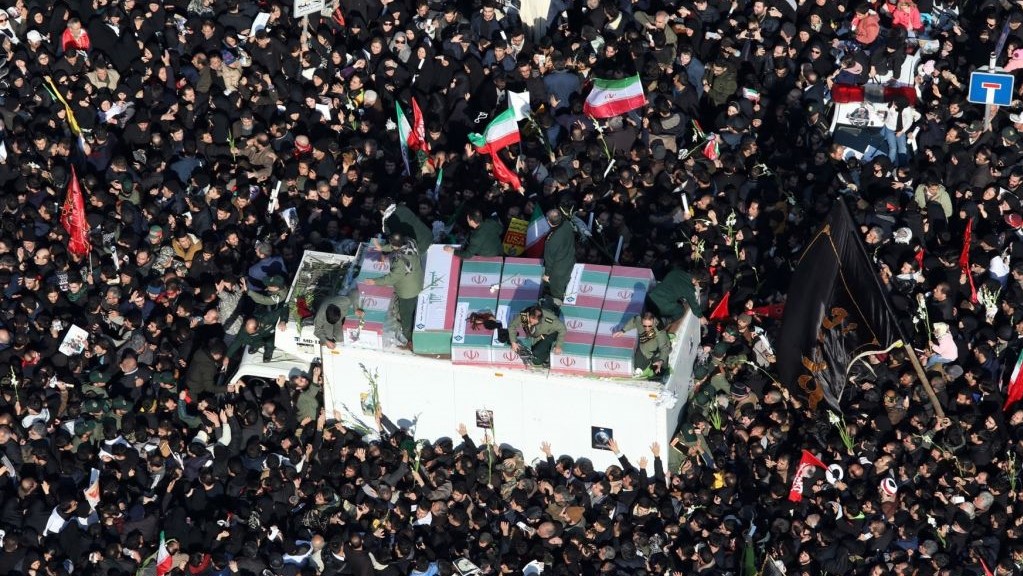
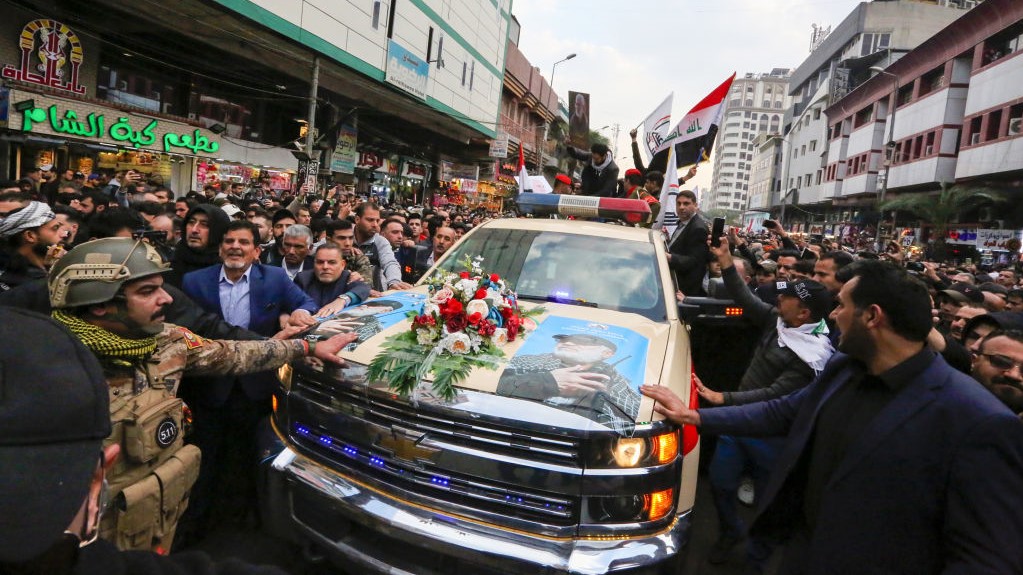
Thousands of people gather at Martyr's Square within a funeral ceremony held after an airstrike on a military school in the south of the Libyan capital of Tripoli by jets loyal to renegade military commander Khalifa Haftar, in Tripoli, Libya on January 05, 2020.
  • Commentary
  • Big questions for Libya in 2020

    Strong U.S. leadership could still make a difference to counter the threats arising from the ongoing proxy war, but the Trump White House appears mainly to have other things on its mind.

    The prospects for Syria in 2020 are grim
    An aerial view taken on December 8, 2019 shows the damage caused by reported Syrian regime and Russian air strikes the previous day in the town of Al-Bara in the south of Syria's Idlib province, that killed at least four civilans, including a child and wounding several others.
  • Commentary
  • The prospects for Syria in 2020 are grim

    Militarily, the most concerning issue remains the fate of Idlib, where at least three million people remain crammed in a killing-zone that encompasses just 3.5 percent of Syria’s territory

    Idlib could define Syria’s future
    Syrian families, who have been forced to displace despite attacks carried out by Assad regime and Russia, sit on soil field despite the cold weather during winter season at Harbanush village in Idlib, Syria on December 28, 2019.
  • Analysis
  • Idlib could define Syria’s future

    The consequences of what happens in Idlib could come to define the future of Syria — a country already destined for many more years of instability and suffering.

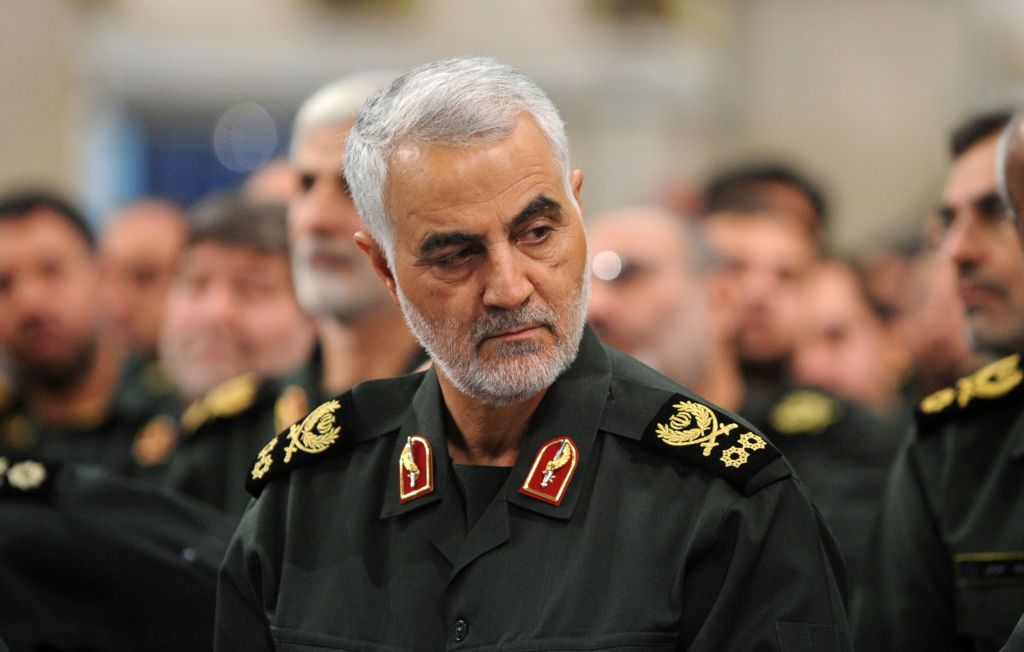
    With Soleimani’s death, war is coming
    Iranian Quds Force commander Qassem Soleimani (C) attends Iranian supreme leader Ayatollah Ali Khamenei's meeting with the Islamic Revolution Guards Corps (IRGC) in Tehran, Iran on September 18, 2016.
  • Commentary
  • With Soleimani’s death, war is coming

    The killing of Qassem Soleimani is one of the biggest developments in the Middle East in decades — it far eclipses the deaths of Osama bin Laden or Abu Bakr al-Baghdadi in terms of strategic significance and implications.

    Why now?
    US President Donald Trump makes a statement on Iran at the Mar-a-Lago estate in Palm Beach Florida, on January 3, 2020.
  • Commentary
  • Why now?

    Just when we thought we had a good understanding of President Donald Trump’s Middle East policy — which boils down to “get out of the region and avoid another endless war there” — he pulls off something dramatic like this.

    January 3, 2020

    A new escalation in the US-Iran crisis
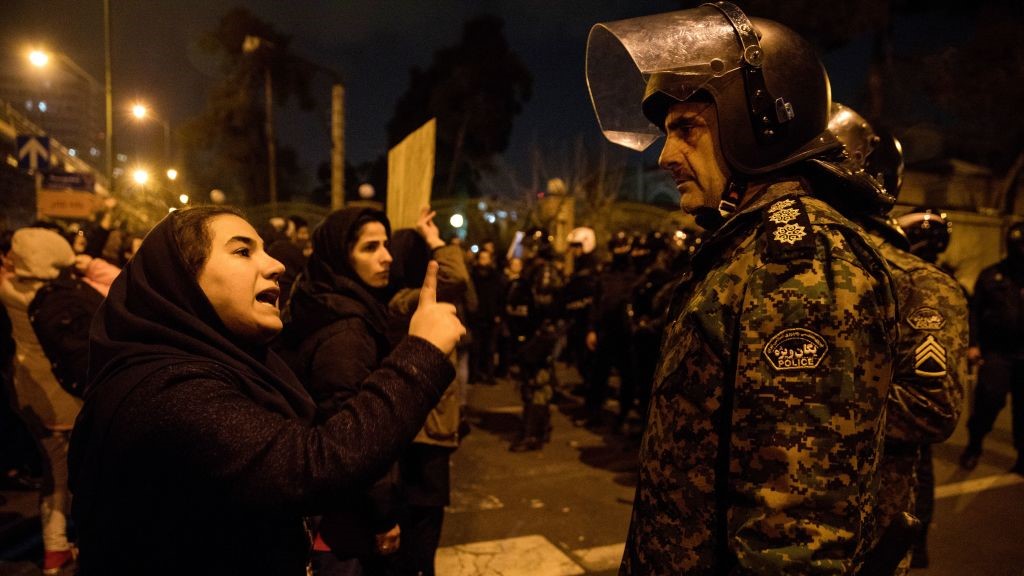
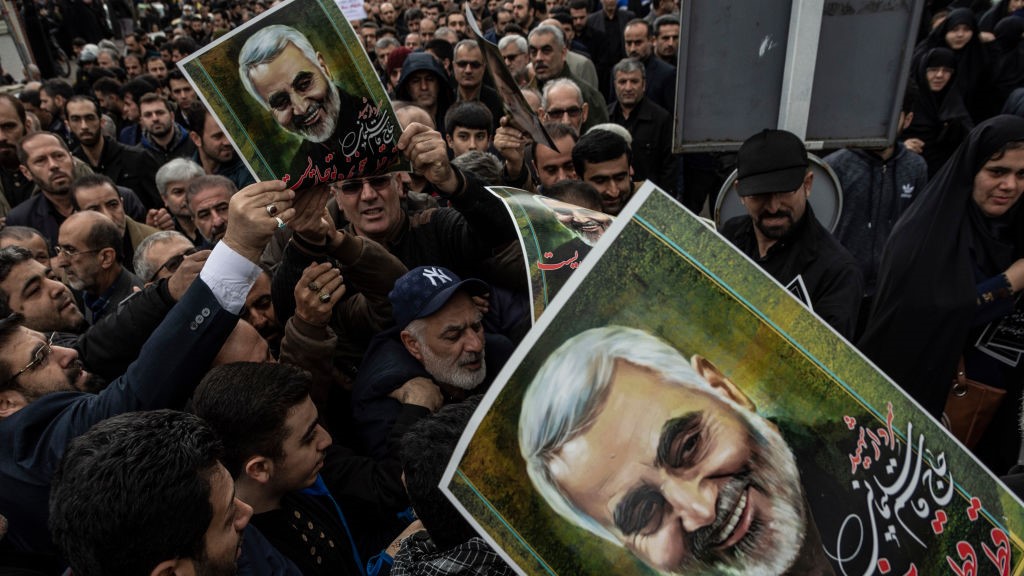
    People gather to stage a protest against the killing of Iranian Revolutionary Guards' Quds Force commander Qasem Soleimani by a US air strike in the Iraqi capital Baghdad, after Friday prayer in Tehran, Iran on January 3, 2020.
  • Commentary
  • A new escalation in the US-Iran crisis

    We must keep in mind that Iran exercises what Barack Obama liked to call “strategic patience.” They pursue strategies and tactics that serve their interests, not emotions. Their interests remain to get Trump to ease off on crippling economic sanctions; to maintain or increase their influence in Iraq, Syria, and Lebanon; and to maintain regime security at home. The death of a senior military officer of theirs is significant but doesn’t change their institutional relations, their interests, or their overall strategy. 

    January 3, 2020

    US airstrike prompts widespread Iraqi criticism
    Supporters of the predominantly Shia Muslim Popular Mobilization Forces (PMF) gather with flags and posters of the PMF deputy head Abu Mahdi al-Muhandis during an anti-US protest after the US airstrike in Baghdad
  • Commentary
  • US airstrike prompts widespread Iraqi criticism

    In the wake of the airstrike, there have been many calls inside Iraq for restraint among Iraqis and between the Americans and the Iranians, most notably from the Shi’a clerical establishment in Najaf. There is a wide consensus in Iraq that the country should not be at the center of an American-Iranian military fight.

    The old rules of the game have been shattered
     A protester stands inside a burned checkpoint during the sit-in against deadly US airstrikes on sites of a Shiite militia in front of the US embassy. Iraqi mourners on Tuesday stormed the building of the US embassy in Baghdad's heavily fortified Green Zone.
  • Commentary
  • The old rules of the game have been shattered

    The killing of Gen. Qassem Soleimani, head of Iran’s Revolutionary Guards Quds Force, was a major and unexpected blow to the Iranian leadership. It punctured the aura of invincibility and the hubris that have characterized Soleimani and his colleagues’ behavior.

    January 3, 2020

    Soleimani's killing: A turning point, but not necessarily a prelude to war
    Middle East Institute
  • Commentary
  • Soleimani's killing: A turning point, but not necessarily a prelude to war

    No one in Tehran can now afford to test the limits of Donald Trump’s unpredictability. He is the man who for years lamented American interventions in the Middle East only to shock the Iranians by killing the leading symbol of Iran’s regional agenda. 

    What do recent successes against ISIS mean for a US withdrawal from Afghanistan?
    Member of the Islamic state ISIS militants stand alongside their weapons, as they surrendered to government in Jalalabad, Nangarhar, Afghanistan on November 17, 2019.
  • Analysis
  • What do recent successes against ISIS mean for a US withdrawal from Afghanistan?

    Afghan security forces, working in concert with U.S. airpower, have launched a series of successful attacks in eastern Afghanistan on ISIS forces, which operate locally under the banner of ISKP. Simultaneously, the Taliban has conducted its own military campaign against ISKP in the same region. These campaigns have significantly degraded ISKP’s position in eastern Afghanistan, a development that may well increase the likelihood of an eventual U.S.-Taliban peace deal.

    December 23, 2019

    Libya’s descent into civil war
    A fighter of Libya's UN-backed Government of National Accord (GNA) of Fayez Serraj, fires his rifle during clashes with forces of the self-styled Libyan National Army (LNA) led by Libyan strongman Khalifa Haftar, at Al-Khalla frontline.
  • Commentary
  • Libya’s descent into civil war

    The question as 2019 ends is whether foreign forces supporting the conflict will rethink their commitment to military victory and instead work to secure political solutions through compromise.