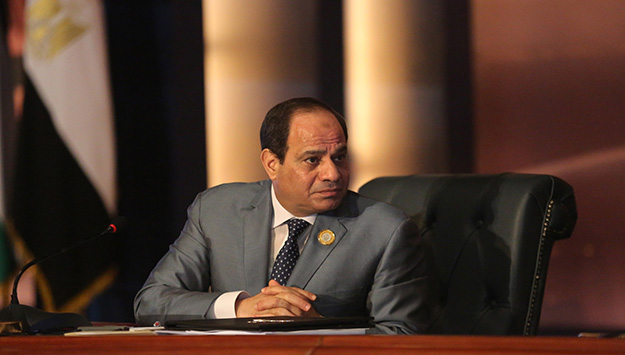
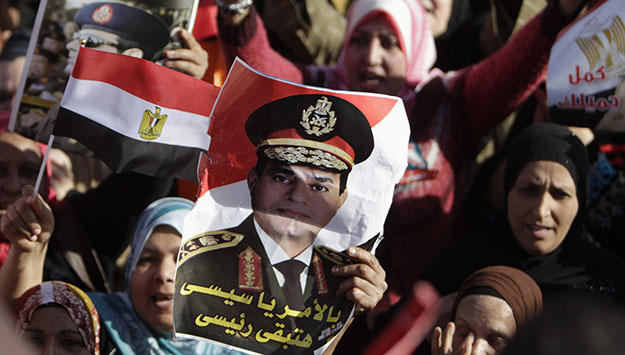
In the year since being elected to the presidency, Abdel Fattah el-Sisi has consolidated a ruling coalition, restored economic growth, and brought back considerable stability to the country after four years of turmoil. But this has come with a harsh crackdown on dissent, a decline in freedoms and human rights, and abuses by the police and judiciary. In the short term, the combination of nationalism, modest economic growth, and highlighting the war on terror is politically sustainable among a broad cross section of the population frustrated by years of uncertainty and economic decline.
Cairo's Rough, Crowded, and Vital Underground Artery
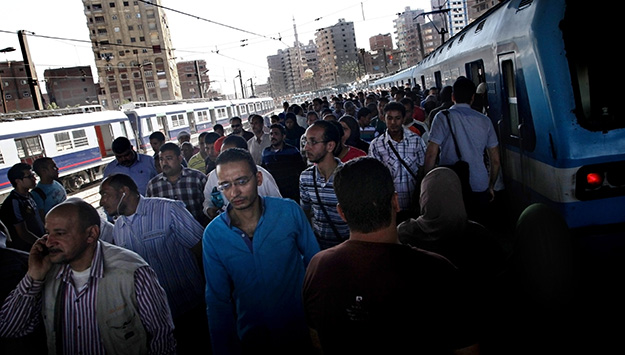
Inaugurated in 1987, Cairo’s Metro was Africa’s first inner-city underground and the embodiment of Hosni Mubarak’s promise to modernize Egypt’s infrastructure. It is hard to think of a Mubarak-era project that was better planned, more efficiently executed, or has had such a functional impact on so many people’s lives. Serving four million passengers daily, the Metro is the fastest, cheapest means of navigating the traffic-congested urban behemoth.
Saudi Arabia’s Succession Shakeup and the Rise of Mohammed bin Salman
King Salman’s reign of four months has brought dramatic changes to Saudi Arabia’s succession framework. Prince Muqrin was appointed as heir before being relieved of his duties in favor of Prince Mohammed bin Nayef, and Prince Mohammed bin Salman (MBS) was designated as heir to the heir. A son of the monarch, MBS carries a variety of additional portfolios, including that of minister of defense and chairman of the Council of Economic and Development Affairs (CEDA), which makes policy on non-security matters.
The United States, the GCC, and Iran: The Crisis that Wasn’t
Whatever eventually comes of the security agreements and mutual pledges of support made at last week’s summit conference between President Obama and leaders of the Arab Gulf monarchies, one result is clear: Saudi Arabia and the others may not be enthusiastic about the pending nuclear agreement with Iran, but they will not actively oppose it.
Egyptian President Abdel Fattah el-Sisi has earned numerous accolades, domestic and international, for his repeated calls for religious discourse away from extremism. Sisi has expressed the conviction that the proclivity to radicalism and conflict is not inherent to Islam, but is the product of the sacralization of texts and the uncritical acceptance of early scholars.
Egypt: Between Chaos, Authoritarianism, and Democracy
The literature on democratic transitions from the last 50 years has emphasized the process of transforming an authoritarian state into a democracy. Much has been written about negotiations between ancien regimes and democratic forces, particularly the bridges that must be made between elements of old and new regimes. Most studies on democratic transitions also examine the competency or democratic nature of such countries’ institutions.
Defying Gravity: Working Toward a Regional Strategy for a Stable Middle East
In this MEI Policy Paper, Ross Harrison asserts that a new regional order is emerging out of the conflicts of the Middle East. The relationships among the pillars of this order–Egypt, Saudi Arabia, Turkey, and Iran–are crucial, as they will largely determine “whether the future of the Middle East will be a continuation of the current chaos and destruction or a more positive transition toward stability and prosperity.” Harrison argues that global powers must concentrate on creating conditions conducive to cooperation among the pillars.
Egypt's Deregulated Property Market: A Crisis of Affordability
What Egyptians call the azmit al-iskan—the housing crisis—is exemplified by the 1986 movie, Karakon fi-l-Shari‘a, or Prison in the Street. The film depicts a typical middle class family that, evicted from its condemned home, must resort to living in a horse-drawn caravan because a regular apartment is unaffordable. The “prison” in the title is a reference to the father’s numerous altercations with the police, who deem his attempts to make a home quasi-legal—not illegal, but also not legal.
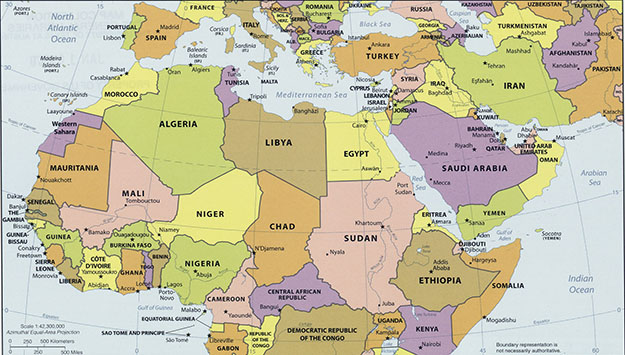
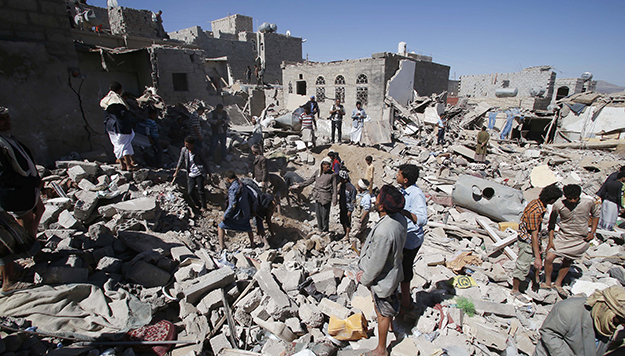
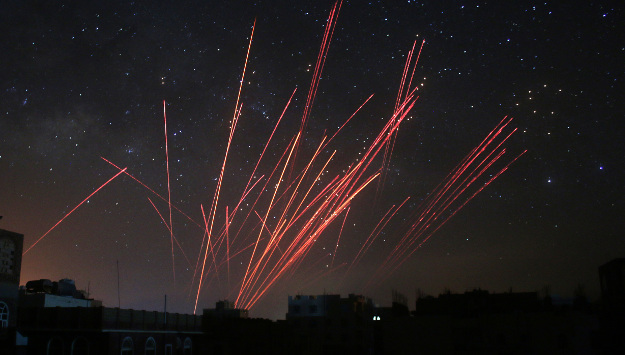
Saudi Arabia’s intervention in Yemen is not surprising given Riyadh’s past policies and current perspectives on Gulf security. Yemen has always suffered from varying degrees of chaos and civil strife. Even in the best of times, large areas of the country lacked government control, and few if any in the region saw it as a functioning nation state. Whatever Gulf Arab leaders may have said publicly, most have viewed Yemen as a loose collection of autonomous or even independent regions, held together only by the lines drawn on a map.
Bringing China and Islam Closer: The First Chinese Azharites
In the 1930s, several groups of Muslim students from China arrived to study at Al-Azhar University in Cairo. They were destined to play an important role in the history of modern Chinese Islam. These 35 Chinese Azharites, all but two from the Sinophone Hui community, helped China to establish lasting links with Egypt and other Muslim countries in the Middle East. They also left a considerable cultural legacy, including translations of crucial texts from both the Islamic and Chinese traditions.
Cairo’s Townhouse Gallery: Social Transformation through Art
As the urban historian Lewis Mumford pointed out, “When a city has reached the megapolitan stage, it is plainly on the downward path: it needs a terrific exertion of social force to overcome the inertia, to alter the direction of the movement, to resist the immanent processes of disintegration.”[1]
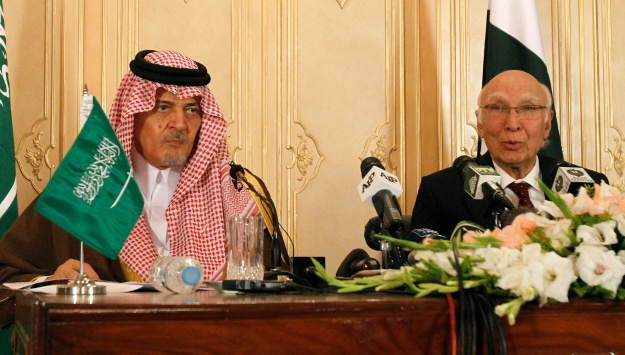
Pakistan’s Balancing Act Between Saudi Arabia and Iran
April 23, 2015 – Marvin Weinbaum, director of the Center for Pakistan Studies at The Middle East Institute, explains Pakistan’s decision not to provide military aid for Saudi Arabia’s operation in Yemen, and how Prime Minister Sharif is working to repair relations with Riyadh.
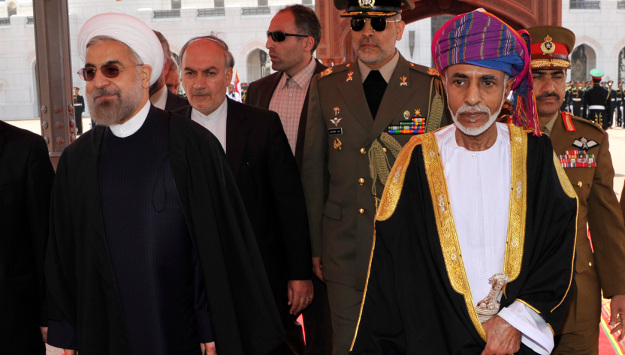
Relations between Iran and Saudi Arabia have always been thorny, but rarely has the state of affairs been as venomous as it is today.
Tehran and Riyadh each point to the other as the main reason for much of the turmoil in the Middle East. In its most recent incarnation, the Iranian-Saudi conflict by proxy has reached Yemen in a spiral that both sides portray as climatic.