Mega Projects and the Limits of Urban Planning in Megacities: The Case of Istanbul in the AKP Era
This essay examines the politics of the Istanbul Master Plan, which was created by the Istanbul Metropolitan Planning and Urban Design Center (IMP), focusing on the role of non-governmental organizations. The essay addresses three main questions. First, to what have NGOs been involved in the formulation, implementation, and oversight of the Istanbul Master Plan? Second, what form has their activism taken and what has been the response of the AKP government? And third, what are the prospects for achieving the balance between conservation and development originally envisioned by the Istanbul Master Plan?
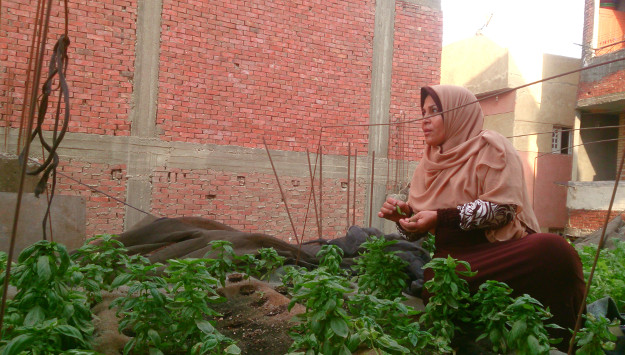
On the rooftop of a three-story brick building tucked inside a dusty alley of ‘Izbat al-Nasr, a poor and informal neighborhood southeast of Cairo, Leila Hussein crouches, tending to the basil and rocket she grows. The incessant cackling of geese, chickens, and pigeons emanating from the roof of a similarly run-down, red brick structure opposite the street gives an eerie, rural soundtrack to her meticulous work.
The Egyptian state today faces one acute crisis after the other. To be fair, the Egyptian military cannot be held responsible for creating these crises. However, it is unlikely that Egypt will be able to resolve them unless and until the armed forces divests itself of the power and the privileges associated with the immense economic power and privileges it has accumulated.
According to the UN’s World Urbanization Prospects 2014, there are 28 “megacities” worldwide (i.e., urban agglomerations with populations in excess of 10 million). By 2030 another dozen will likely be added to their ranks.
Since the early days of the republic, Turkey’s deep state has been seen as the clandestine defender of the Turkish establishment and the secular and nationalist ideology established by Turkey’s founder, Mustafa Kemal Ataturk.
The following represents findings from an MEI delegation trip to Egypt that took place between October 5 and 9. The delegation met with government, civil society, youth and business leaders, and heard a variety of views on the country’s challenges. What follows is a presentation of the views we heard, not an MEI assessment.
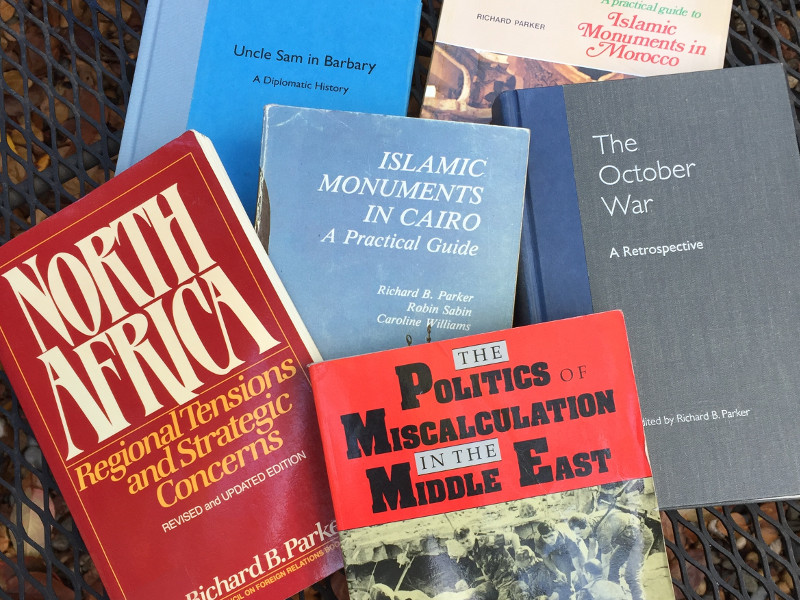
Only a few authors have works that can be found on both floors of the Oman Library at The Middle East Institute, and fewer still that have a personal connection to both the institute and the history of the region. The late Ambassador Richard B. Parker can claim this status, having served 31 years in the Foreign Service and as the third editor of The Middle East Journal. He was also a longtime MEI scholar-in-residence.
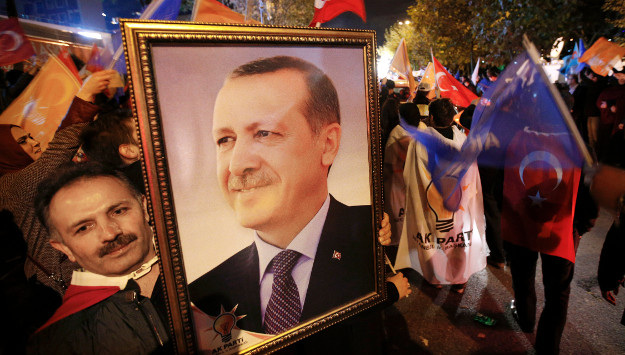
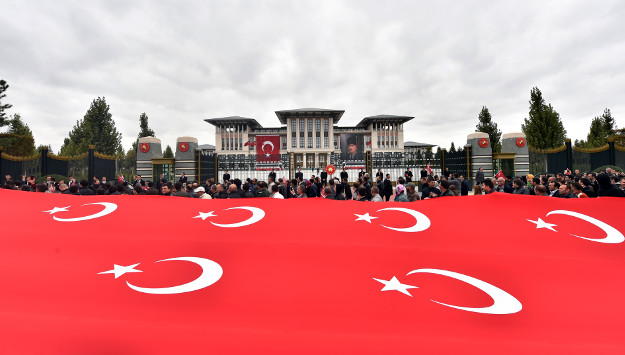
In a stunning electoral comeback that has surprised everyone, including its own legislators, Turkey’s ruling Justice and Development Party (AKP) captured almost 50 percent of the votes, but well over 50 percent of parliamentary seats, in Sunday’s elections. There are many lingering questions. Considering that even the pro-government pollsters did not foresee such a victory, many have asked whether the elections were free and fair. If so, how did the AKP manage to reverse its electoral fortunes in just five months in a country that has been mired in chaos and violence during that time?
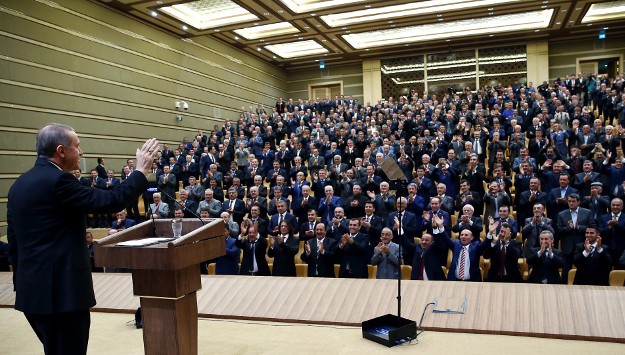
The Turkish electorate is going to the polls on Sunday for the second time in just over five months. After 13 years in power, the ruling Justice and Development Party (AKP) failed to secure enough votes in June to form a majority government. In the hope another vote could deliver a parliamentary majority to his party, President Recep Tayyip Erdogan called for snap elections. But polls indicate that Erdogan might not get what he wants.
Dateline Egypt: Roadmaps, Refinancing, and Regional Roles
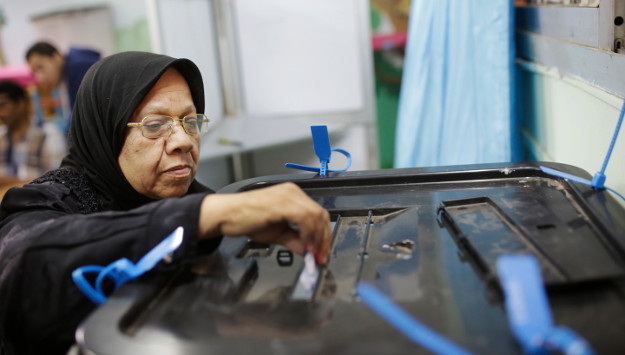
In the past ten days Egypt held a first round of parliamentary elections, announced renewed loan talks with the IMF, experienced new clashes with militants in the Sinai, and joined multinational talks to end the war in Syria. These headlines provide current glimpses into the country’s complex and challenging political, economic and security trajectories.
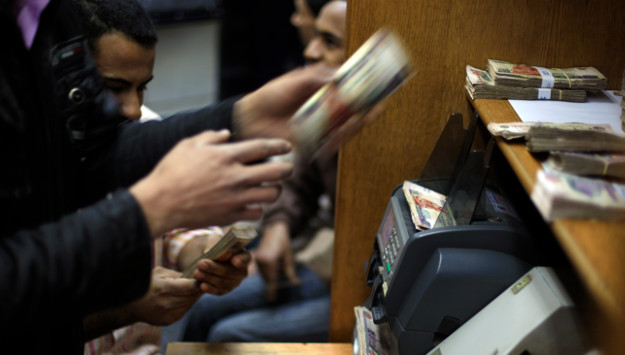
Since the 1990s, the need for streamlined procedures to facilitate business, trade and investment has grown to crisis proportions in Egypt. But the political will to deliver administrative reform was always lacking, not least because it would involve lay-offs and wage reductions; in other words, direct threats to the livelihoods of some seven million state employees and consequently the regime’s popularity. But with the government wage bill estimated to reach USD30 billion next year, Egypt has finally taken action.
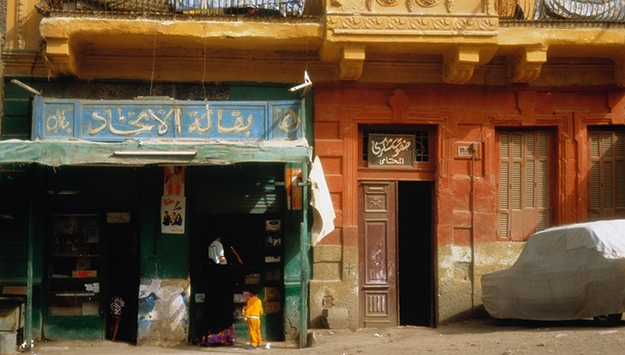
In mid-June, just before Ramadan, the pre-dawn calm of downtown Cairo was shattered by the sound of heavy machinery. The municipality had decided to repair the battered sidewalks, a fairly regular occurrence since shoddy concrete tiles are typically used for the job. Truckloads of sand were deposited at intervals along the main boulevards to be spread as a bed for the new tiles, while much of the rubble from the old ones was left piled by the curbs. To avoid the rough new terrain pedestrians took to the streets with the cars.
Turkish Prime Minister Ahmet Davutoglu is at the United Nations in New York, making another push for Turkey’s long-standing demand for a safe zone in northern Syria, while President Recep Tayyip Erdogan seems to have realized that it might be a long shot given recent developments.
A recent public opinion poll conducted by Ipsos suggests that the Turkish public is supportive of foreign aid, with around 45 percent of those surveyed indicating that Turkey should spend 3 to 10 percent of its national budget on such assistance. Material and ideological factors rather than moral imperatives play a role in this opinion.
Tens of thousands of women, angry at what they say is the government’s latest step to “Islamify” Turkey, recently signed a petition against the rise of religious marriages in lieu of civil unions.