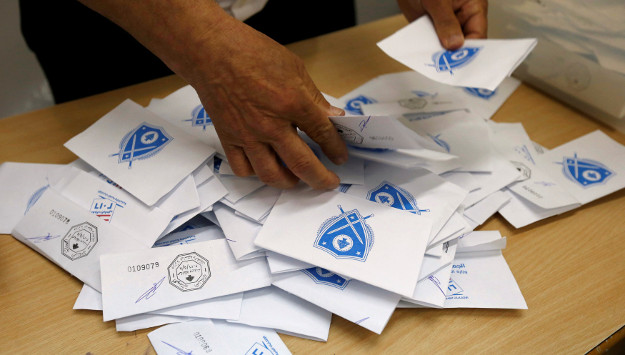
Representatives of the Kurdistan Regional Government (K.R.G.) are currently in the process of shaping the information environment ahead of a desired referendum on Kurdish independence. Aside from a lobbying campaign strongly focused on Washington—the K.R.G. has spent more on lobbying in the United States than Pakistan—leaders have been making provocative statements regarding territorial ambitions.[1] K.R.G.
Monday Briefing: India FM to Visit Iraq and Syria; Iran-Turkey Relations After the Failed Coup; Afghanistan's Fractured Government
In this week’s Monday Briefing, MEI experts Zubair Iqbal, Alex Vatanka, and Marvin G. Weinbaum provide analysis on issues including India’s Middle East policy as its foreign minister is set to visit Iraq and Syria, the opening of relations between Iran and Turkey following the latter’s recent failed coup, and the latest signs of tension within Afghanistan’s shaky unity government.
Monday Briefing: After Turkey's Failed Coup, How Far Will the Crackdown Go?
In this week’s Monday Briefing, MEI expert W. Robert Pearson provides analysis on the failed coup in Turkey and the impending crackdown on opposition. Marvin Weinbaum considers whether the unpopularity of Pakistan’s government could put it at risk of a military coup of its own. And Charles Lister looks at how ISIS is adapting in the face of territorial losses in Iraq and Syria.
Monday Briefing: Chilcot Report, French FM in Lebanon, Iran Economy
In this week’s Monday Briefing, MEI experts Daniel Serwer, Alex Vatanka, and Paul Salem provide analysis on recent and upcoming events including the recent Chilcot Report, European trade delegations visit to Iran, and France’s push to end the Lebanon stalemate.
Weekly Briefing: Baghdad Bombing, NATO Summit, Israel’s Africa Outreach, and Saudi Embassy Trial in Iran
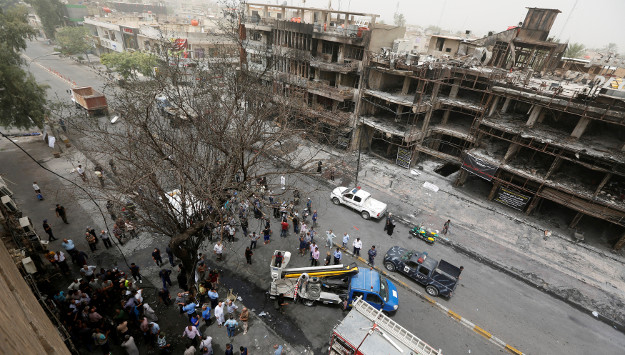
In this week’s briefing, MEI experts Hassan Mneimneh, Daniel Serwer, Paul Scham, and Alex Vatanka provide analysis on recent and upcoming events including the ISIS bombing in Baghdad, this week’s NATO summit in Warsaw, Israel’s outreach to Africa, and the trial in Iran over the ransacking of the Saudi embassy.
The Next Challenge: Governing Liberated Cities after ISIS
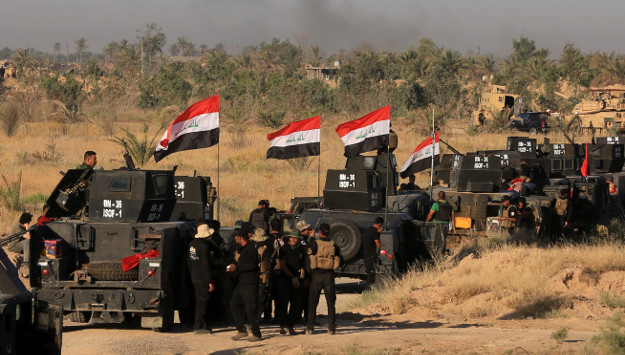
Lieutenant General Abdulwahab al-Saadi, the Iraqi commander of the Iraqi forces fighting to retake Fallujah, said June 23 that his units held 80 percent of the city. This contrasts with the estimate from the U.S. military spokesman in Iraq on June 22, who said that Iraqi forces held only a third of the city. Whatever the exact figure, after heavy fighting, often street-by-street, the Islamic State will lose the city.
Monday Briefing: ISIS to Lose Fallujah; Pakistan to Join S.C.O.
In this week’s Monday Briefing, MEI experts Robert S. Ford, Paul Scham, and Marvin G. Weinbaum provide analysis on recent events including the battle against ISIS for Fallujah, Israel’s upcoming address to the EU Parliament, and Pakistan’s upcoming accession to the Shanghai Cooperation Organization.
The battle for Fallujah, Thursday's OPEC meeting, and Hariri's loss in Tripoli
In this week’s briefing, MEI experts Charles Lister, Herman Franssen, and Paul Salem provide analysis on recent and upcoming events including the battle for Fallujah, Thursday’s OPEC meeting, and Saad Hariri’s defeat in Tripoli, Lebanon.
Iraqi Narrative of U.S. Invasion Struggles to Be Heard
A new American opera called Fallujah debuted this spring, bringing attention to post-traumatic stress disorders suffered by U.S. marines who fought in Iraq. The opera joins a list of American artworks that have explored the impact of the Iraq war on American lives. The big elephant in the room, however, are the Iraqi victims of the war and the deafening silence in U.S. discourse on the horrific consequences the war brought on them.
In this week’s Monday Briefing, MEI experts Marvin G. Weinbaum, Charles Lister, Hassan Mneimneh, and Paul Scham provide analysis on recent events including the killing of Afghan Taliban leader Mullah Akhtar Mansour, deadly blasts targeting regime-held territory in Syria, Iraq’s intra-Shiite feud, and Avigdor Lieberman’s appointment as Israel’s Defense Minister.
The Potential for Intra-Regional Energy Cooperation
Regional Cooperation Series
This Policy Paper is part of The Middle East Institute’s Regional Cooperation Series. Throughout 2016, MEI will be releasing several policy papers by renowned scholars and experts exploring possibilities to foster regional cooperation across an array of sectors. The purpose is to highlight the myriad benefits and opportunities associated with regional cooperation, and the high costs of the continued business-as-usual model of competition and intense rivalry.
Philip Gordon, a former Middle East policy adviser in the White House, likes to say that President Barack Obama learned three lessons from the region’s unending turmoil.
Iraq is enduring a dangerous political crisis. Its substance, however, is under dispute. For many, it is a valiant attempt at reform, and at fulfilling the long overdue promise of sound governance, against a system brought to a halt by corruption and dysfunction. For others, it is a questionable maneuver to restore autocracy, and to unravel the checks and balances that have been instituted over more than a decade. The truth, however, is not somewhere in between, irrespective of the many smokescreens that the opponents of reform may raise.
Monday Briefing: Lebanon's Elections, Gaza Unrest, Syria Talks, and Saudi's New Oil Minister
In this week’s Monday Briefing, MEI experts Paul Salem, Paul Scham, Charles Lister, and Jean-François Seznec provide analysis on recent events including Lebanon’s elections, unrest in Gaza, the ongoing Syria talks, and Saudi Arabia’s new oil minister.