Skip to Content

Research & Commentary Results

Filter by
2034 Results
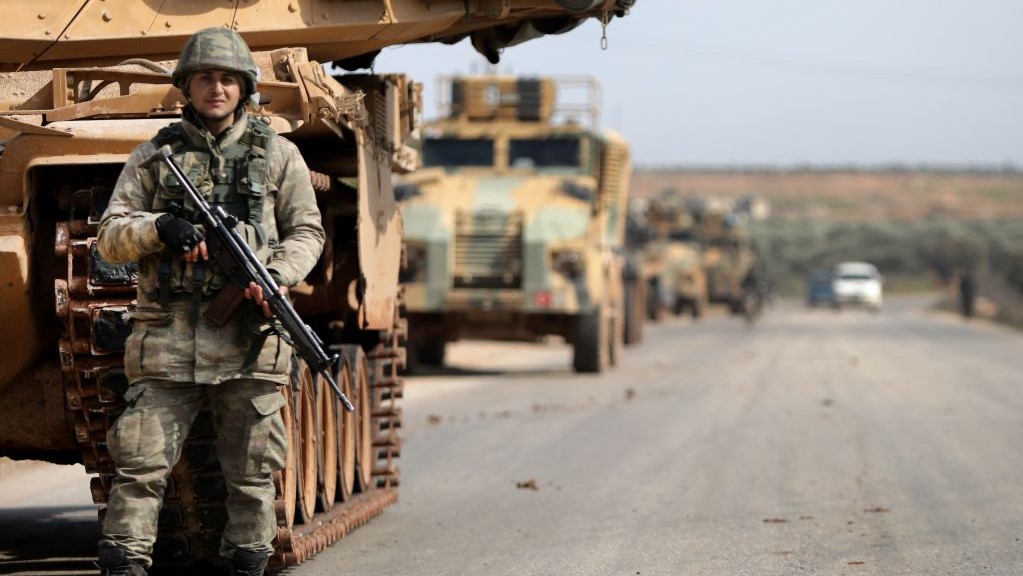
Idlib tests Turkey-Russia ties
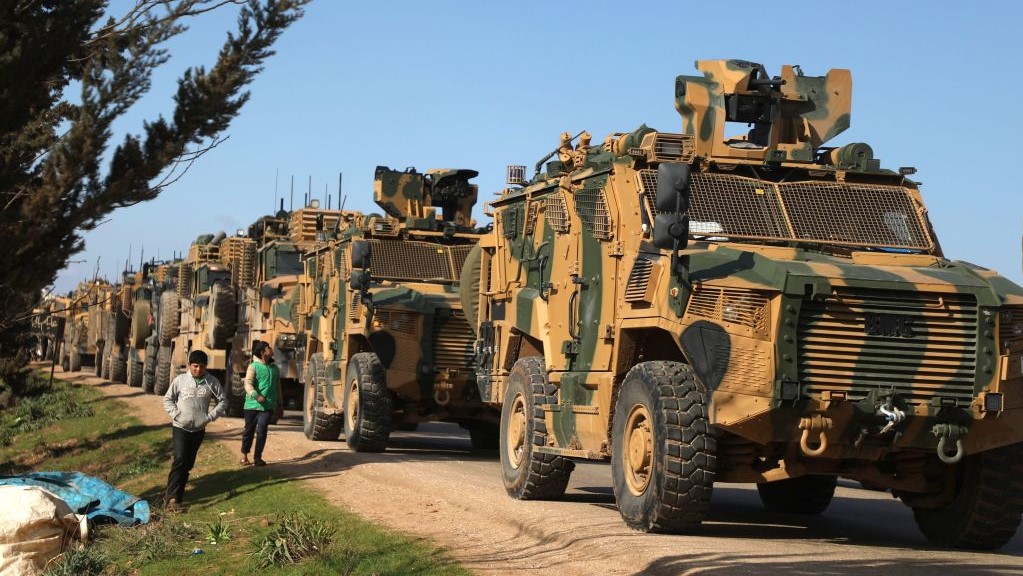
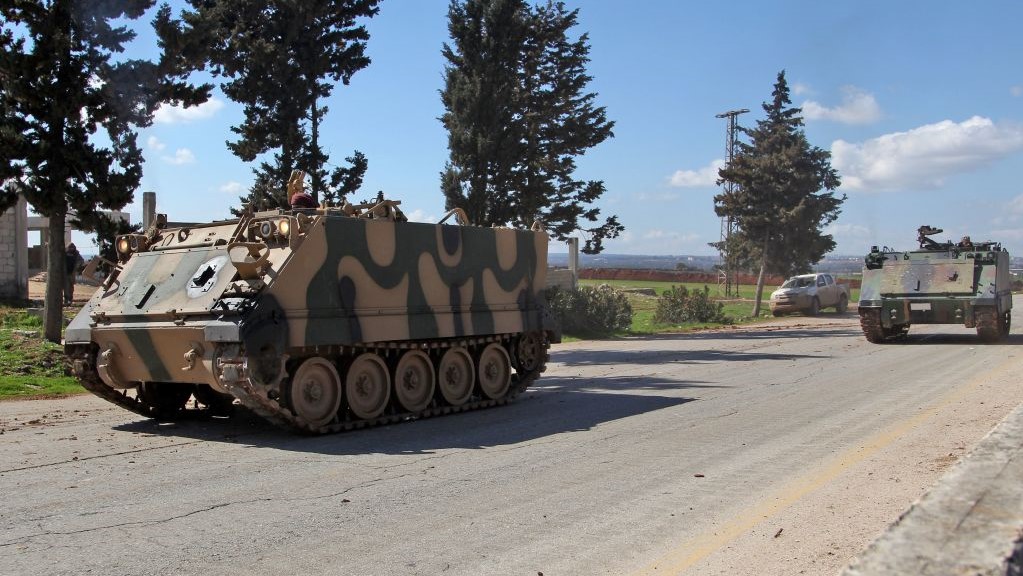
A Turkish military convoy of tanks and armoured vehicles passes through the Syrian town of Dana, east of the Turkish-Syrian border in the northwestern Syrian Idlib province, on February 2, 2020.
  • Commentary
  • Idlib tests Turkey-Russia ties

    The escalating tensions between Turkey and Russia over Idlib did not come as a surprise to many outside the Turkish capital.

    In Syria, we’re getting counter-terrorism all wrong
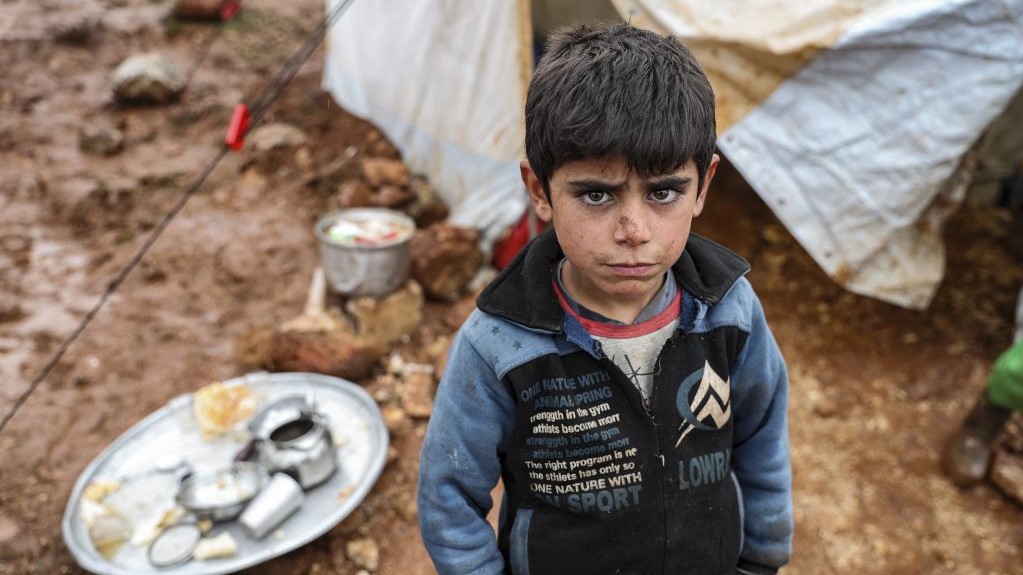
    Syrian families, who have been forced to displace due to the ongoing attacks carried out by Assad regime and Russia, are seen on their way to safer zones with their belongings, at Atme camps in Idlib, Syria on January 19, 2020.
  • Analysis
  • In Syria, we’re getting counter-terrorism all wrong

    While proclamations of ISIS’s defeat were certainly premature, international policy and attention on countering terrorism in Syria has since declined — as if to suggest that the job is done. In fact, as 2020 sets in, the world seems to be getting counter-terrorism all wrong in Syria, in three interlinked ways.

    Why Jordan was so quick to reject Trump’s peace plan
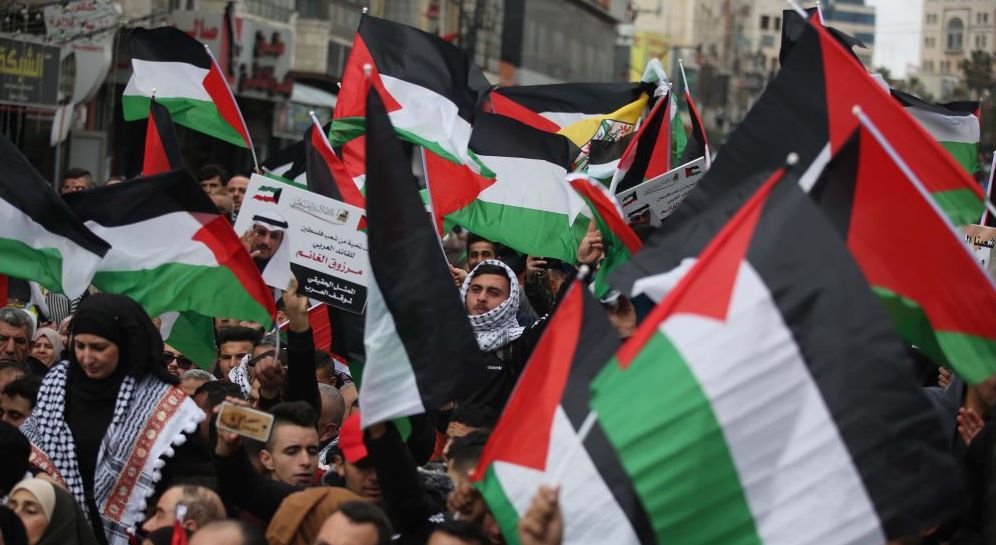
    Thousands of Jordanians protested on Friday against President Trump's Middle East Peace Plan on January 31, 2020 in Amman, Jordan.
  • Analysis
  • Why Jordan was so quick to reject Trump’s peace plan

    Jordan’s response to President Donald Trump’s so-called “deal of the century” has been quick and unequivocal. Less than an hour after the release of the peace plan at a White House ceremony on Jan. 28, Jordanian Foreign Minister Ayman Safadi issued a statement in which he reiterated Amman’s support for the two-state solution and the Arab Peace Initiative (API) as the only path to a just and lasting settlement to the Israeli-Palestinian conflict, without referring directly to the Trump proposal.

    February 3, 2020

    Arab states unanimously reject Trump plan
    Palestinian president Mahmud Abbas (3rd-L) and Palestine Liberation Organisation (PLO) Secretary-General Saeb Erekat (2nd-L) look on as Arab League Secretary-General Ahmed Aboul Gheit (L) reads a statement during an Arab League emergency meeting discussing the US-brokered proposal for a settlement of the Middle East conflict, at the league headquarters in the Egyptian capital Cairo on February 1, 2020.
  • Commentary
  • Arab states unanimously reject Trump plan

    The communiqué, while largely symbolic, was nonetheless a major victory for Abbas’ beleaguered leadership.

    February 3, 2020

    FBI probes NSO Group
    An Israeli woman uses her iPhone in front of the building housing the Israeli NSO group, on August 28, 2016, in Herzliya, near Tel Aviv.
  • Commentary
  • FBI probes NSO Group

    Reuters reported on Jan. 30 that the FBI has been investigating Israeli spyware firm NSO Group since 2017. The revelation comes after Sen. Chris Murphy and UN Special Rapporteur Agnes Callamard called on the U.S. to investigate the apparent hacking of Amazon CEO Jeff Bezos’s phone by Saudi Crown Prince Mohammed bin Salman. In its statement, the UN identified NSO Group as a likely source of the malware.

    January 31, 2020

    Trump's "Peace Plan"
    Middle East Institute
  • Podcast
  • Trump's "Peace Plan"

    Khaled Elgindy and Michael Koplow join host Alistair Taylor to discuss the long-awaited “deal of the century” Middle East peace plan. President Trump rolled the plan out at the White House on Tuesday with Israeli Prime Minister Benjamin Netanyahu in attendance, while the Palestinians, who have refused to deal with the administration since it recognized Jerusalem as Israel’s capital at the end of 2017, were not there – and not invited. How has it been received so far, and where might things go from here?

    January 31, 2020

    Lebanon’s inconvenient truths
    BEIRUT, LEBANON - JANUARY 16: An anti-government protester bangs a pan as they demonstrate ahead of the expected naming of a new cabinet tomorrow by Prime Minister Designate Hassan Diab, on January 16, 2020 in Beirut, Lebanon.
  • Analysis
  • Lebanon’s inconvenient truths

    By any objective standard, the Lebanese protest movement has failed. This is not necessarily an indictment against it. Rather, it’s a reality one cannot and should not ignore. The responsible thing to do now is to try to understand why it has fallen flat, despite more than 100 days of demonstrations in various regions of the country including the capital, Beirut. 

    First, a word of solace. In the annals of history, the Lebanese are in good company as most uprisings and revolutions failed to attain their goals. And even when they did, success either didn’t last long or was completely reversed due to counterrevolutions and other spoilers, both foreign and domestic.

    January 29, 2020

    The day after Soleimani: Israel contemplates “success leveraging”
     A file photo dated September 18, 2016 shows Iranian Revolutionary Guards' Quds Force commander Qasem Soleimani during Iranian Supreme Leader Ayatollah Ali Khamenei's meeting with Revolutionary Guards, in Tehran, Iran.
  • Analysis
  • The day after Soleimani: Israel contemplates “success leveraging”

    Iranian Gen. Qassem Soleimani was on Israel’s “most wanted” list for more than a decade. Israeli intelligence identified him as a looming threat early in his career, and with time he outperformed even the graver threat predictions, as he systematically built the Islamic Revolutionary Guard Corps’ (IRGC) Quds Force into a formidable regional stealth operation. Soleimani was a highly sophisticated executioner of Iran’s long-term strategy, which can be described as an effort to build a “double crescent.”

    Trump’s “peace plan” aims to bury the two-state solution
    A picture taken on January 27, 2020 shows Israel's controversial concrete barrier (C) separating the Jewish settlement of Neve Yaakov (foreground) in the northern part of east Jerusalem and the Palestinian area of al-Ram (background) in the occupied West Bank.
  • Commentary
  • Trump’s “peace plan” aims to bury the two-state solution

    The notion that an American president, in consultation with two Israeli leaders, could decide on the future of Palestinians without any Palestinian involvement seems to epitomize Trump’s overall approach to the conflict.

    January 27, 2020

    It’s shameful to use Palestinians as props in Israel’s election
    U.S. President Donald Trump and Prime Minister of Israel Benjamin Netanyahu shake hands while walking through the colonnade prior to an Oval Office meeting at the White House March 25, 2019 in Washington, DC.
  • Analysis
  • It’s shameful to use Palestinians as props in Israel’s election

    The upcoming visit to the White House by Israel’s caretaker prime minister has nothing to do with the Middle East conflict and everything to do with giving yet another political favor to Benyamin Netanyahu. While the Jan. 28 visit may be all about the Israeli elections, it is shameful and dangerous for American officials to be giving time and space for discussions that affect the Palestinian people without their involvement.

    January 27, 2020

    The ties that bind: The South Caucasus and the Middle East
    Turkish Foreign Affairs Minister Mevlut Cavusoglu (C), Minister of Foreign Affairs of Iran, Javad Zarif (R) and Azerbaijani Minister of Foreign Affairs, Elmar Mammadyarov (L) pose for a photo prior the tripartite meeting of foreign ministers of Turkey, Azerbaijan and Iran in Istanbul, Turkey on October 30, 2018.
  • Analysis
  • The ties that bind: The South Caucasus and the Middle East

    As neighboring regions, the South Caucasus and the Middle East are inextricably intertwined — so much so that the former is sometimes even considered part of the Greater Middle East. While geographical proximity is the strongest driver of interconnectivity between the two regions, geopolitics, business ties, and energy interests also link countries from the South Caucasus and the Middle East and form the basis for important bilateral and regional relationships.

    January 24, 2020

    Qassem Soleimani’s reign may be over, but his legacy in Syria will endure
    yrians take part in a protest against the United States and in support of Iranian general Qassem Soleimani at the Saadallah al-Jabiri Square in Aleppo, northern Syria, on Jan. 7, 2020.
  • Analysis
  • Qassem Soleimani’s reign may be over, but his legacy in Syria will endure

    The U.S. assassination of Iranian Gen. Qassem Soleimani came as a seismic shock to the Middle East, not least to the embattled political system in Damascus that has reaped the benefits of Iran’s military involvement across the region. While his death will be a severe blow, it will not necessarily translate into a decline in Iran’s influence or military presence in Syria. Soleimani’s army of militias and supporters will outlast him, possibly by decades.