Skip to Content

Research & Commentary Results

Filter by
3034 Results
Reviewing the Middle East in 2019
Middle East Institute
  • Podcast
  • Reviewing the Middle East in 2019

    In our annual year in review episode, MEI experts Paul Salem, Gonul Tol, Charles Lister, Alex Vatanka, Marvin Weinbaum, and Mirette Mabrouk sit with host Alistair Taylor to discuss the key events across the region in 2019, what surprised them, and where things stand as we head into 2020.

    December 19, 2019

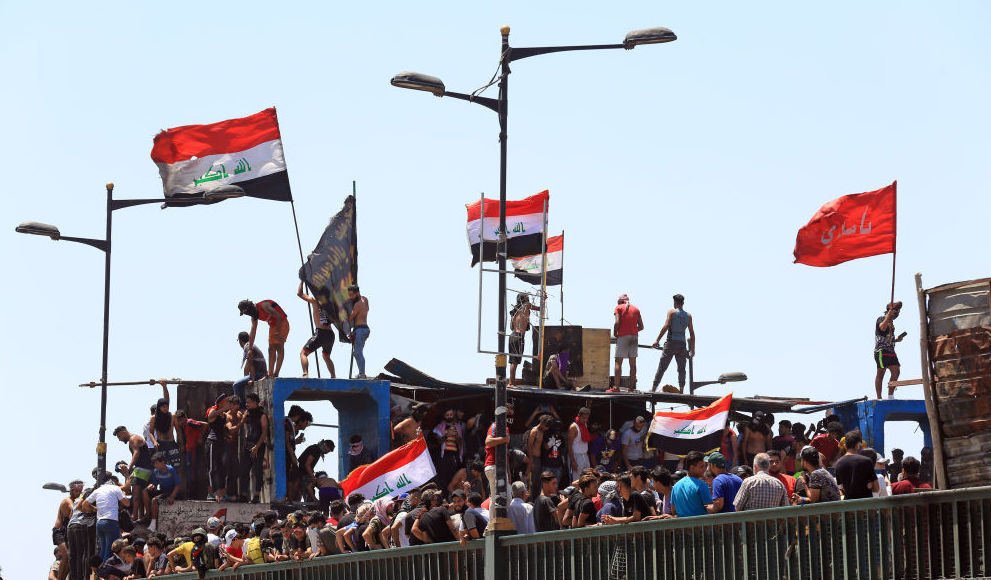
    Three uprisings in search of a better future
    An Iraqi protester chants slogans during a demonstration against state corruption, failing public services and unemployment at Tayaran square in Baghdad on October 2, 2019.
  • Analysis
  • Three uprisings in search of a better future

    The three uprisings in Iran, Iraq, and Lebanon represent the revolt of a new generation seeking to build a better future for itself. Since 2011, there have been 11 uprisings in the Middle East and North Africa. All 11 uprisings have similar drivers: the explosive dysfunction of high demographic growth, low levels of economic development and job creation, poor government performance and services, and high levels of corruption and inequality.

    December 18, 2019

    Caesar Bill could ratchet up US sanctions on the Syrian regime and its allies
    Members of the Syrian security forces gather at the border-crossing between Albu Kamal in Syria and Al-Qaim in Iraq, on the Syrian side in the eastern region of Deir Ezzor, on September 30, 2019.
  • Analysis
  • Caesar Bill could ratchet up US sanctions on the Syrian regime and its allies

    After several years of behind-the-scenes efforts, the Caesar Syria Civilian Protection Act will be signed into law in Washington. It is an extraordinarily expansive and aggressive piece of legislation, allowing for a significant expansion of sanctions against Syrian regime figures and bodies, including the Central Bank and multiple sectors of the state economy. More significantly, the “Caesar Bill” will place an expectation on the U.S. government to sanction any individual or organization anywhere in the world who provides any form of financial support to the Syrian regime that furthers its ability to repress its people.

    Iran's Internet Shutdown
    Middle East Institute
  • Podcast
  • Iran's Internet Shutdown

    Researcher Mahsa Alimardani and MEI Cyber program director Mike Sexton join host Alistair Taylor to discuss the recent Iranian internet shutdown, its impact on protests and the nation’s economy, and what it means for the future of civil liberties in Iran and the wider region.

    December 12, 2019

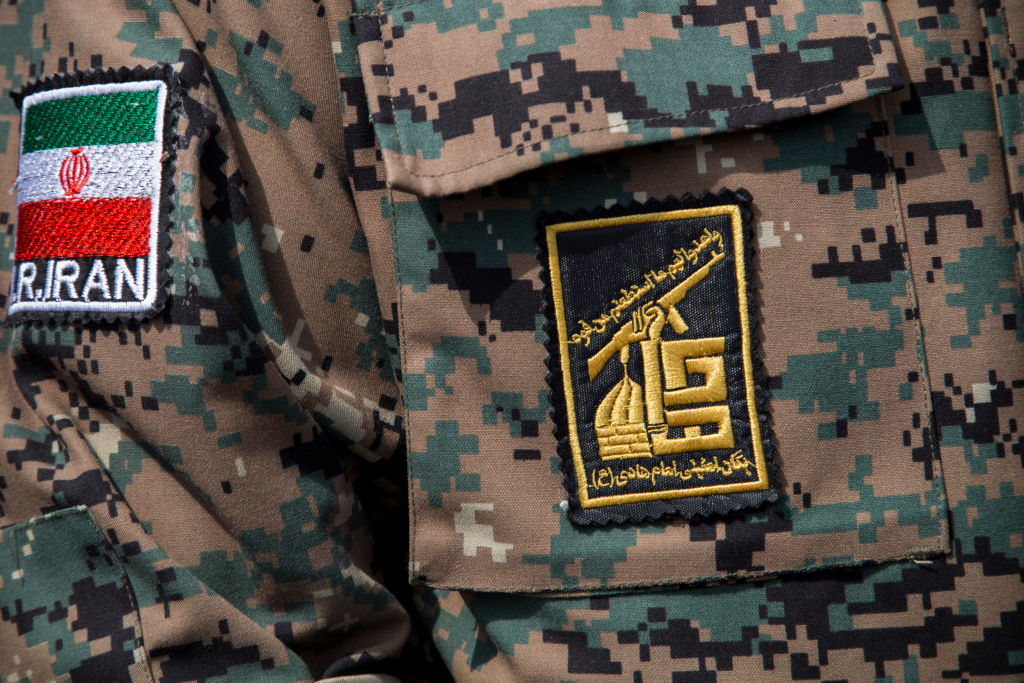
    Upgrading Iran’s Military Doctrine: An Offensive “Forward Defense”
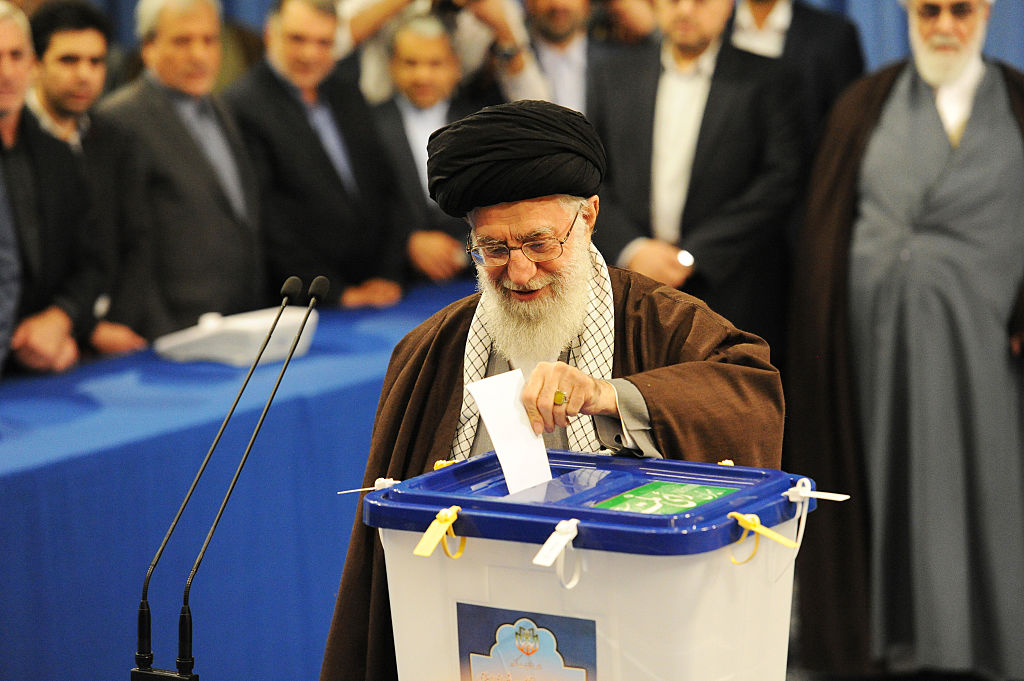
    (Photo by Pool / Press Office of Iranian Supreme Leader/Anadolu Agency/Getty Images)
  • Analysis
  • Upgrading Iran’s Military Doctrine: An Offensive “Forward Defense”

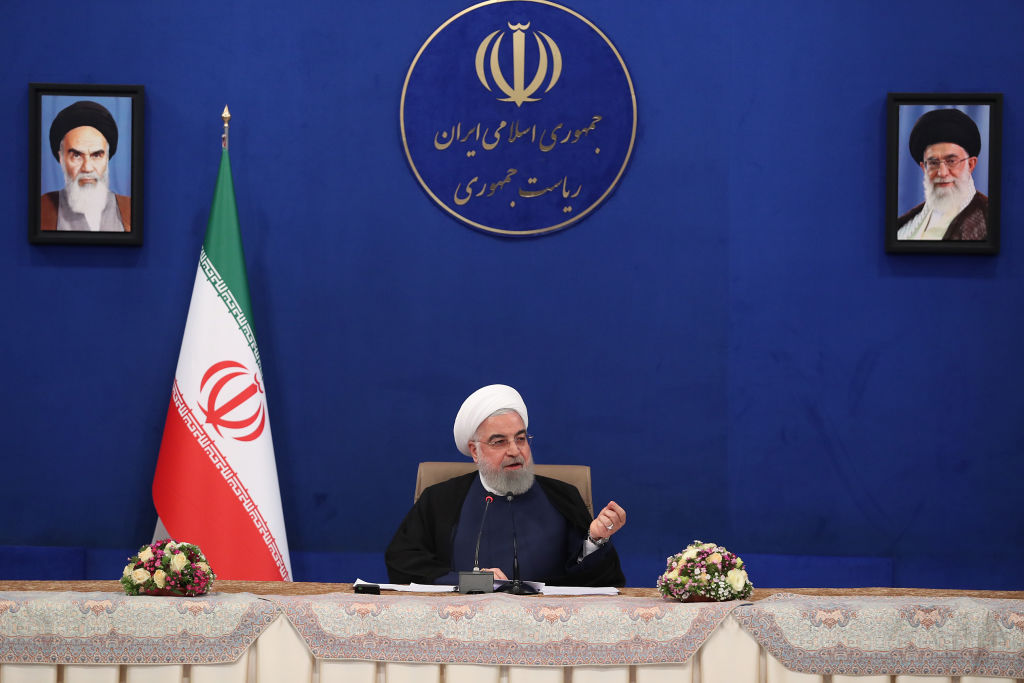
    Since the 2011 “Arab Spring” uprisings, there have been several indications that Iran is shifting to an offensive military doctrine through the adoption of hybrid warfare. This essay will demonstrate that Iran’s “forward defense” doctrine emphasis on the offensive is influenced not simply by the “window of opportunity” created by regional upheaval but by a dispute about the domestic politics of the Islamic Republic between the radical Islamic Revolution Guards Corps (IRGC) and the reform camp within the regime currently represented by President Hassan Rouhani. This development represents a marked setback for the “civilianization” of the Iranian state.

    December 10, 2019

    Kuala Lumpur summit: A challenge to Saudi leadership?
    Pakistan's Prime Minister Imran Khan (C) is accompanied by his Malaysian counterpart Mahathir Mohamad (L) as he reviews a guard of honour during a welcoming ceremony at the prime minister's office in Putrajaya on November 21, 2018. (Photo by Mohd RASFAN / AFP) (Photo credit should read MOHD RASFAN/AFP via Getty Images)
  • Analysis
  • Kuala Lumpur summit: A challenge to Saudi leadership?

    On Nov. 23, Malaysia’s prime minister, Mahathir Mohamad, announced that his country will stage an Islamic summit in Kuala Lumpur from Dec. 19-21. The event, on the theme of “The Role of Development in Achieving National Security,” will feature representatives from the host country as well as Indonesia, Pakistan, Qatar, and Turkey. Around 450 leaders, scholars, clerics, and thinkers from 52 countries will attend, along with Turkish President Recep Tayyip Erdoğan, Qatari Emir Sheikh Tamim bin Hamad al-Thani, Indonesian President Joko Widodo, and Pakistani Prime Minister Imran Khan.

    December 10, 2019

    Protests and politics in Iraq and Iran
    Middle East Institute
  • Podcast
  • Protests and politics in Iraq and Iran

    Political analyst Hafsa Halawa and MEI Senior Fellow Alex Vatanka join host Alistair Taylor to discuss the political crisis in Iraq following the resignation of Prime Minister Adel Abdul Mahdi, the protest movements that have rocked both Iraq and Iran, and the impact of Iranian impact in Baghdad on Iraq’s development going forward.

    December 6, 2019

    Pakistan’s Gen. Bajwa gets an extension amid political drama
    Pakistan Army Chief General Qamar Javed Bajwa arrives to attend the Pakistan Day parade in Islamabad on March 23, 2019.
  • Analysis
  • Pakistan’s Gen. Bajwa gets an extension amid political drama

    Understanding a state and its society involves understanding how the state treats its military, its record of governance, and the relationship between the military and civilian politicians. By all accounts, Pakistan, a state founded in 1947 as a homeland for the Muslim population of British India, is a unique case where the military dominates all other institutions in both state and society. This was on clear display in the recent court battle over the extension of Army Chief of Staff Gen. Qamar Javed Bajwa’s tenure.

    December 6, 2019

    Rouhani vs. the pump: Ignoring better policy alternatives, again?
    Iranians fill their vehicles at a petrol station in Tehran, on November 15, 2019.
  • Analysis
  • Rouhani vs. the pump: Ignoring better policy alternatives, again?

    Faced with rapidly deteriorating public finances, Iranian policymakers had no choice but to reduce gasoline subsidies through a combination of rationing and price hikes. However, the way in which they did so was problematic, especially when they had other, better policy options that would have ensured a more equitable, effective, and efficient outcome.

    December 5, 2019

    Will protests in Iran lead to negotiations with the US?
    Iranian protesters gather around a fire during a demonstration against an increase in gasoline prices in the capital Tehran, on November 16, 2019. - One person was killed and others injured in protests across Iran, hours after a surprise decision to increase petrol prices by 50 percent for the first 60 litres and 300 percent for anything above that each month, and impose rationing. Authorities said the move was aimed at helping needy citizens, and expected to generate 300 trillion rials ($2.55 billion) per
  • Analysis
  • Will protests in Iran lead to negotiations with the US?

    The protests that began in Iran in mid-November may well have a direct impact on Tehran’s relations with Washington. Initially sparked by the Iranian government’s sudden decision to raise fuel prices, the demonstrations have made clear the country’s fragile socio-economic and political situation.

    Gen. Votel on US Policy in Afghanistan
    Middle East Institute
  • Video
  • Gen. Votel on US Policy in Afghanistan

    Gen. (Ret.) Joseph Votel discusses the role of Afghanistan in US regional strategic interests, whether a peace deal is possible with the Taliban, and how important Pakistan is to achieving a sustainable political settlement.

    December 3, 2019

    US-Taliban talks are back on but little has changed
    US President Donald Trump holds a bilateral meeting with Afghan's President Ashraf Ghani at Bagram Air Field during a surprise Thanksgiving day visit, on November 28, 2019 in Afghanistan.
  • Commentary
  • US-Taliban talks are back on but little has changed

    President Donald Trump’s lightning fast roundtrip to Bagram airbase north of Kabul had its share of surprises. In addressing troops, he confirmed previous reports that talks are once again underway with the Taliban, but then went on to inject a ceasefire as a condition for a new agreement.