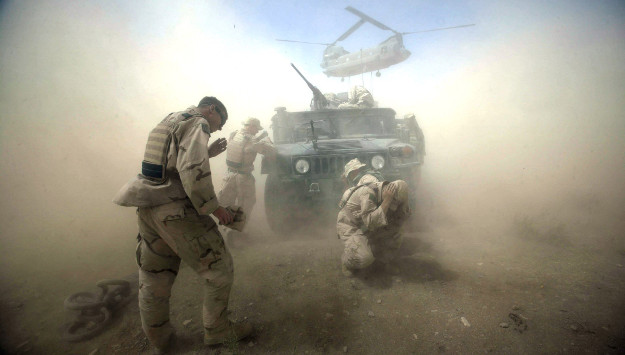
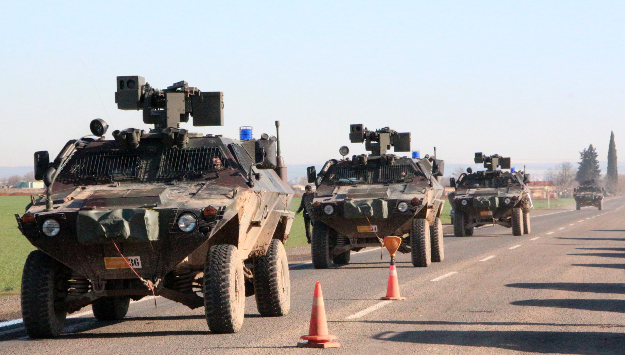
Between the rise to power of the Justice and Development Party (A.K.P.) in the early 2000s and the eruption of the Syrian crisis in 2011, Turkey’s “zero problems with neighbors” approach to foreign policy seemed commendable. Today, however, Ankara’s foreign policy is perhaps best described as “zero neighbors without problems.” In response to the Arab uprisings of 2011, Ankara’s projection of primarily soft power has evolved into the embrace of hard power—most notably in Iraq and Syria.
Monday Briefing: Manbij Offensive, Yemen Talks, Turkey-Israel, Tunisia Unity Government
In this week’s Monday Briefing, MEI experts Robert S. Ford, Charles Schmitz, Gonul Tol, and Mabrouka M’Barek provide analysis on recent events including Manbij offensive, Yemen talks, Israel-Turkey rapprochement, and Tunisia national unity government.
In this week’s Monday Briefing, MEI experts Marvin G. Weinbaum, Charles Lister, Hassan Mneimneh, and Paul Scham provide analysis on recent events including the killing of Afghan Taliban leader Mullah Akhtar Mansour, deadly blasts targeting regime-held territory in Syria, Iraq’s intra-Shiite feud, and Avigdor Lieberman’s appointment as Israel’s Defense Minister.
Monday Briefing: International Syria Support Group, Mustafa Badreddine, Global Refugee Summit, and India's Modi to Visit Iran
In this week’s Monday Briefing, MEI experts Robert S. Ford, Randa Slim, Paul Salem, and Alex Vatanka provide analysis on recent events including Tuesday’s meeting of the International Syria Support Group in Vienna, the death of Hezbollah senior leader Mustafa Badreddine, the global Refugee Summit to be held in Istanbul, and Indian PM Modi’s upcoming visit to Iran.
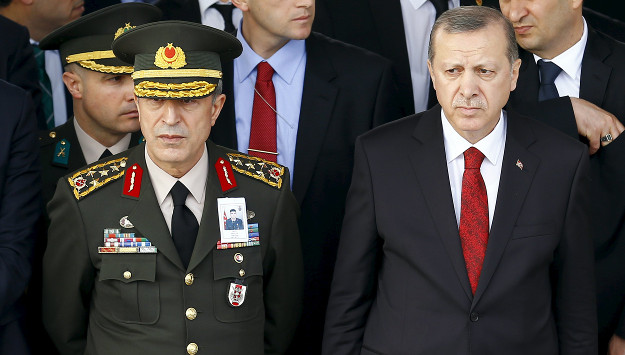
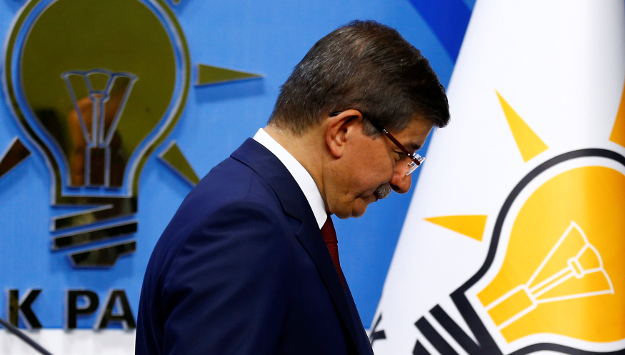
Turkish Prime Minister Ahmet Davutoglu has announced his resignation after 20 months in office. The decision has exposed a rift with Turkish President Recep Tayyip Erdogan, with whom tension has been building for some time. Erdogan handpicked Davutoglu as the country’s next prime minister after he became the president in August 2014, expecting that he would play a backseat role as Erdogan pushed ahead with plans to make the largely ceremonial presidency into an all-powerful executive position.
Turkey’s Choices: Muslim Brotherhood or Regional Isolation
In the latest attempt to break Turkey’s regional isolation, Turkish Foreign Minister Mevlut Cavusoglu wrapped up last week what he described as a watershed visit to the United Arab Emirates. He held meetings with high-ranking leaders and successfully improved ties with a key Arab state that has opposed Turkey’s pro-Muslim Brotherhood regional policies. The U.A.E. announced during the visit that it has decided to appoint an ambassador to Turkey after three years of coldness in ties.
Holy Crossings: Making Desirable Refugees for Resettlement from Turkey
The focus of this essay is on the practice of the Christianisation of refugees in Turkey. The essay shows that the politics of conversion can be interpreted as part of a struggle to be mobile and to increase resettlement prospects to the United States, the main country of resettlement for refugees in Turkey.
Turkey’s ideologically inspired foreign policy is shifting to concentrate more directly on bolstering domestic nationalist support and highlight its regional religious identity. Ankara seeks to divert attention from its policy setbacks in Syria, as well as its internal and economic problems, while continuing to blunt U.S. efforts to crush ISIS.
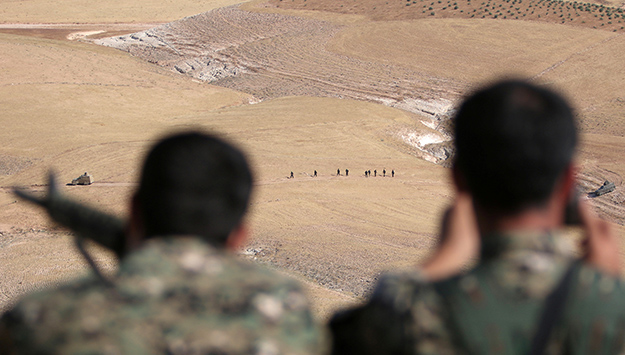
The United States has been pushing Turkey for a campaign to eject ISIS from a 60-mile stretch of border that it still controls between the Syrian towns of Jarabulus and Azaz. However, the joint U.S.-Turkey operation has faced several roadblocks. From the outset, the United States and Turkey have had different goals. Washington wants Ankara to close the border, which is the sole remaining crossing point for ISIS militants.
Monday Briefing: Erdogan's Failed Washington Trip, Iraq's Cabinet Reshuffle, and Other Key Issues in Week Ahead
In this week’s Monday Briefing, MEI experts Gonul Tol, Robert S. Ford, Charles Lister, and Paul Salem provide analysis on recent events including Turkish President Erdogan’s visit to Washington, the reshuffling of Iraq’s cabinet, King Salman’s forthcoming visit to Egypt, and the latest attempts by Jabhat al-Nusra over the weekend to disrupt the Syrian political process.
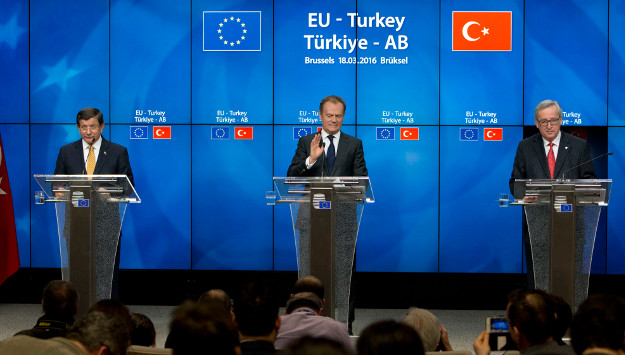
Turkey and the European Union have reached what they have labelled an “historic” agreement. The Europeans believe they have papered over an expanding and divisive refugee problem, while the Turks think they have a wider door for E.U. membership. The Europeans, however, have no intention of bringing Turkey into its fold anytime soon as it would dramatically accelerate the growth of its rightwing parties. Neither do the Turks have a genuine interest in solving Europe’s refugee crisis, since the crisis itself is Turkey’s leverage to gain concessions from Europe.
Support for civil society and civil society organizations (CSOs) has been an integral part of endeavors by most major policy makers to advance democratization across the globe, with particular emphasis on the Middle East North Africa (MENA) region since the late 1980s. The role envisaged for CSOs within this context is to increase government accountability, filter the interests of ordinary citizens into policy processes, and advance democratization generally, this process is often connected with human rights and social progress. This essay investigates how this vision of civil society is constituted in the case of Turkey, using empirical evidence gathered through 38 in-depth qualitative interviews with women’s organizations from across the political, religious, and geographical spectrum.