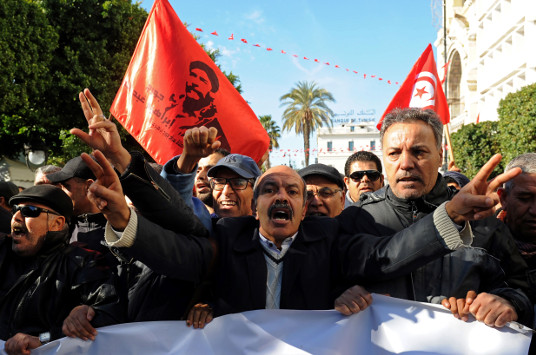
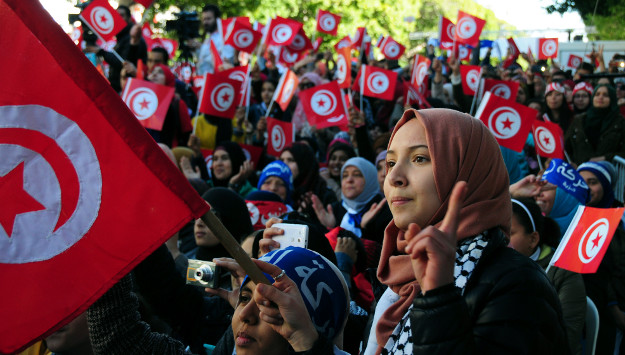
Widespread protests have rocked Tunisia in recent weeks in response to a series of tax increases, exposing a general frustration among the population who have yet to see the fruits of the 2011 revolution. Are these the growing pains of a nascent democracy, or is Tunisia at another breaking point? Dokhi Fassihian (Freedom House), Eric Goldstein (Human Rights Watch), and Tunisian journalist and researcher Asma Ghribi join Paul Salem to discuss.
Since Jan. 3, Tunisia has been experiencing scattered protests all over the country. The protests, which continued through the second week of January, follow the entry into force of the national budget for the 2018 fiscal year.
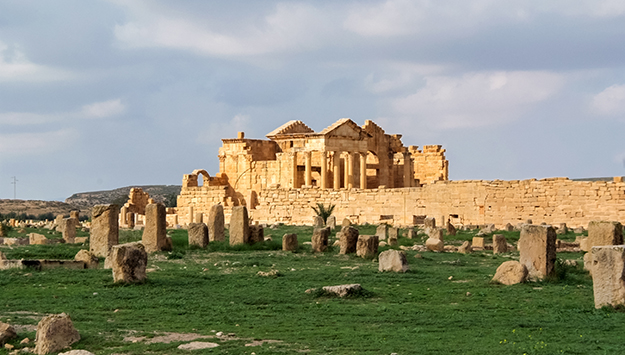
ISIS Eyes Tunisia’s Cultural Heritage as Militants Return
Looting and trafficking of antiquities in the Middle East and North Africa has reached unprecedented levels since the rise of ISIS. In a region with tens of thousands of archaeological sites, antiquities are as easily accessible as oil for terrorist groups controlling such archaeologically rich territory.
Syrian Peace Negotiations at a Standstill | Monday Briefing
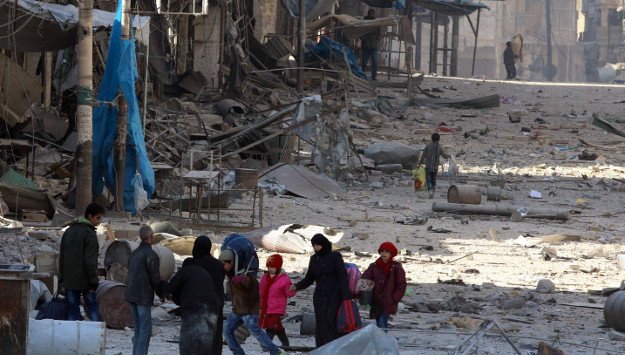
In this week’s Monday Briefing, MEI experts Randa Slim, Charles Lister, and Mabrouka M’Barek provide analysis on the progress of ongoing negotiations over peace in Syria, rising tensions in Idlib province between Hay’at Tahrir al-Sham and Ahrar al-Sham, and Tunisia’s lobbying efforts to ensure continued U.S. aid.
The Influence of North African Militaries in Foreign Policy-Making
This essay looks at five North African states, arguing that the armed forces — for a variety of often case-specific reasons — are actually not as politically powerful and thus influential in foreign policy-making as one might expect. It first discusses the political strength of the military establishments of five North African states — Morocco, Algeria, Tunisia, Libya, and Egypt — and then investigates the difference, if any, that the recent Arab upheavals have made in their involvement in foreign policy-making.
Two weeks ago, Tunisian security forces used excessive force to try to stop peaceful demonstrators in El Kamour Tataouine, killing one of them. Six years after the 2010-2011 uprising, many Tunisians are wondering what is left of their revolution.
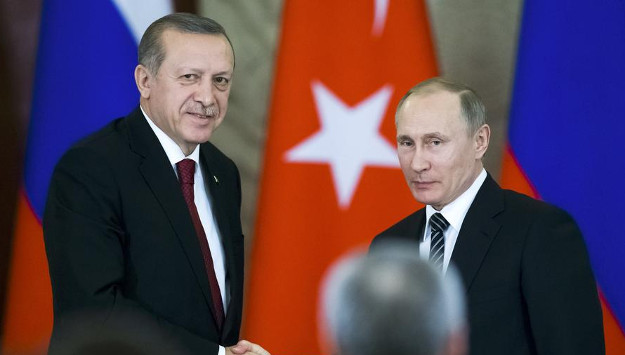
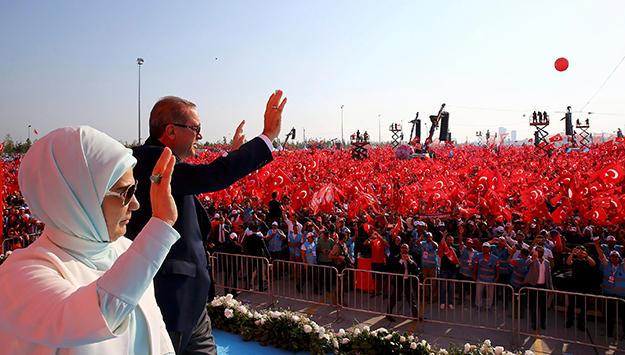
In this week’s Monday Briefing, MEI experts Gonul Tol, Randa Slim, Alex Vatanka, Marvin G. Weinbaum, and Mabrouka M’Barek provide analysis on recent and upcoming events including Turkish President Erdogan’s upcoming meeting with Russian President Putin, the upcoming speech by Hezbollah Secretary General Nasrallah, the suprising popularity of Rouhani’s VP in the Iranian Presidential Race, the Taliban’s new Spring offensive, and protests in Tunisia over a government proposal to give amnesty to the country’s corrupt financial elite.
Islamists in Government: Lessons from their Successes and Failures
The question of whether Islamist groups are compatible with democracy has been a topic of serious discussion for some time, especially considering the claims that Islamists have structural impediments when it comes to adapting to various social and political contexts.
In this week’s Monday Briefing, MEI experts Charles Lister, Yousef Munayyer, and Mabrouka M’Barek provide analysis on recent and upcoming events including the Assad regime’s advances in Aleppo, Fatah’s annual conference, and Tunisia’s upcoming conference for its economic plan.
To be a cinephile in Tunis is a patriotic act. Tunisians came out in droves to last year’s Carthage Film Festival, which occurred a day after a terror attack targeting security forces.
“Everyone came out in defiance of the situation, to show their solidarity and love of cinema,” Tunisian journalist and festival staffer Yosr Hazgui said.
“Together for Tunisia”: Tribal Structures and Social and Political Mobilization
This essay demonstrates that national unity was constructed and utilized as a tool by the Tunisian state for the purpose of consolidating power, and that traditional kin-based and family ties have existed parallel to the formal structures of both the state and civil society as frames for social and political activity.The essay shows that these historical frames for organization were revitalized and renewed after the popular uprising in 2011.
Tunisia's Evolving Islamic Charitable Sector and Its Model of Social Mobilization
This essay discusses the evolution of Islamic charities in Tunisia since 2011 as new actors of associational life. In particular, it considers the extent to which they represent an alternative model of social mobilization.
Essebsi’s Power Grab Imperils Tunisia’s Nascent Democracy
The Tunisian parliament on August 27 endorsed the new government led by Youssef Chahed, a month after the assembly dismissed the previous Essid government.
Monday Briefing: Erdogan Reaching Out to Russia; Update on Battle for Aleppo
In this week’s Monday Briefing MEI experts provide analysis on recent and upcoming events including Turkish President Erdogan’s trip to Russia tomorrow, Iranian President Rouhani’s upcoming meeting with President Putin in Baku, the ongoing battle for Aleppo, strains in U.S.-Pakistan relations over the Haqqani Network, and what’s next for Tunisia’s political transition following the vote of no confidence in the current government.
Monday Briefing: Manbij Offensive, Yemen Talks, Turkey-Israel, Tunisia Unity Government
In this week’s Monday Briefing, MEI experts Robert S. Ford, Charles Schmitz, Gonul Tol, and Mabrouka M’Barek provide analysis on recent events including Manbij offensive, Yemen talks, Israel-Turkey rapprochement, and Tunisia national unity government.