Skip to Content

Research & Commentary Results

Filter by
3377 Results
Is Erdogan misreading Putin on Libya?
Russian President Vladimir Putin and Turkish President Recep Tayyip Erdogan greet each other during their talks at the Kremlin on March 5, 2020 in Moscow, Russia. Erdogan is having a one day visit to Russia to discuss the war conflcit in Syria.
  • Analysis
  • Is Erdogan misreading Putin on Libya?

    After Turkish President Recep Tayyip Erdogan hammered out a deal with his Russian counterpart Vladimir Putin on March 5 to bring an end to the fighting in Idlib in northwestern Syria, he said he was hopeful that the two countries could extend their cooperation to Libya.

    Shifting US strategy in Iraq
    A partial view of the Iraqi capital Baghdad is reflected in the visor of a US Army helicopter crew member as he looks out of a Chinook helicopter flying from the US Embassy to Baghdad International airport, following the helicopter of US secretary of State Mike Pompeo, on January 9, 2019.
  • Analysis
  • Shifting US strategy in Iraq

    The United States has missed a valuable opportunity to use its influence in Iraq to encourage the government to implement the reforms Iraqi protesters have been demanding over the past six months and push back on Iran.

    March 12, 2020

    Manufacturing Division: The Assad Regime and Minorities in South-west Syria
    A picture shows the new church of Sayyidet al-Beshara in Shaqra town in the southern Syrian province of Daraa on December 22, 2019. - Less than 10 kilometres (six miles) away lies the mainly Christian town of Shaqra, emptied of most of its Christian residents after a spate of attacks by rebels and jihadists during the conflict. Such attacks have stopped since the area came back under regime control, but very few Christian families remain. (Photo by MAHER AL MOUNES / AFP) (Photo by MAHER AL MOUNES/AFP via Ge
  • Analysis
  • Manufacturing Division: The Assad Regime and Minorities in South-west Syria

    Minority communities in south-west Syria have shrunk to a fraction of their pre-2011 size, and the regime’s repressive policies perpetuate a cycle of violence and chaos that prevents their safe return. The regime’s strategy of transforming minority communities into sources of militia fighters has not only led to the deaths of thousands of young Alawite and Shi’a men, but also created sectarian tensions between formerly interconnected communities in south-west Syria. So long as the regime’s policy in the south-west is characterized by violence, the safe and dignified return of displaced Syrians will not be possible. This paper studies current and former minority communities in south-west Syria, the security and economic challenges these groups face, and the manner by which the regime exploits and weaponizes these vulnerable Syrians.

    March 11, 2020

    The president’s time: How US-Iran relations are out of sync
     President Donald Trump speaks from the White House on January 08, 2020 in Washington, DC. During his remarks, Trump addressed the Iranian missile attacks that took place last night in Iraq and said, “As long as I am president of the United States, Iran will never be allowed to have a nuclear weapon.”
  • Analysis
  • The president’s time: How US-Iran relations are out of sync

    The Islamic Revolution of 1979 fundamentally transformed U.S.-Iran relations from a special relationship into an adversarial one. However, this has not prevented American presidents of both parties, from Ronald Reagan to Barack Obama, from reaching out to Tehran in the hope of a potential détente. There are many ideological, political, and economic factors behind the inability of Washington and Tehran to normalize their relations over the past four decades. One that has received little attention, however, is the cycle of U.S.

    March 4, 2020

    All eyes on Moscow as Erdogan and Putin meet for Syria talks
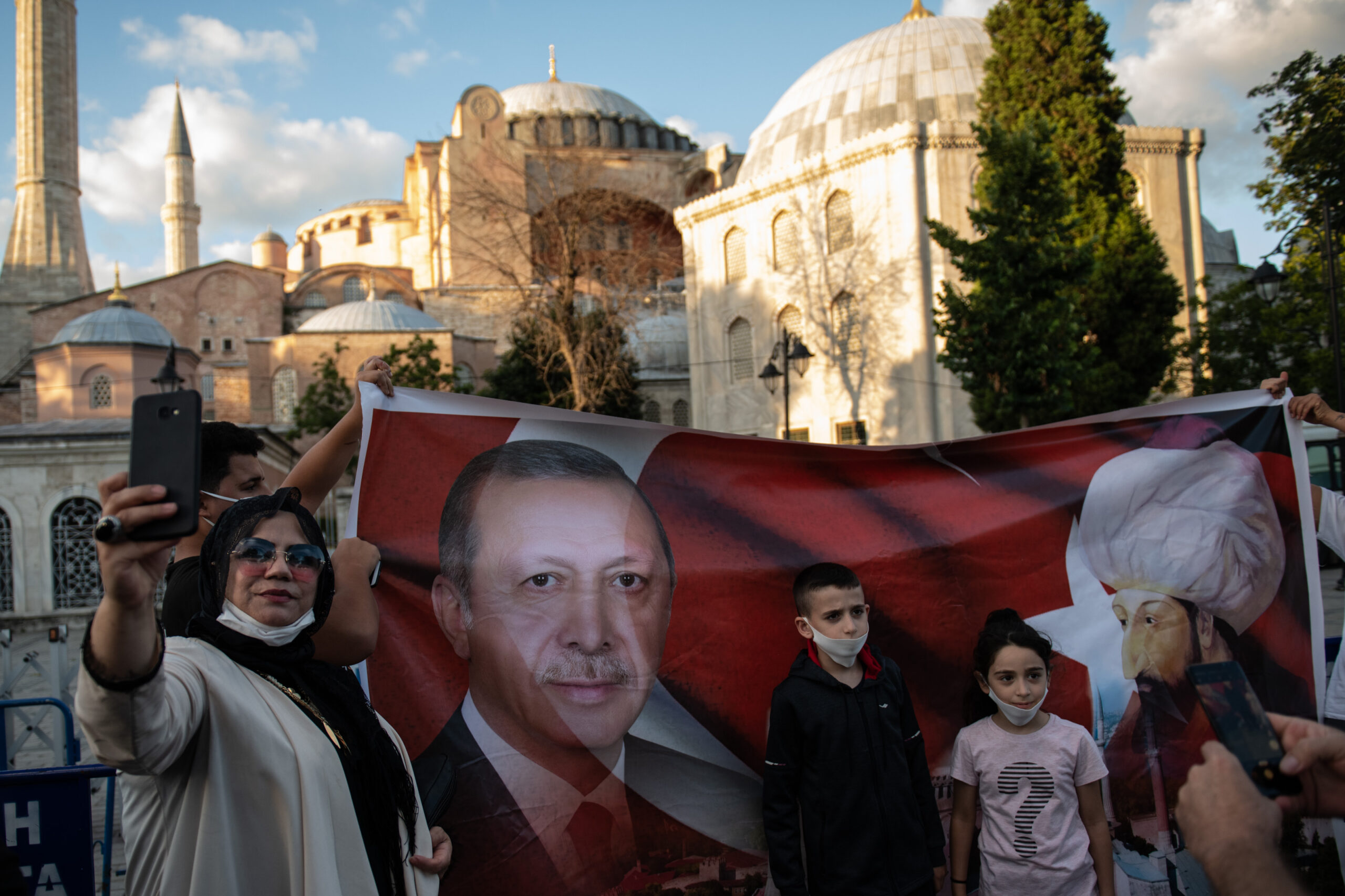
    Women in Istanbul hold banners which read murderer Russia, murderer Iran, murderer Esed during the protest on February 29, 2020 after 33 Turkish soldiers were killed in Idlib, Syria on 27 February.
  • Analysis
  • All eyes on Moscow as Erdogan and Putin meet for Syria talks

    Turkish President Recep Tayyip Erdogan typically never misses an opportunity to appear in front of the cameras. But after the airstrike last week that killed dozens of Turkish soldiers in Syria’s Idlib Province, he was unusually quiet. The local governor of the south-eastern Turkish province of Hatay, just across the border from Idlib, did the talking instead, providing information to the outraged public about Turkey’s worst day in the Syrian conflict so far. As the death toll rose, so did the public anger.

    The Crisis in Idlib
    Middle East Institute
  • Podcast
  • The Crisis in Idlib

    An airstrike last Thursday, which killed 33 Turkish soldiers and wounded 60 more, was a game-changing development in the Syrian conflict. In the days since, Turkey has unleashed a major military response, carrying out scores of drone attacks on Syrian Army units and facilities. All of this is taking place against the backdrop of a massive and growing humanitarian crisis, with nearly a million people fleeing toward the Turkish border. Charles Lister and Sasha Ghost-Siminoff join host Alistair Taylor to discuss how events are unfolding.

    March 3, 2020

    Syria: What the US could do
    A Turkish soldier stands in front of a military vehicles convoy east of Idlib city in northwestern Syria on February 20, 2020 amid ongoing regime offensive on the last major rebel bastion in the country's northwest.
  • Commentary
  • Syria: What the US could do

    Turkey is running out of options in Idlib Province and in Syria. Aggressively taking on a task that is beyond its capabilities, the government in Ankara now is faced with doubling down on a high-risk gamble, hoping someone, somewhere will believe its bluff, or saving Turkey and the area from worse destruction. There are two things the U.S could do, working together with the EU, NATO, and the UN.

    “People can’t even afford to buy bulgur”: Discontent is on the rise as Syria’s economic crisis worsens
    Shoppers walk through the Bzourieh market in the centre of the Syrian capital Damascus on September 11, 2019.
  • Analysis
  • “People can’t even afford to buy bulgur”: Discontent is on the rise as Syria’s economic crisis worsens

    The latest economic crisis in Syria is hitting the population hard. Syrians have been beset by currency depreciation, soaring prices for basic goods, and energy shortages that have left people to freeze in the harsh winter, leading to growing and increasingly vocal discontent.

    February 28, 2020

    A wake-up call: The Idlib crisis and its effects look set only to worsen
     Irregular migrants escaped from civil war in Syria, who want to proceed to Europe, are seen after they came with a boat at a shore in Lesbos Island on Greece on February 28, 2020.
  • Analysis
  • A wake-up call: The Idlib crisis and its effects look set only to worsen

    The death of at least 33 Turkish soldiers and wounding of 60 more in Syria’s Idlib on Thursday night was a game-changing development. The crisis there and its effects represent an existential threat to Turkish President Recep Tayyip Erdogan and for now, it appears likely that Turkey will remain alone in dealing with the crisis. That presents us with two possible scenarios, both bleak. If the world wants to avoid a true nightmare from becoming reality, it needs to wake up and get engaged.

    Will Iran replace its presidency with a parliamentary system?
    Iran's President Hassan Rouhani delivers a speech presenting the Islamic republic's new budget for the financial year starting late March 2020 in Tehran on December 8, 2019.
  • Analysis
  • Will Iran replace its presidency with a parliamentary system?

    The results of Iran’s recent elections and preparations for the succession of Ayatollah Khamenei as supreme leader could mean that the topic of replacing Iran’s presidential system with a parliamentary one may very well be up for discussion again.

    February 27, 2020

    If the West leaves Idlib to Russia and Assad, it won’t be only Syrians who pay the price
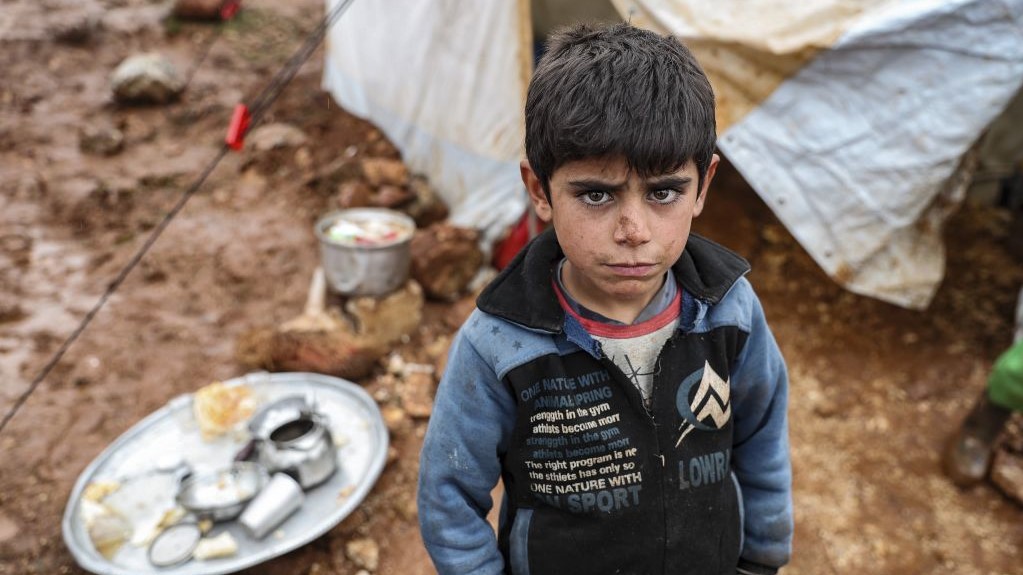
     Syrian child poses at a camp hosting Syrian families, who have been forced to displace due to the attacks carried out by Assad regime and Russia, in Idlib, Syria on January 10, 2020.
  • Analysis
  • If the West leaves Idlib to Russia and Assad, it won’t be only Syrians who pay the price

    If Assad and the Russians are not reined in and are instead allowed to conquer Idlib — and the more than three million people trapped there — the results could be catastrophic, leading to massive displacement and loss of life.

    February 27, 2020