Defying Gravity: Working Toward a Regional Strategy for a Stable Middle East
In this MEI Policy Paper, Ross Harrison asserts that a new regional order is emerging out of the conflicts of the Middle East. The relationships among the pillars of this order–Egypt, Saudi Arabia, Turkey, and Iran–are crucial, as they will largely determine “whether the future of the Middle East will be a continuation of the current chaos and destruction or a more positive transition toward stability and prosperity.” Harrison argues that global powers must concentrate on creating conditions conducive to cooperation among the pillars.
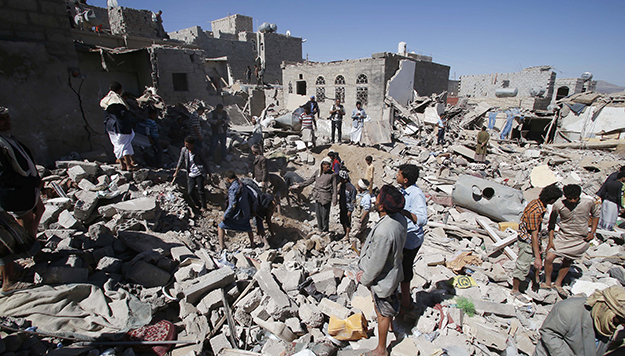
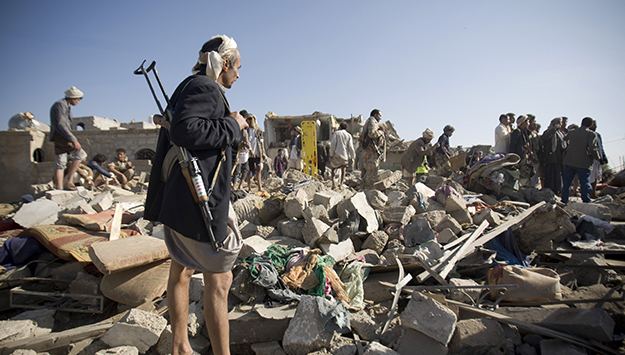
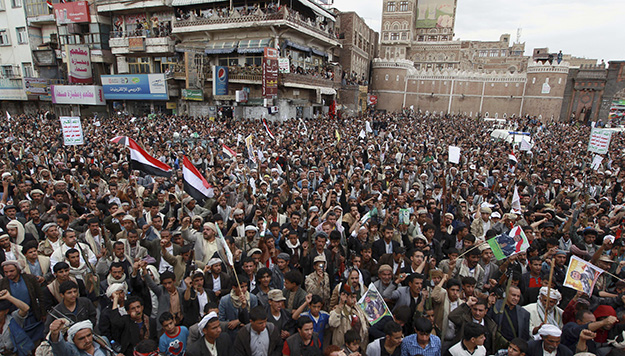
Saudi Arabia’s intervention in Yemen is not surprising given Riyadh’s past policies and current perspectives on Gulf security. Yemen has always suffered from varying degrees of chaos and civil strife. Even in the best of times, large areas of the country lacked government control, and few if any in the region saw it as a functioning nation state. Whatever Gulf Arab leaders may have said publicly, most have viewed Yemen as a loose collection of autonomous or even independent regions, held together only by the lines drawn on a map.
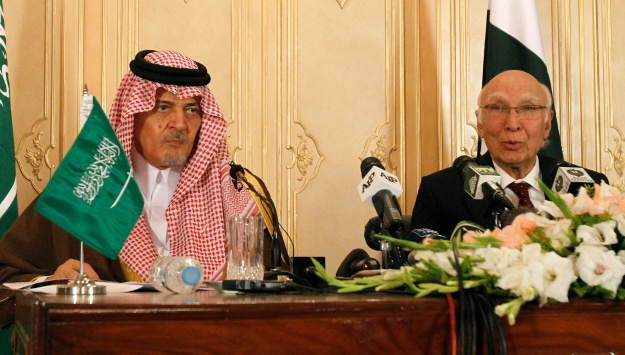
Pakistan’s Balancing Act Between Saudi Arabia and Iran
April 23, 2015 – Marvin Weinbaum, director of the Center for Pakistan Studies at The Middle East Institute, explains Pakistan’s decision not to provide military aid for Saudi Arabia’s operation in Yemen, and how Prime Minister Sharif is working to repair relations with Riyadh.
Relations between Iran and Saudi Arabia have always been thorny, but rarely has the state of affairs been as venomous as it is today.
Tehran and Riyadh each point to the other as the main reason for much of the turmoil in the Middle East. In its most recent incarnation, the Iranian-Saudi conflict by proxy has reached Yemen in a spiral that both sides portray as climatic.
Turkey and Armenia: Make History Instead of Repeating It
On April 24, Turks, Armenians, and millions of others around the globe will clash again over the events that began 100 years ago in the Ottoman domains. The mass deportations and massacres of Armenians in 1915 and later years have led many to call this great tragedy a genocide. The old arguments and contested evidence are now going to be heard once more. It might also be the perfect moment for Ankara and Yerevan to take practical steps that benefit all and harm none.
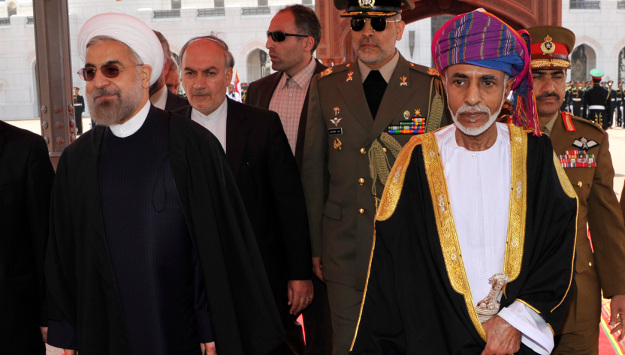
Turkey’s Balancing Act between Iran and Saudi Arabia
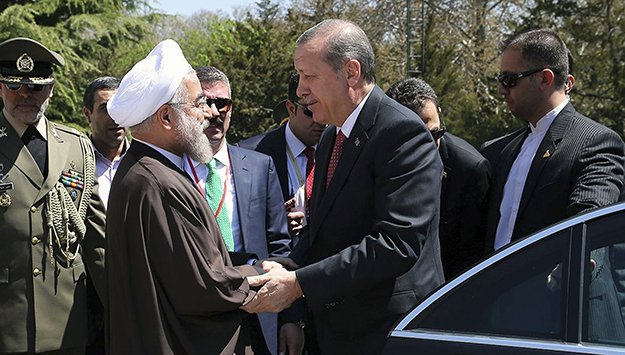
Turkish Foreign Minister Mevlut Cavusoglu, reiterating Turkey’s support for a diplomatic solution over the use of force regarding Iran’s nuclear program, welcomed the interim deal between Tehran and the world powers. Turkey’s slowing economy may be among the first to reap economic benefits from the deal, and Ankara’s longtime quest to become an energy hub could finally be realized. Yet the deal could also pose a challenge to Ankara’s Iraq and Syria policies and its recent rapprochement with the Saudis.
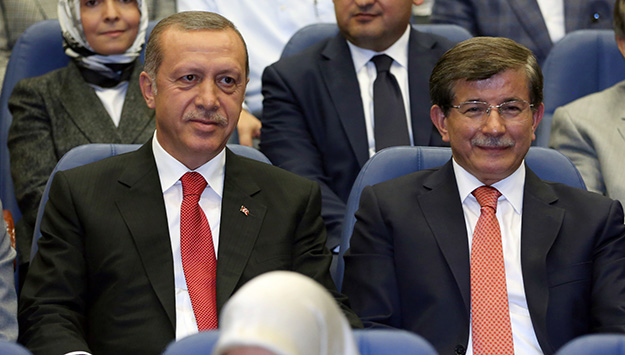
In Turkey today, as President Recep Tayyip Erdogan and Prime Minister Ahmet Davutoglu wrestle over who governs, the political uncertainty they are creating may be a ground tremor about to generate an earthquake. The earthquake, however, may not only be political in nature; it may also be economic.
Turkey’s remarkable economic growth is now in jeopardy. Its economy is drifting, beset by contrary winds of economic policies and political wrangling. There is a clear track forward, but to reach the next level of prosperity, the government must undertake a major new effort.
The Middle East in China’s Silk Road Visions: Business as Usual?
Chinese President Xi Jinping’s 2013 proclamation of the Silk Road Economic Belt (“One Belt, One Road”) and Twenty-First Century Maritime Silk Road initiatives provided an overarching framework for understanding China’s strategic priorities over the coming decade. The land-based and sea-based Silk Roads will link Asia and Europe via the Middle East and Central Asia through a series of transcontinental railroads, pipelines, ports, airports, and other infrastructure projects.
Misadventures in Violence in Yemen: Operation Resolute Storm
Saudi Arabia’s military intervention in Yemen is a risky move motivated by various Saudi objectives in Yemen and in the region. The immediate objective is to save President Abdu Rabbu Mansour Hadi from Ansar Allah’s advance on Aden and reinstall him as head of state by forcing Ansar Allah to make major political concessions. But the operation also marks the increasing willingness of the Saudis to use their own military rather than rely on the United States.
The recent public row between Deputy Prime Minister Bulent Arinc and Ankara Mayor Melih Gokcek marked the latest fallout from a widening rift between the country’s president, Recep Tayyip Erdogan, and his handpicked prime minister, Ahmet Davutoglu. If the crack continues to widen, it will not only deal a blow to Erdogan’s presidential dream but also to the future of the ruling party.
With its bold and public intervention in Yemen’s civil war, Saudi Arabia has cast off a half-century of caution and restraint in regional security affairs.
Collection Spotlight: In the Name of Oil: Anglo-American Relations in the Middle East, 1950-1958
Ivan L. G. Pearson’s In the Name of Oil: Anglo-American Relations in the Middle East, 1950-1958 provides a comprehensive analysis of the extent to which British interests in the Middle East influenced or were furthered by the United States between 1950 and 1958.
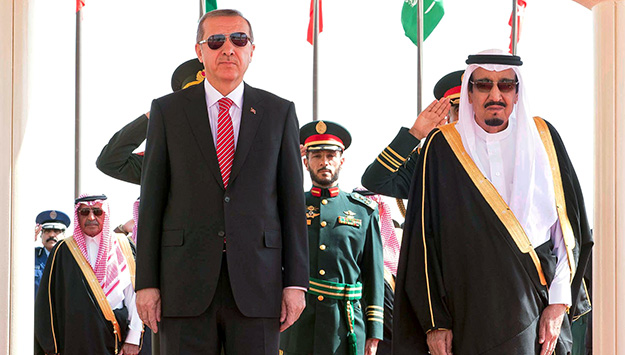
Frustrated Turkey Turns to Onetime Ally Saudi Arabia
Frustrated by the United States’ failure to heed its advice on Syria and Iraq, and by Iran’s growing clout in these countries, Turkey seems to have decided to mend its frosty relationship with Saudi Arabia. When King Abdullah died earlier this year, Turkish President Recep Tayyip Erdogan immediately cut short an African tour and flew to Riyadh to offer his condolences. He declared a period of mourning in Turkey and ordered the Turkish flag to be flown at half-mast.



 Ivan L. G. Pearson’s In the Name of Oil: Anglo-American Relations in the Middle East, 1950-1958 provides a comprehensive analysis of the extent to which British interests in the Middle East influenced or were furthered by the United States between 1950 and 1958.