Report: Sunni Deobandi-Shi'i Sectarian Violence in Pakistan
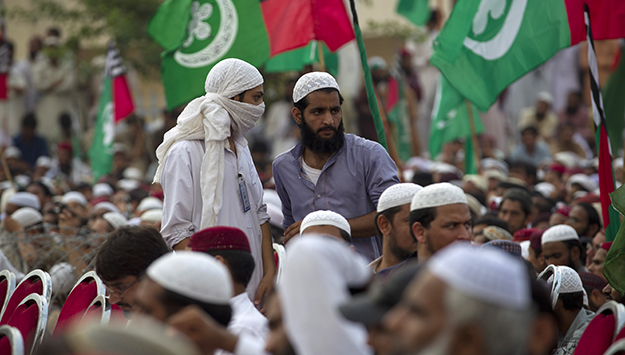
In both general and more informed discussions in Pakistan and beyond, sectarian violence in Pakistan between Sunni and Shi‘i groups is almost without exception referred to simply as Sunni-Shi‘i violence. But such a characterization is a misnomer. Two of Pakistan’s three major Sunni subsects, the Ahl-e-Hadis, and to a lesser extent, the Barelvis, may have antipathy toward the Shi‘a, but rarely express such sentiments through violent activity.
Obama’s Legacy in the Gulf: Despite Disgruntlement, U.S. Remains Indispensable
This paper is part of an MEI scholar series, titled “Obama’s Legacy in the Middle East: Passing the Baton in 2017.” Click here to view the full project, or navigate using the table of contents to the right.
This paper is part of an MEI scholar series, titled “Obama’s Legacy in the Middle East: Passing the Baton in 2017.” Click here to view the full project, or navigate using the table of contents to the right.
There have been a number of rounds of border skirmishes between Iran and Pakistan since the first week of October. However, reports that Pakistani forces have returned mortar fire is highly unusual and represents an increase in tensions that have marred this region for years.
Thanks to unprecedented current account surpluses, the Gulf Cooperation Council (GCC) countries are investing billions abroad and looking more toward the East. The GCC’s growing trade ties with China have been accompanied by encouraging development in investment relations. For these countries, investment projects in China promise access not only to large and rapidly growing energy markets, but also to other booming sectors.
Gulf Investment in China: Beyond the Petroleum Sector
This essay explores recent GCC investment in sectors of the Chinese economy other than the petrochemicals industry and examines the challenges confronted by Gulf investors.
The rise of China and India, coupled with major changes in the global energy market such as the US shale revolution have shifted the Gulf countries’ economic focus towards the Asian continent. East Asia has already emerged as the GCC’s most important trade partner, accounting for over 57% of its external trade.
One way to grasp the immense difficulty facing President Obama as he tries to forge an effective international coalition to oppose the Islamic State is to examine the difference between this effort and the last time the United States led a diverse group of countries to take on a conflict in the Middle East: Operation Desert Storm, in 1991.
Pakistan's Political Turmoil: Interview with Dr. Marvin Weinbaum
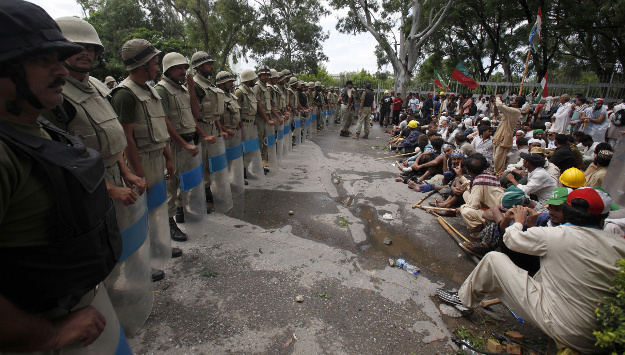
The crisis in Pakistan is coming to a head. Of course it’s been building since the 15th of August, but now we’re faced with a situation in which this government is either going to survive or, very likely, were going to see a military takeover.
The big question is where does the military stand, because everybody realizes that ultimately the outcome will depend on what the military is willing to accept or, indeed, what the military wants.
Violence and Peace Spoilers in the Southern Philippines
The 27 March 2014 signing of the Comprehensive Agreement on the Bangsamoro (CAB) by the Philippine Government (GPH) and the Moro Islamic Liberation Front was heralded as the start of enduring peace and development in Mindanao. Unfortunately, spoilers opposed to the CAB remain capable of derailing the process. Joseph Franco explains some of the nuances of spoiling efforts as well as the prevailing socioeconomic milieu in the Southern Philippines that sustains latent enablers for sectarian conflict.
Putting Out the Fire in Southern Thailand: An Appeal for Truce Seeking
Observers have struggled to explain ongoing sectarian violence in southern Thailand given that both Thai Buddhists and Malay/Thai Muslims are victims of violence, have historically coexisted peacefully, and share local customs and spiritual traditions. Tim Rackett explores the role of majority and minority ethnic and religious identities in fueling sectarian violence and identifies a way out.
Korea and the GCC: Reaching a Sustainable Economic Partnership
Over the past four decades, economic relations between the Republic of Korea (hereafter Korea) and the Gulf Cooperation Council (GCC) countries have been focused on two sectors. Given the lack of energy resources in Korea, the GCC countries have provided oil and gas for Korean manufacturing, electricity, transport, and related activities. These countries have also provided Korea with business opportunities in the construction sector, including the building of expressways, seaports, and industrial plants.
Pakistan is only one of three countries—the others being Afghanistan and Nigeria—in which polio has never been eradicated. Polio in Pakistan has been a particular worry recently, with a disturbing spike in cases. According to the World Health Organization (WHO), 61 out of 77 cases of polio reported worldwide from January through mid-May 2014, or 79 percent, were in Pakistan.[1]
Geography alone should make the Arab world Iran’s key foreign policy focus. Of Iran’s 13 immediate neighbors, seven are Arab countries.[1] But Tehran’s approach to the Arab world, with its 22 states extending from North Africa to the Arabian Peninsula, varies widely in intensity, and Iran’s objectives are equally varied depending on the country in question.