Skip to Content

Research & Commentary Results

Filter by
3257 Results
The fighter jet that could break US-Turkey defense relations
F-35 American made fighter jet showing off advanced maneuverability
  • Analysis
  • The fighter jet that could break US-Turkey defense relations

    On Jun. 18, the U.S. Senate voted for the National Defense Authorization Act (NDAA), which proposes blocking the delivery of F-35 combat aircraft to Turkey and advises the removal of Turkey from the 20-year-old international program for joint production of F-35s. This motion was preceded by a May 25 vote in the U.S.

    June 26, 2018

    China’s Belt and Road Initiative (BRI) and Turkey’s Middle Corridor: “Win-Win Cooperation”?
    Xi Jinping (2nd R) & Recep Tayyip Erdogan (L) | May 14, 2017
  • Analysis
  • China’s Belt and Road Initiative (BRI) and Turkey’s Middle Corridor: “Win-Win Cooperation”?

    The launching of the Belt and Road Initiative (BRI) and the Middle Corridor have provided wider scope and greater potential for China, now the world’s second-largest economy and Turkey, a G20 member, to develop more extensive bilateral trade and investment ties and further advance their respective regional and global aspirations. This article examines the headway that China and Turkey have made and the roadblocks that they have encountered in enhancing their economic relations.

    June 26, 2018

    Turkey is trapped in identity politics
    crowds greet President Erdogan
  • Analysis
  • Turkey is trapped in identity politics

    Turkey’s President Recep Tayyip Erdogan claimed victory in critical presidential and parliamentary elections on Sunday. The vote grants him five more years in office as well as unprecedented powers in a powerful presidential system. His critics had hoped that this time they had a real shot at defeating the strongman. The notoriously fractured opposition had united to deny the ruling party a parliamentary majority. The main opposition, the Republican People’s Party (CHP), had fielded a firebrand candidate who was determined to reach out well beyond the party’s secularist, nationalist base.

    The US’s F-35 conundrum
    F-35 fighter jet
  • Analysis
  • The US’s F-35 conundrum

    In this week’s Monday Briefing, MEI experts Bilal Y. Saab, Randa Slim, and Gerald Feierstein provide analysis on recent and upcoming events including Washington’s concerns about F-35 sales to Turkey, Iraq’s vote recount amidst mounting violence, and the king of Jordan’s visit to the White House to discuss Trump’s Israeli-Palestinian peace plan.

    The US’s F-35 conundrum
    Bilal Y. Saab, Director of the Defense and Security Program

    June 25, 2018

    Assad says Iran, like Russia, can set up military bases in Syria if needed
    Syria's President Assad
  • Analysis
  • Assad says Iran, like Russia, can set up military bases in Syria if needed

    In an interview with a state-run Iranian TV channel, Syrian President Bashar al-Assad said that the evolving dynamics in southern and northern Syria would not alter “strategic” relations between Damascus and Tehran and emphasized that his government would be open to permitting Iran to establish military bases on the Syrian soil if needed. “After the liberation of Ghouta, a plan to advance toward southern Syria was discussed.

    June 22, 2018

    Russia and Iran's awkward flirtation on energy
    Rouhani and Putin hold talks
  • Analysis
  • Russia and Iran's awkward flirtation on energy

    As international companies leave Iran under U.S. pressure, the Iranian government is scrambling to salvage as much foreign investment as possible. The top leadership in Tehran believes the solution is to engage with Russia, China, and the “east” to replace the West’s hesitant commitment to the Iranian market. But this eastward approach is a pipe dream, and there is plenty of history to prove it.

    Iran’s Russian desires

    What’s at stake in Turkey’s elections
    Middle East Institute
  • Podcast
  • What’s at stake in Turkey’s elections

    Worries of economic downturn loom large as Turkish voters head into a critical election for the president and members of parliament on June 24. MEI’s Gonul Tol and W. Robert Pearson join host Paul Salem to analyze the myriad issues facing voters, and the prospects for President Recep Tayyip Erdoğan and his ruling AK party.

    June 20, 2018

    The Manbij deal and the state of US-Turkish cooperation in Syria
    Middle East Institute
  • Podcast
  • The Manbij deal and the state of US-Turkish cooperation in Syria

    Can a deal to withdraw U.S.-backed Kurdish forces from the contested Syrian town of Manbij help to break the tension between opposing Turkish and American strategies in Syria? MEI’s Gonul Tol and Charles Lister join host Paul Salem to discuss.

    June 8, 2018

    Nuclear Programs in the Middle East
  • Video
  • Nuclear Programs in the Middle East

    The Middle East is going nuclear, and not just Iran. As several countries across the region pursue nuclear programs to meet soaring domestic energy demands, the risk of nuclear proliferation also increases. MEI’s Bilal Saab explains the security risks.

    June 8, 2018

    Pompeo’s sanction threats and Iran’s energy sector
    Middle East Institute
  • Podcast
  • Pompeo’s sanction threats and Iran’s energy sector


    Secretary of State Mike Pompeo threatened Iran with the “strongest sanctions in history” following the U.S. exit from the nuclear deal and outlined twelve demands as conditions for striking a new treaty between the two countries. MEI’s Rauf Mammadov and Ahmad Majidyar join Paul Salem to discuss the implications of this policy and take a closer look at Iran’s oil and energy sector amid the sanction threats.

    May 24, 2018

    Europe has little wiggle room to keep Iran deal alive | Monday Briefing
  • Analysis
  • Europe has little wiggle room to keep Iran deal alive | Monday Briefing

    In this week’s Monday Briefing, MEI experts Ahmad Majidyar, Alex Vatanka, Jean-François Seznec, Gerald Feierstein, Marvin G. Weinbaum, Gonul Tol, and Randa Slim provide analysis on recent and upcoming events including Europe’s scramble to salvage the Iran nuclear deal following the U.S. withdrawal, Iran’s response to Russia’s call for all foreign forces to leave Syria, a meeting by Saudi Arabia, the UAE and Russia to discuss the impact of new U.S. sanctions on Iran, the arrest of women’s rights activists in Saudi Arabia, new political tensions in Pakistan, a push in the U.S.

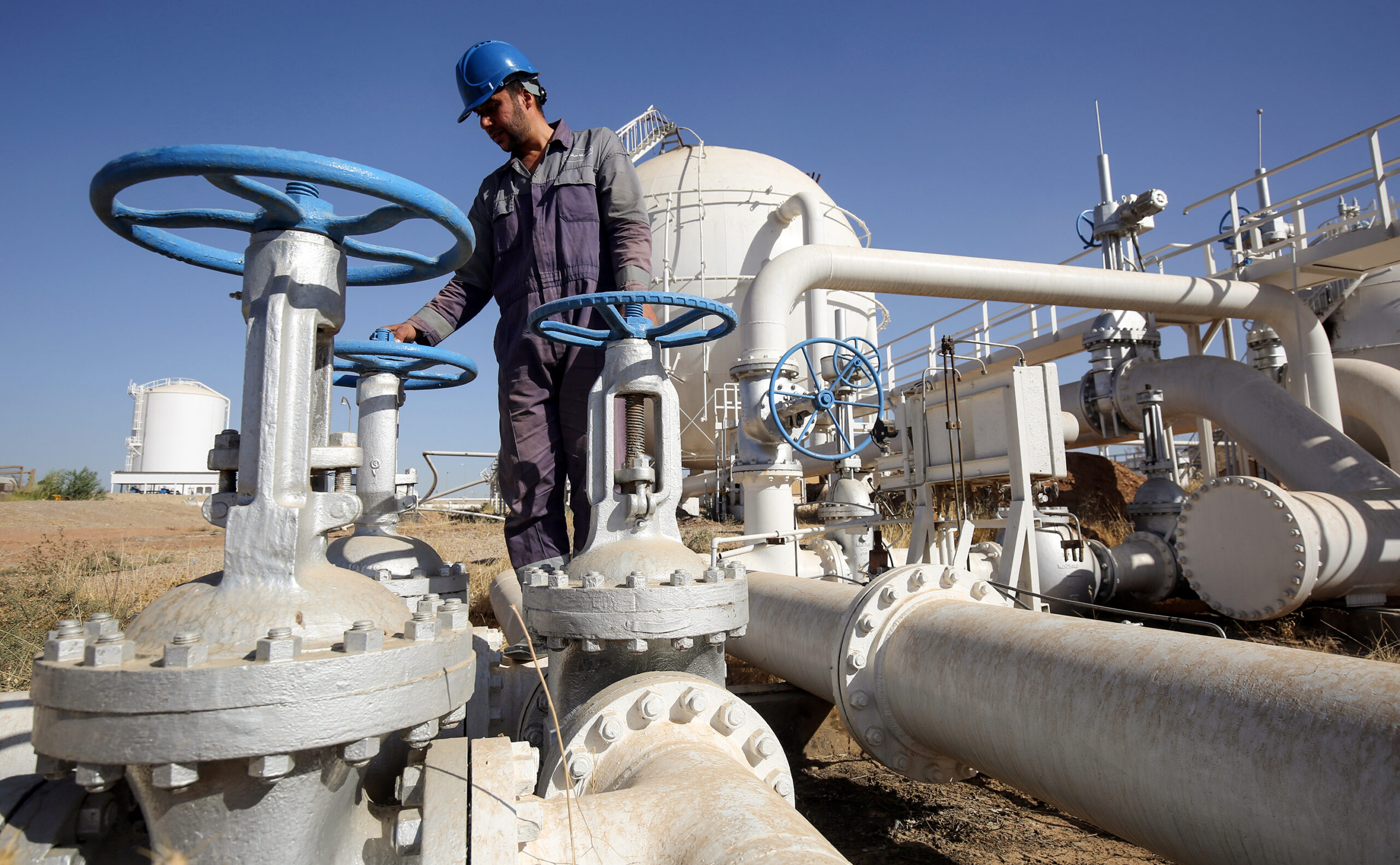
    How Trump’s pullout from the nuclear deal will affect Iran’s energy industry
  • Analysis
  • How Trump’s pullout from the nuclear deal will affect Iran’s energy industry

    Opinions about the consequences of the U.S. pulling out of the Iran nuclear deal began flying around as soon as President Donald Trump announced the exit.

    Many of the key points that pundits have made about Washington turning its back on the Joint Comprehensive Plan of Action have dealt with oil. That’s because the U.S. is likely to sanction Iranian oil exports again, as it did during the Obama administration.

    Here are several short-term and long-term consequences of the U.S. about-face on the Iran deal:

    Short-term consequences

    May 21, 2018

    Muqtada al-Sadr’s victory in Iraqi elections raises alarm in Tehran
    Middle East Institute
  • Analysis
  • Muqtada al-Sadr’s victory in Iraqi elections raises alarm in Tehran

    Firebrand Shiite cleric Muqtada al-Sadr’s surprising lead in Iraq’s May 12 parliamentary elections has raised alarm in Tehran. The Iranian press expressed the concern that Sadr would seek to undercut the Islamic Republic’s influence in Iraq by marginalizing Iran’s allies and allowing regional Sunni countries, particularly Saudi Arabia, to make inroads into Iraqi politics and economy at the expense of Tehran’s interests.

    May 21, 2018